

Rehabilitation Medicine
Contact the Rehabilitation Medicine Clinic
Comprehensive inpatient and outpatient care from a national leader in pediatric rehabilitation.
Rehabilitation Medicine helps your child and family adapt to changes after injury or illness or adapt to conditions present at birth (congenital) that affect your child’s function.
Seattle Children’s is a national leader in pediatric rehabilitation. We provide comprehensive rehab services for children with a broad range of conditions, from the most common to the most complex, at our hospital in Seattle and our clinics around the Northwest.
Rehabilitation Medicine is part of our Rehabilitation Services Program. Together with other experts from the Orthopedics and Rehabilitation Center, we provide seamless, coordinated care for children with needs.
Why Choose Seattle Children’s
Quality of Life
We tailor your child’s rehab care to help them thrive, both now and as they continue to grow and develop.
Technology & Innovation
Our experts use advanced methods and tools, from diagnosis through treatment, to get the best results.
Coordinated Care
By partnering with teams across Seattle Children’s, we strive to make getting care easier on your family.
Why choose Seattle Children’s for rehabilitation medicine?
- Care designed for kids: Many rehab centers in the community will accept children but are focused on adults, who often have very different conditions and needs. At Seattle Children’s, we focus only on children. We have special training and experience with pediatric conditions and the treatments that are right for children as they grow and develop.
- Customized, team-based treatment: Our Rehabilitation Medicine team works closely with each other and with you to evaluate your child’s needs and abilities. We design a treatment plan that fits your child and family. We partner with experts from many other areas of Seattle Children’s to make sure your child receives complete, coordinated care.
- The experts you need are here: Seattle Children’s has been named a level 1 Pediatric Trauma Rehabilitation Center (the highest level) by the Washington State Department of Health. We have the only inpatient rehab unit in Washington, Alaska, Montana and Idaho certified as a Pediatric Family-Centered Program by the Commission on Accreditation of Rehabilitation Facilities (CARF).
- Full-spectrum care: We have the technology and expertise to offer a wide range of care options, from , to in-house production, to our Motion Analysis Clinic, where we can measure how your child moves. We’re also the only center in the region doing surgical procedures to manage and ( placement and ).
- Support for you and your child: Your family is at the center of care. Parents help to set goals and take part in rehab sessions. We provide training and support to prepare you to meet your child’s needs at home. As your child gets ready to return to childcare, school or work after injury, illness or surgery, we work with you to make the transition a success.
Conditions We Treat
We serve the complex needs of children with a range of conditions that affect function. Some of the many conditions we treat include the following.
Physical trauma, like a fall or a car crash, can cause brain injuries. These are often called traumatic brain injuries. But some children have brain injuries that are not from trauma. Infections and problems with the immune system can lead to brain injuries. Examples include , and . Brain injuries from causes like these may be called acquired brain injuries.
Our team evaluates and treats children with an acquired brain injury. Treatment plans may be similar to those for children with a traumatic brain injury.
Children with arthrogryposis are born with several joints that have limited flexibility (contractures) and muscle weakness. This affects your child’s ability to move. It most often affects shoulders, elbows, wrists, hands, hips, knees and feet.
If your child has arthrogryposis, they may see a team of providers, including a , , , , , or . This is based on your child’s needs.
Our team recommends treatment to improve your child’s overall function and the range of motion of their joints. Treatments may include therapy, special equipment, splints, braces and surgery.
A stretch injury to a child’s neck and shoulder can injure the set of nerves that control the muscles of the arm (brachial plexus). This can happen during birth if the baby’s shoulder gets stuck against the parent’s pelvis. In older children and young adults, a brachial plexus injury can happen because of an accident, such as a car crash or sports injury.
We work closely with others from the Brachial Plexus and Peripheral Nerve Program to assess your child’s injury and recommend treatment, such as therapy, splinting and sometimes surgery, to improve your child’s use of their arm.
Cerebral palsy (CP) is caused by an injury to the brain. CP affects your child’s muscle tone. It may be hard for them to move their arms and legs in a coordinated way. CP can lead to other health issues, such as vision, hearing, speech and learning problems.
Our team recommends treatment to improve your child’s overall function and general health. These may include therapy, special equipment, , surgery, and medicines such as botulinum toxin (Botox) (PDF) and phenol. Seattle Children’s is the only provider in the Pacific Northwest to offer selective dorsal rhizotomy surgery to improve mobility and quality of life for children with CP.
We work closely with Seattle Children’s Cancer and Blood Disorders Center to care for children who have cancer. Brain tumors, spinal cord and some cancer treatments can cause problems with walking, doing daily activities (such as dressing), talking and thinking.
We focus on helping your child improve their movement, strength, flexibility and communication and on managing stiff muscles. We also help with equipment needs and your child’s return to school and their community.
Neuromuscular diseases are caused by problems with the muscles or nerves. These diseases cause muscle weakness that may make it hard for children to walk, run and use their hands and arms. Some of these diseases affect the heart and lungs. Common neuromuscular diseases that we treat include:
Our team recommends treatments to improve your child’s muscle strength and function. The goal is to help your child do things for themselves. Treatments may include therapy, special equipment, orthotics, medicines and surgery. The team also recommends treatments that help prevent other health problems.
A spinal cord injury can be from a physical trauma, an infection, an immune condition (such as ) or a . The spinal cord controls movement of the arms and legs and the muscles that help with breathing and using the bathroom. The effects depend on what part of the spinal cord is injured.
Our team assesses your child, and we recommend ways to treat their condition and improve what they can do. We focus on:
- Improving your child’s strength, flexibility and arm and leg movement
- Helping your child move around their home and community
- Helping them perform daily activities (such as getting dressed and eating)
- Supporting their bowel and bladder needs
- Decreasing stiff muscles (spasticity)
A stroke happens when the blood supply to part of the brain is cut off or when a blood vessel in the brain bursts and causes bleeding in the brain. In both cases, brain cells don’t get the oxygen and nutrients they need to survive. Strokes can cause loss of muscle use on 1 side of the body (paralysis), as well as problems with speech, memory, learning and thinking.
Our team recommends treatment to improve your child’s overall function and general health. Treatments may include therapy, special equipment, , surgery and medicines to relax tight (spastic) muscles. We also work closely with stroke specialists from the Pediatric Vascular Neurology Program. Learn more about strokes in children.
A serious head injury can damage a child’s brain. A TBI can cause problems with walking, moving the arms and legs, talking and thinking. A mild TBI may also be called a concussion.
Our team evaluates your child to check how their brain is working. We recommend ways to help them improve their function. We also help plan for their return to school and their community.
Outpatient Treatments and Services
Rehabilitation Medicine offers several outpatient clinics in Washington, as well as clinics in Alaska, so you can schedule appointments with our experts close to home. Learn more about our locations.
In some clinics, your child may see more than 1 provider during a visit so we can address your child’s different needs.
In our general clinic, we see children with a range of problems that affect function. Some need follow-up after their inpatient rehabilitation stay, such as children with brain injury, spinal cord injury or . Others were born with a condition that makes it hard for them to do daily tasks, such as children with , or a missing or short limb.
Based on your child’s needs, they may see a team of providers, including these:
- Rehabilitation nurse
- Educator
The team may recommend treatments such as therapy, special equipment, splinting, , medicine and surgery. These treatments may help improve your child’s ability to walk, move and use their hands and arms.
Children with a TBI may be seen at our TBI and Concussion Clinic if they have symptoms from their injury. Often children come to this clinic after their injury was evaluated somewhere else, such as at a trauma center or by the Concussion Program. They come to the TBI and Concussion Clinic because they need more support.
Based on your child’s needs, they may see a team of providers, including these:
The team evaluates your child and recommends ways to manage problems and help them return to school.
The Rehabilitation Medicine team also provides care in many other Seattle Children’s clinics and programs, including:
- Arthrogryposis Clinic
- Brachial Plexus and Peripheral Nerve Program
- Brain Tumor Program
- Hand and Upper Extremity Program
- Lower Limb Differences Clinic
- Neuromuscular Program and related clinics
- Ortho Rehab Clinic
- Pediatric Vascular Neurology Program
- Spina Bifida Program
- Tone Management Program
Inpatient Rehabilitation
Some children have a sudden illness or injury that requires intensive therapy to help them dress, walk, talk, eat or take part in school or their community. If this is true for your child, we may have your child stay at the hospital in our inpatient rehabilitation unit.
Our inpatient rehab unit is the only certified Pediatric Family-Centered Program in a 4-state region.
Read more about inpatient rehabilitation.
Surgical Options
Our Rehabilitation Medicine team partners with Neurosurgery and Orthopedics to offer surgical options to improve your child’s function and comfort. After careful evaluation, our team of doctors, surgeons, nurse practitioners and therapists will make recommendations. We will work with you to create a plan of care that is right for your child.
These are some of the many options we offer:
Selective dorsal rhizotomy is a surgery done on the lower spinal cord to permanently reduce tight, stiff muscles (spasticity) in the legs. Certain nerve fibers that lead to spasticity are cut.
The goal is to improve your child’s ability to move and the quality of their movement. After surgery, your child will likely need 2 to 3 weeks of inpatient rehabilitation (physical and occupational therapy). The purpose is to increase your child’s strength and muscle control with a special focus on walking.
After going home from the hospital, your child will need clinic appointments for therapy at least 3 to 4 times each week. Read more about selective dorsal rhizotomy and other surgical options for cerebral palsy and spasticity.
Baclofen is a medicine that relaxes muscles. It can reduce spasticity throughout your child’s body. A pump filled with baclofen is placed under the skin in your child’s belly. The pump delivers baclofen to the fluid around your child’s spinal cord. The medicine goes directly to your child’s nervous system, so your child doesn’t need as much baclofen as they do if they take it by mouth.
Before placing a pump, we inject a test dose of baclofen around your child’s spinal cord to be sure this medicine is right for your child. Then a and watch for several hours to see how the medicine affects your child’s body. Once we know the medicine is right for your child, we can schedule your child to get a pump. Read more about baclofen pumps and other surgical options for cerebral palsy and spasticity.
Seattle Children’s surgeons who specialize in bones, muscles and joints provide a full range of orthopedic surgeries to improve children’s function and comfort. For example, based on your child’s needs, we might recommend surgery to release stiff joints (contractures), better align bones and joints or treat scoliosis.
Our Rehabilitation Medicine doctors work closely with our orthopedic surgeons, therapists and other experts, such as in our Arthrogryposis Clinic, Ortho Rehab Clinic, Hand and Upper Extremity Program, Spine Program and Brachial Plexus and Peripheral Nerve Program.
If your child needs orthopedic surgery, your team will plan and provide inpatient or clinic-based rehabilitation to help your child recover.
Children with who have several stiff joints (contractures) or deformed bones in their hips, knees, ankles or feet might benefit from having surgery to address all of these concerns at once. This approach is called single-event multilevel surgery (SEMLS).
SEMLS requires the advanced skills, teamwork and careful coordination you will find at Seattle Children’s.
Our Orthopedics and Rehabilitation Medicine teams work together closely to develop a detailed SEMLS plan that is right for your child. We map out every aspect of your child’s surgery, as well as the intensive therapy your child will need after surgery, to get the best results. Read more about cerebral palsy treatment and the Ortho Rehab Clinic.
They treated him like they were treating their own family. I saw it within the neurology team, the rehabilitation team, the nurses, even the cleaning team. They cared for each of us.
— Jyothi, whose son Sirish spent nearly 2 months in Seattle Children’s Hospital after a series of seizures
Meet Your Rehabilitation Medicine Team
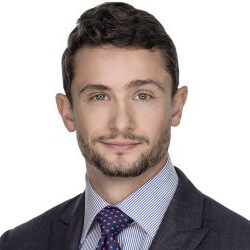
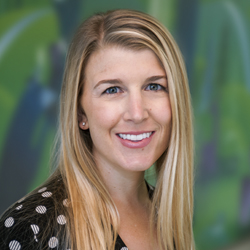
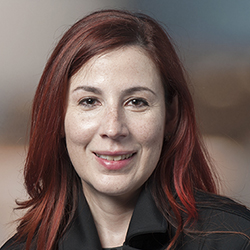
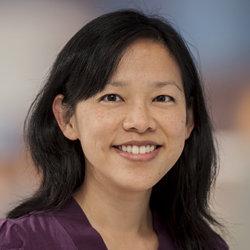
Everyone on the Rehabilitation Medicine team at Seattle Children’s is specially trained to understand and meet the specific healthcare needs of babies, children and adolescents. Our pediatric experts tailor care to your child’s age and developmental stage to improve and protect your child’s function both now and as they continue to grow.
Providers in Rehabilitation Medicine include (), , nurses, social workers, , , education specialists and team members from Occupational Therapy, Physical Therapy and Speech and Language Services.
Leadership
-
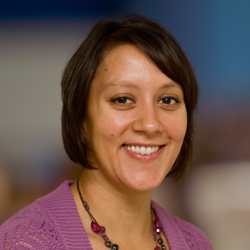
Co-director, Orthopedics and Rehabilitation Center; Chief, Rehabilitation Medicine
Teams
Doctors
Rehabilitation Medicine Resources
Contact Us
Contact Rehabilitation Medicine at 206-987-2114 for an appointment, a second opinion or more information.