Is Your Family Ready for the End of Daylight Saving Time? Prep for ‘Fall Back’ This Season With Tips From a Sleep Expert
Published
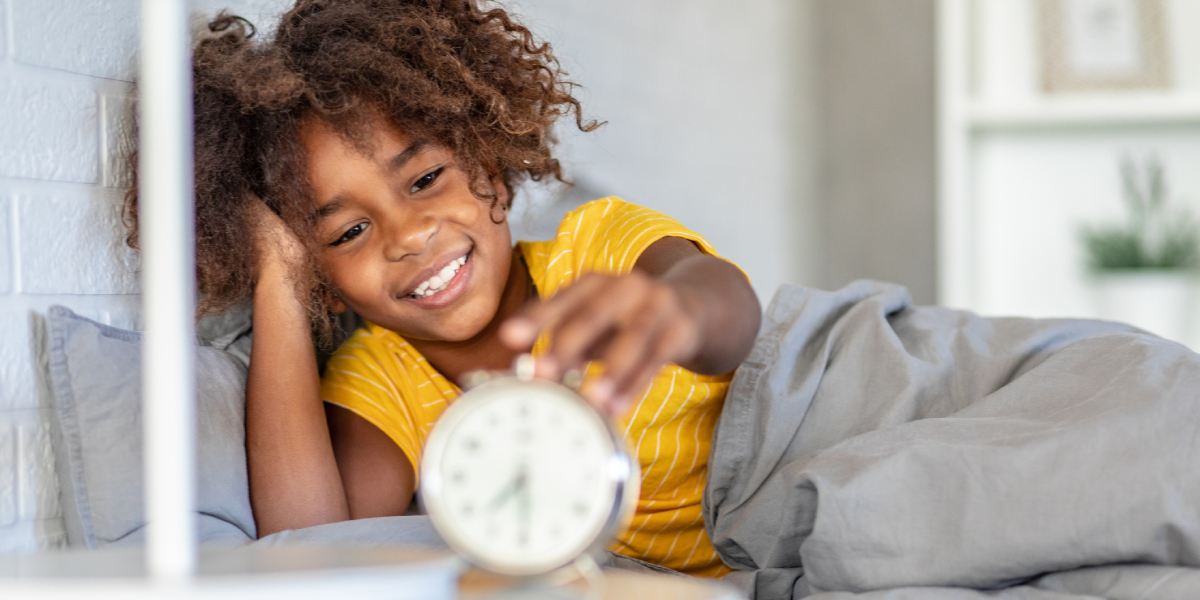
On Nov. 1 at 2 a.m. local time, we will encounter the end of daylight saving time (DST), which means clocks will “fall back” one hour.
While adjusting the clock on your microwave, you might wonder how this seasonal change impacts our biological clocks. If you’re a parent, you may also be wondering how this change could impact your kids as they adjust to school schedules, weekend activities and most importantly, their sleep and health management.
Dr. Maida Lynn Chen, medical director of Seattle Children’s Pediatric Sleep Center and member of the Center for Respiratory Biology and Therapeutics, has spent much of her career investigating sleep, sleep disorders and respiratory conditions. As a clinician-researcher, Dr. Chen shares a few insights on how to navigate the change to our internal clocks.
What is the most important thing parents should know ahead of the end of daylight saving time and its potential impact on their kids’ sleep cycles?
Sleep-wake cycles are regulated by internal body clocks (circadian rhythm), external social clocks and the solar clock. In an ideal world and in optimal health, all three clocks are aligned. Optimal alignment occurs when we wake up and start our days as the sun is rising (not during the dark), and we go to sleep at night after the sun has been down for a little and it’s dark. That alignment is better on standard time, as opposed to daylight saving time, which extends the evening daylight, but keeps mornings dark. Twice a year, the social clock is automatically reset (beginning and end of daylight saving time); these changes essentially induce the equivalent of jet lag for entire nations at a time.
We are going back to standard time Nov. 1, which means clock time moves backwards by one hour. Sleep onset time and wake times will likely be altered for a few days, and sleep itself may be disrupted, particularly at the beginning and end of overnight sleep, as they are misaligned with the new social clock.
What are some things parents can do to mitigate the time change’s impact?
For all children, maintaining a schedule according to the social clock (for instance, the timing of meals and bedtime routine) helps reduce the time change’s impact. Moving clocks back on Saturday night so that the household wakes up to a new clock time on Sunday helps to get Sunday going on the right foot.
Avoiding excessive light exposure from screens and media content in the evening hours will help to solidify sleep onset. If possible, morning exposure to sunlight (even on an overcast day!) and physical activity is helpful, particularly on the first day of the change.
Some children benefit from moving bedtime 15 minutes later each night for a few nights before the time change.
What does research say about daylight saving and its effect on sleep in kids?
Studies from all over the world show that daylight saving time takes a lasting toll on health. It happens because changing the clocks throws our bodies out of sync with natural light and our daily routines.
Living with daylight saving time for six months straight impacts sleep. Because the sun stays out later at night, it’s harder to fall asleep, and dark mornings make getting out of bed a struggle. Late spring and early summer, the sun sets much later than most kids’ bedtimes, but school start times don’t change with daylight saving time. This makes it hard for kids and teens to get the recommended amount of sleep.
Over time, missing out on sleep like this can lead to serious health issues later, including weight gain, heart problems and and depression. For kids, lack of sleep makes it especially tough to focus in school and can leave them feeling cranky and moody. Standard time allows for circadian, social and solar clocks to stay in better alignment and minimizes some of these impacts.
Beyond the long-term impacts, changing our clocks twice a year causes immediate shock to our systems – especially during the “spring forward” weekend. Losing that hour of sleep triggers a spike in serious emergencies, including heart attacks, strokes, car accidents, hospital visits and mental health problems. These would be minimized if daylight saving time is eliminated, a change that multiple medical and scientific groups are advocating for.
Resources
Related Categories
Related Articles

How to Help Kids Sleep Better – Putting Myths to Rest
Published
Learn about a few common pediatric sleep misconceptions, and get guidance and resources on better sleep habits.
Sleepwalking and Sleep Terrors During Childhood
Published
Dr. Maida Chen explains two sleep issues that can impact your whole household and shares how to best handle them.

Tips for a Safe Halloween
Published
Dr. Tony Woodward, chief of Emergency Medicine at Seattle Children’s, offers tips for how to safely celebrate what many kids consider to be the best holiday.