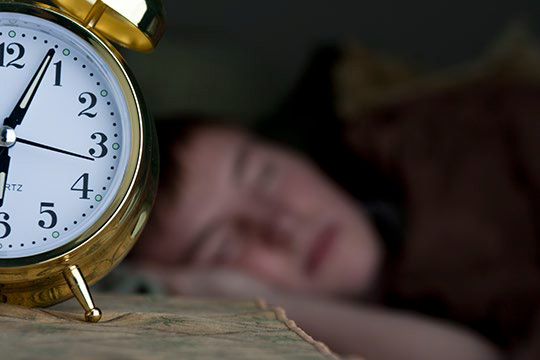
We all hear that teenagers typically do not get enough sleep. Teens need 9 to 9-½ hours of sleep each night. The average teen gets only 7 to 7-¼ hours per night.
 For more information, watch “How to Help Your Teen Get Enough Sleep” For more information, watch “How to Help Your Teen Get Enough Sleep”
youtu.be/Hmv4gVGvDWU
|
What prevents teens from getting the sleep they need?
- A biological shift in the body’s internal clock. After puberty, there is a biological shift in a teen’s internal clock of about 2 hours. This means that a teen who used to fall asleep by 10 p.m. will now not be able to fall asleep until midnight. They will also not naturally wake up until 2 hours later in the morning.
- Early school start times. Many school districts start school as early as 7 a.m. This means teens may need to get up as early as 5 a.m. to get ready and get to school on time.
- A busy social life. Many teens have lots of afterschool events (like sports, clubs, part-time jobs, or family chores) in addition to homework that keeps them up longer in the evening. And of course, there is also ongoing socializing and computer and cell phone use that fills those evening hours and keeps them up late.
|
What happens when teens don’t get enough sleep?
Sleep deprivation affects:
- Mood – Sleep deprivation can cause teens to be moody, irritable and cranky. They may also have a difficult time controlling their moods and be more easily frustrated and upset.
- Behavior – Teens who are sleep deprived are more likely to engage in risk-taking behaviors, such as drinking and driving fast.
- Thinking – Lack of sleep can result in problems with attention, memory, decision making, reaction time and creativity, all of which are important for success in school.
- Academic performance – Teens who get less sleep are more likely to get poor grades in school, fall asleep in school and have school absences and tardiness.
- Driving – Teens are at the highest risk of falling asleep while driving.
- Combined with other concerns about teen driving (slower reaction times, being easily distracted while driving) this can be very dangerous for all involved.
|
What can you do?
Pay attention to sleep patterns and schedules
- Keep a regular sleep schedule – Teens should go to bed and wake up at about the same time every night. This includes non-school nights. There should not be more than an hour difference from one night to the next.
- Weekends – Teens can stay up a bit later on weekend nights but should not sleep-in on weekends to “catch up” on sleep. This will make it harder to get back on schedule the following night.
- Naps – An early afternoon nap of 30 to 45 minutes is fine. But teens shouldn’t nap too long or too late in the afternoon, or they’ll have difficulty falling asleep at bedtime.
Create a sleep-friendly physical environment
- Make sure the bedroom is comfortable, cool, quiet and dark. A room that is warmer than 75 degrees can make it hard to sleep.
- Use the bed only for sleeping. Don’t study, read or listen to music on the bed.
- Keep all electronics out of the bedroom and turned off one hour prior to sleep time.
- Stick to a pre-bedtime routine. About 30 to 60 minutes before bedtime, try to “wind down.” Do relaxing, calming activities such as reading or listening to soothing music to help your mind slow down. Don’t watch TV, study, use the computer, talk on cell phone, exercise or do things that are “energizing.”
Here are some more important habits to follow:
Try to:
- Exercise regularly. Exercise may help you fall asleep and sleep more deeply.
- Spend time outside every day, particularly in the morning. Exposure to sunlight or bright lights helps keep your body’s internal clock on track.
- Eat regular meals and don’t go to bed hungry. Have a light snack before bedtime, but don’t eat a full meal in the hour before bedtime.
Avoid:
- Caffeine – Avoid eating or drinking anything with caffeine in the late afternoon or evening. This includes caffeinated soda, coffee, tea, energy drinks or chocolate.
- Alcohol – Alcohol disrupts sleep and may cause you to wake up during the night.
- Smoking – Smoking disrupts sleep. Don’t smoke for at least an hour before bedtime (and preferably not at all!)
- Sleeping pills – Don’t use sleeping pills, or other over-the-counter sleep aids. These can be dangerous and your sleep problems may return when you stop taking them.
|