
Early Trial Results for Tumor Regression
Published
Featured Researchers

Summary
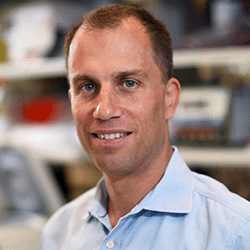
- New England Journal of Medicine publishes the work of Andras Heczey, MD; Michelle Choe, MD; and collaborators showing durable complete liver cancer remission in a pediatric patient, one year after treatment with the Glypican-3 (GPC3) CAR T-cell treatment with dual cytokine armoring, without requiring additional therapies.
- This is the first-in-child, first-in-human use of dual cytokine armoring to show a durable complete remission.
- Seattle Children’s is one of two sites spearheading the evaluation of IL15 and IL21 co-expressing GPC3-CAR T cells, with the goal of exploring the investigational treatment’s capacity to bring into remission patients enduring highly relapsed or refractory solid tumors.
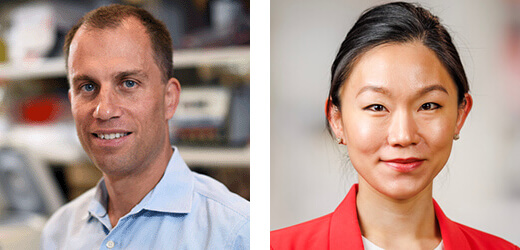 Sept. 9, 2026 – A letter published in the New England Journal of Medicine details an impressive patient response that directly supports the same investigational treatment strategy now being piloted in the enrolling IMPACT trial. Spearheaded at Seattle Children’s by Andras Heczey, MD, and co-led by principal investigator Michelle Choe, MD, this trial aims to investigate the efficacy of a novel CAR T-cell treatment using the protein marker, glypican-3 (GPC-3), armored with protective, dual cytokine proteins interleukin-15 (IL15) and -21 (IL21) to target and destroy cancerous liver cells.
Drs. Choe and Heczey share insights into this latest publication and excitement about the research.
What are the significant findings from this letter?
This letter details emerging data from this trial. Liver cancer is the third leading cause of cancer-related mortality globally, and treatment options with minimal potential for damage to healthy cells are evolving. The research outlined finds early-stage evidence that CAR T-cell treatment can be effective to induce complete, durable remission and is the first to pilot this treatment in human pediatric patients.
Additionally, to make GPC3-CAR T-cells more effective against tumor cells, two genes, IL15 and IL21, were added to increase persistence and help withstand the hostile microenvironment of a solid tumor. This design has shown consistent positive results in preclinical models – until now, this is the first clinical result.
How can this research improve treatment for cancerous tumors?
Current treatments for solid tumor malignancies include invasive options such as surgery and radiation therapy, which could pose serious complications in patients. IMPACT is a phase 1 clinical trial, evaluating the safety, pharmacokinetics and efficacy of genetically engineered autologous T-cells to express GPC3-CAR to treat solid tumors expressing GPC3.
The IMPACT study aims to explore the continued effectiveness of GPC3 CAR T-cell treatment over time, and whether this treatment can continue to be effective against relapsed or therapy refractory solid tumors.
This letter is a significant milestone for this research, promising positive future results for this novel treatment. We are looking forward to exploring a potential new treatment option for children with solid tumors, right here at Seattle Children’s.
How can I get involved in this research?
Our research team at Seattle Children’s is actively enrolling participants age 1 to 26 who qualify for the enrollment criteria. To refer a patient to this trial, contact [email protected].
This clinical trial, which is also being piloted at Texas Children’s Hospital, is being supported at Seattle Children’s Therapeutics and the Ben Towne Center for Childhood Cancer and Blood Disorders Research.
— Empress Rivera-Ruiz
Related Categories
Featured Researchers
Related Centers & Programs
Related Articles
Publication Q&A: Mobile Subthreshold Exercise Program (MSTEP) for Youth With Prolonged Concussion Recovery
Published
New research led by Dr. Sara Chrisman demonstrates that a 6-week virtual aerobic exercise program (MSTEP) significantly speeds up youth concussion recovery.
Early T1D Program Offers New Therapy to Delay Onset of Type 1 Diabetes
Published
Seattle Children’s is home to one of the first programs to support kids and young adults on track to develop type 1 diabetes — and to offer a therapy that can delay the onset of the disease.

Understanding Why Type 2 Diabetes Can Be Worse in Young People
Published
Type 2 diabetes (T2D) is on the rise in children and teens — and young people may experience more severe complications than adults. Dr. Petter Bjornstad is working to learn why and what we can do about it.