
Changing the odds for infections during cancer treatment
Published
Featured Researchers

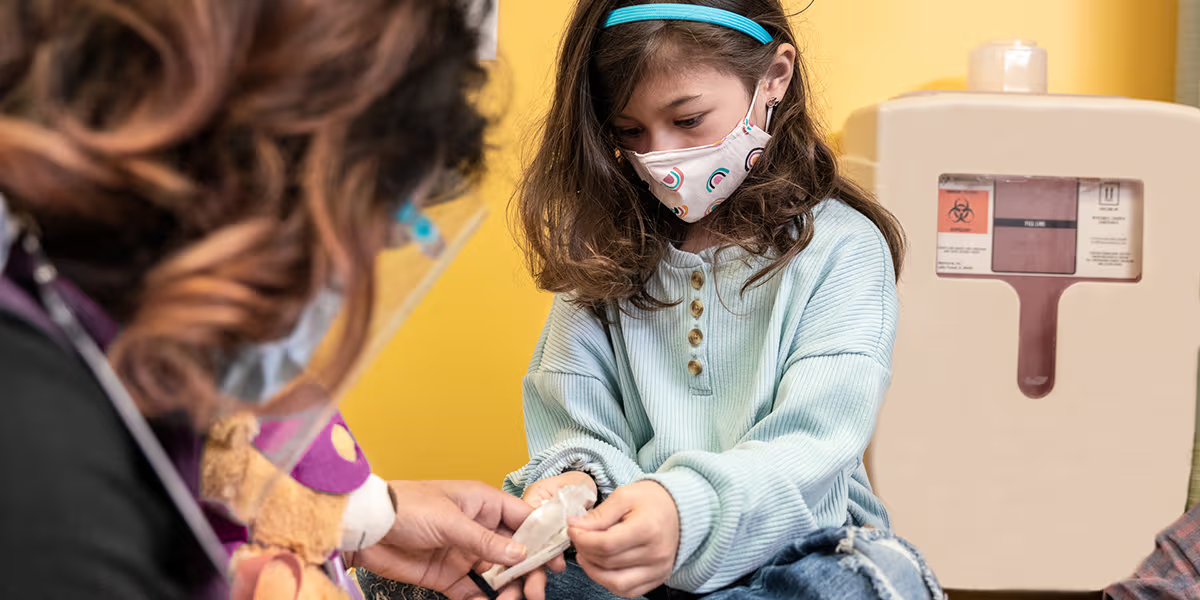
Cancer treatments have significantly improved over the past few decades, thanks to advances in research and care. But the risk — and the potential complications — of infections during treatment has largely stayed the same.
That’s in part because treatments like chemotherapy can weaken the immune system and make it harder for the body to fight infections (a state doctors call “immunocompromised”). Bone marrow transplants can make children who have cancer especially vulnerable, because they require temporarily wiping out the immune system so the body can accept the new cells.
“If a child gets a virus during treatment, it often lingers longer than it normally would,” said Dr. Alpana Waghmare, Associate Professor, Department of Pediatrics, University of Washington School of Medicine. “And sometimes a virus can progress to pneumonia, leading to hospitalization and the need for oxygen support. In some cases, kids can die from these infections.”
Dr. Waghmare’s work aims to change the odds for kids who develop common infections during cancer treatments by better predicting when infections will become severe, intervening earlier and improving prevention strategies.
Predicting who will get very sick and intervening early
Right now, doctors have no way to know which kids will get very sick from an infection. Many different factors could play a role: A child’s age, the amount of virus in their system, medications they're taking, genetics.
To better identify what matters most, Dr. Waghmare’s team collects blood samples and nasal swabs from children who get sick during cancer treatment. Her team examines these samples to identify patterns that distinguish children who develop severe illness from those who recover more easily.
“We’re trying to understand what predicts a severe infection and what might protect against it,” she said. “For example, do some children have antibodies — proteins the body makes to fight infections — that help keep them from getting very sick?”
The next important step: treating the kids on the path to severe infection as early as possible.
Right now, that’s not easy. Some viruses are minor, but others aren't — and the early symptoms may look the same.
“By the time we know what virus a child has and if they could benefit from treatment, they’re already a week into being sick and treatments might not help as much,” Dr. Waghmare said.
She hopes to change that by developing a home testing kit for kids going through cancer treatments. Parents could test as soon as their child develops symptoms and quickly connect with their care team if needed.
“If a test shows something that could become more serious, families could notify their doctor and get treatment ASAP,” Dr. Waghmare said. “And if it’s something milder, they’d have peace of mind knowing they can safely monitor symptoms at home.”
Improving prevention strategies
The ultimate goal is not just to treat infections, but to prevent them altogether. Vaccines are one of the best ways to do that, but they don’t always work as well in kids who are immunocompromised.
One solution could be additional vaccine doses. One recent study Dr. Waghmare’s team participated in found that giving immunocompromised kids additional COVID-19 vaccine doses could help their immune systems fight the virus.
Another option: monoclonal antibodies. Unlike vaccines, which train the body to make proteins called antibodies to fight off infections, this method provides those antibodies directly. This type of protection does not last as long, but it can be valuable for children whose immune systems may not respond strongly to vaccines.
“Right now, there are two monoclonal antibodies that are highly effective at preventing hospitalization from RSV in infants,” Dr. Waghmare said. “We’d like to learn if this approach may also help children who are immunocompromised.”
Dr. Waghmare’s team works closely with scientists from Fred Hutch Cancer Center, sharing resources and insights and getting closer to answers that can help kids and adults.
The ultimate goal: changing the odds for people who get infections during cancer treatment.
“All families can relate to how disruptive it is to get sick,” Dr. Waghmare said. “But when your child has a weakened immune system — because of a life-threatening illness like cancer — it’s even harder, and frightening to not know how sick their child might become. That’s why having better tools to understand risk and access the right treatment early is so important.”
Funding cuts in infectious disease research put progress at stake
Breakthroughs in infectious disease research have the power to save lives, but they rely on consistent funding to move forward. Recent changes in the National Institutes of Health and the Centers for Disease Control and Prevention have led to widespread grant cancellations and funding cuts for infectious disease research.
Without stable support, research slows. And so does progress toward better treatments and earlier interventions for the kids and families who need them.
Your support can help sustain this research and accelerate lifesaving discoveries.
Related Categories
Featured Researchers
Related Centers & Programs
Related Articles
Publication Q&A: Mobile Subthreshold Exercise Program (MSTEP) for Youth With Prolonged Concussion Recovery
Published
New research led by Dr. Sara Chrisman demonstrates that a 6-week virtual aerobic exercise program (MSTEP) significantly speeds up youth concussion recovery.
Early T1D Program Offers New Therapy to Delay Onset of Type 1 Diabetes
Published
Seattle Children’s is home to one of the first programs to support kids and young adults on track to develop type 1 diabetes — and to offer a therapy that can delay the onset of the disease.

Understanding Why Type 2 Diabetes Can Be Worse in Young People
Published
Type 2 diabetes (T2D) is on the rise in children and teens — and young people may experience more severe complications than adults. Dr. Petter Bjornstad is working to learn why and what we can do about it.