
Center for Clinical and Translational Research
Improving Pediatric Healthcare
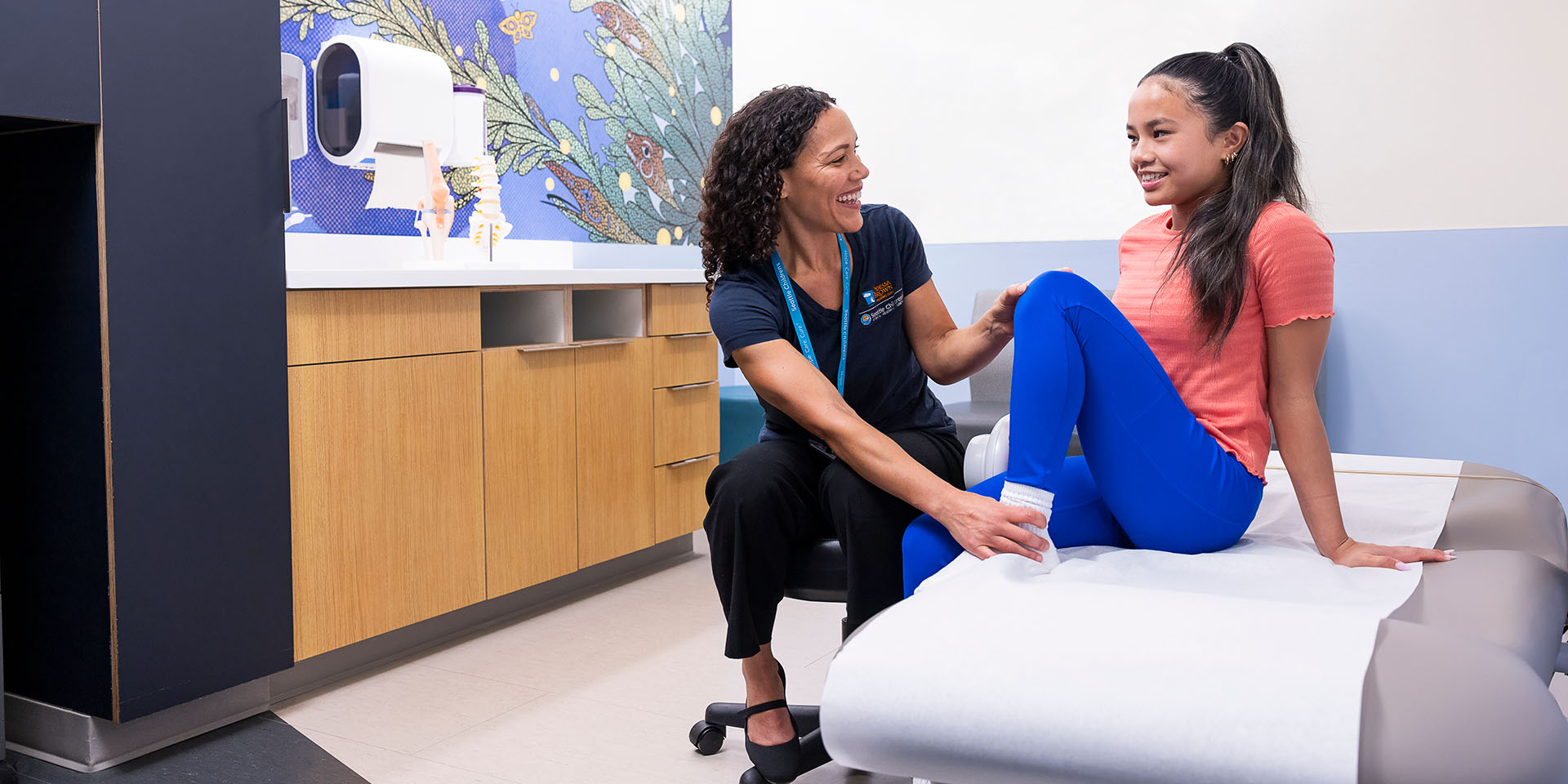
At the Center for Clinical and Translational Research, we are dedicated to improving pediatric health, patient care and family experiences. Many of our investigators are clinicians, whose understanding of their patients' needs allows us to answer research questions informed by our clinical experiences and ensure that our research is benefiting children in ways that matter to them.
Our investigators come from a wide range of medical specialties and collaborate on all types of studies, including bench research, clinical trials and implementation studies. Since 2006, we have led and supported research that has shaped pediatric care, advanced new therapies and transformed how clinicians diagnose and treat children. We have:
- Accelerated immunotherapy and translational treatments
- Conducted first-of-their-kind pediatric clinical studies
- Contributed to the FDA approval of lifesaving vaccines
- Created surgical robotic techniques
- Developed tools to empower patients in their healthcare decision-making
Through our research, we make pediatric healthcare better.
Integrating Clinical Research Into Clinical Care
One of our primary goals is to make clinical research part of the clinical experience. We do this by working to make participation in research studies available and accessible to all patients. We also strive to integrate our research results into clinical practice so that all patients benefit. We leverage methods in clinical and research informatics to learn from our patient care and generate new knowledge.
For example, we have applied our 20 years of interdisciplinary vaccine research in the clinic to improve vaccine delivery and uptake. We studied how respiratory vaccines spread throughout communities (in partnership with the CDC), developed and tested vaccines in children and pregnant mothers, and gained important insights into parents’ vaccine decision-making process. This research enabled Mersine Bryan, MD, MPH, and Annika Hofstetter MD, PhD, MPH, to develop strategies to help pediatricians partner with parents at all points of care to discuss and administer vaccines.
Leading Multicenter Research Collaborations and Networks
Our investigators help create and facilitate local, national and international collaborations between multiple research centers. These collaborations address many common research questions, such as those that arise when studying rare conditions or tracking long-term outcomes. Our work helps researchers find answers. Examples of our areas of focus include:
Local clinical research networks
- The Seattle Children's Practice-Based Research Network includes local pediatric clinical practices interested in participating in clinical research.
- A CDC-funded study awarded to Catherine Pihoker, MD, will establish a new network of five institutions in the Pacific Northwest to monitor outcomes for children and adults with diabetes.
Longitudinal studies
The Research Integration Hub and BEAR Core have partnered with the University of Washington to track our patients’ longitudinal outcomes throughout the lifespan.
Learning health systems
We leverage large-scale data to bridge the gap between research and real-world care:
- PEDSnet: Seattle Children’s is one of 12 pediatric hospitals in the U.S. sharing data from the electronic health record (EHR), giving researchers access to large datasets.
- PR-COIN: Led by Esi Morgan, MD, MSCE, this a large multicenter collaborative focused on improving care for children with juvenile idiopathic arthritis (JIA).
- Cleft Outcomes: With recent funding from NIH, Carrie Heike, MD, MS, and her colleagues are developing a learning health system for health outcomes in children with clefts of the lip and/or palate.
- Condition-Specific Registries: We work with clinicians and researchers to develop condition-specific EHR registries to allow for improvements in clinical care, quality and research.
- PECARN: By participating in research in Seattle Children’s Emergency Department, thousands of patients have helped generate evidence that improves care and outcomes for young people with acute injuries or illnesses.
Paving the Path for Precision Medicine and Personalized Pediatric Healthcare
We use our clinical insight to bring precision medicine into pediatric healthcare. Our investigators study the unique aspects of common and rare conditions that require treatment approaches tailored to each patient.
A critical gap in research for children with rare conditions is the lack of standardized methods to characterize important clinical features of their conditions. Often, there is no standard way to classify severity, assess functional impairment or delineate clinically meaningful outcomes. This gap makes it harder to conduct clinical trials and obtain regulatory approval of therapies that can significantly improve patients' lives.
By understanding the genetic causes of conditions, we can provide tailored care to children. Through knowledge about the pathophysiology of these conditions and patient preferences, we develop new therapies and interventions that work for children. We also partner with patients and families to identify the best treatment plan for each patient.
Here are some of the ways we are working to create more personalized treatments:
- Petter Bjornstad, MD, is finding ways to help children with Type 1 and Type 2 diabetes. He conducts studies that uncover the mechanism of pediatric diabetes as well as clinical trials to test adjunctive therapies that may prevent the complications of immunotherapies used to treat the condition.
- Juliana Bonilla-Velez, MD, is working to optimize outcomes for children with head and neck lymphatic malformations (HNLM), the most common type of vascular anomaly with significant phenotypic variability and an unpredictable natural history. To do so, she is developing phenotypic assessment tools that integrate clinical, imaging and genomic data to guide treatment selection and create individualized treatment plans.
- Yongdong Zhao, MD, PhD, RhMSUS, focuses on optimizing care for children with chronic nonbacterial osteomyelitis (CNO), also known as chronic recurrent multifocal osteomyelitis (CRMO). He is developing reliable and valid assessment tools that help facilitate clinical trials designed to evaluate and identify effective treatments.
- Katrina Dipple, MD, PhD, leads the Pacific Northwest site for the Undiagnosed Diseases Network to provide answers for children and adults with rare or mysterious medical conditions.
Our goal is to conduct research in the areas that are most important for patients, and our research allows us to provide healthcare, identify treatments and create interventions that lead to the best pediatric outcomes.
— Carrie Heike, MD, MS, director of the Center for Clinical and Translational Research
Explore Our Research
Search results
Featured Research
We seek to answer a wide spectrum of clinical questions for a vast number of pediatric conditions. We achieve these results by using an array of study designs and methods, innovative techniques and approaches, and hundreds of active clinical studies.
Resources
Explore the opportunities available to members of our center and to Seattle Children’s researchers.