
Early T1D Program Offers New Therapy to Delay Onset of Type 1 Diabetes
Published
Featured Researchers
Abstract
Seattle Children’s is home to one of the first programs to support kids and young adults on track to develop type 1 diabetes — and to offer a therapy that can delay the onset of the disease.
In the 1920s, the discovery of insulin therapy transformed type 1 diabetes (T1D) from a deadly illness into a chronic disease. Insulin therapy replaces an important hormone that people with T1D can’t make. Over the next century, the tools for managing T1D and delivering insulin improved dramatically. But there were no therapies that target the root cause of the disease, an immune system attack on insulin-producing cells in the pancreas.
That changed in 2022 with the FDA approval of TZIELD, a medicine given to people before they develop T1D that can delay the onset of the disease for an average of 2.7 years.
“We’ve had the ability to screen people for T1D for a while now,” said Dr. Millie Nandi-Munshi. “But there wasn’t much impetus for screening because besides educating people about symptoms, there wasn’t much we could do to help them.”
After the approval of TZIELD, Dr. Nandi-Munshi and Elena Martinez, PA-C of the Center for Clinical and Translational Research, started laying the groundwork for an Early T1D Program at Seattle Children’s. The program now offers education and TZIELD therapy for people on track to develop T1D and was the first place in the Pacific Northwest to offer TZIELD outside of a research study.
“For the first time, we’re telling patients who are on track to develop T1D: there’s a way to delay the disease,” Martinez said. “And that’s really exciting.”
Learning Who Will Develop T1D
One of the first patients to come to the Early T1D Program at Seattle Children’s was then-16-year-old Kaia. She learned she was on track to develop T1D because her mom enrolled her in a study when she was a baby.
Her participation in that study helped scientists understand how T1D develops, including the discovery that five proteins called autoantibodies play a key role in the disease. If a person develops two or more of those autoantibodies, they have a nearly 100% chance of developing T1D.
People may develop those autoantibodies years before they have any symptoms. This discovery opened the door to predicting who will develop T1D and exploring how to slow it down or even prevent it.
For most of her life, Kaia gave periodic blood samples for the study. When she was 16, she learned she had developed multiple T1D autoantibodies.
“I was definitely nervous, but I wasn’t deathly afraid because I grew up around it,” Kaia said. “My mom has it, my grandpa has it. So it didn’t feel like this super foreign thing.”
Soon she was meeting Dr. Nandi-Munshi, and learning about the medicine that could slow the progression of T1D.
Why Delaying T1D Matters
When Dr. Nandi-Munshi and Elena Martinez talk to patients about delaying T1D, they balance explaining the reality of T1D without trying to overwhelm families.
“T1D management has come so far, people have fewer complications, they live very normal lives,” Martinez said. “But it’s still a lifelong disease that weighs on you physically and mentally.”
Dr. Nandi-Munshi talked to Kaia and her family about monitoring for early symptoms of T1D, like extreme thirst, frequent urination, vomiting and fatigue. Watching for those symptoms can significantly lower the risk of a life-threatening complication of T1D called diabetic ketoacidosis.
She also explained that on average, the medicine delays the onset of T1D for 2.7 years, but the actual delay could be longer or shorter for each individual.
“A couple of years without T1D can make a huge difference,” Dr. Nandi-Munshi said. “It can mean learning to manage the disease in middle school instead of elementary school or as a 20-something instead of as a teenager.”
Kaia thought about graduating high school and starting college in the next few years.
“With diabetes, you have to be very disciplined about what you eat and your exercise and your insulin. There are so many factors that go into it,” she said. “So I talked about it with my parents and decided it would be worth trying if it meant not having to manage diabetes when I was starting college.”
Exciting Progress
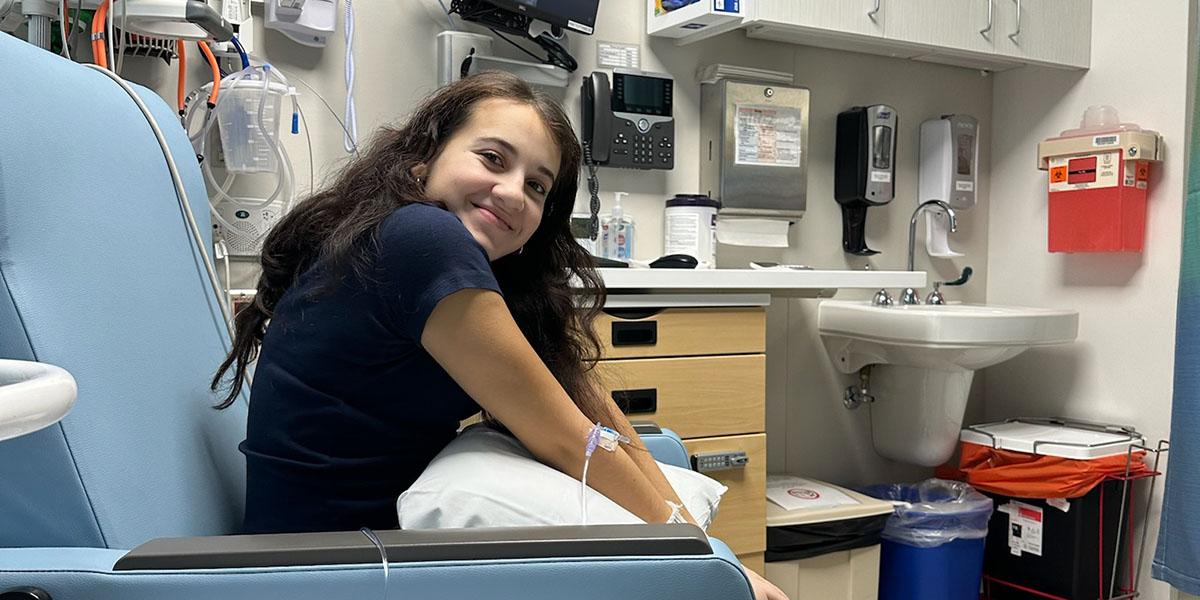
In the weeks that followed, Kaia came to Seattle Children’s every day for two weeks to get infusions of TZIELD.
“It was easier than I thought it would be,” Kaia said. “My parents or my friends or my boyfriend would come with me and we would play a game or watch a show during the infusion. You could also order food; the breakfast potatoes were really good.”
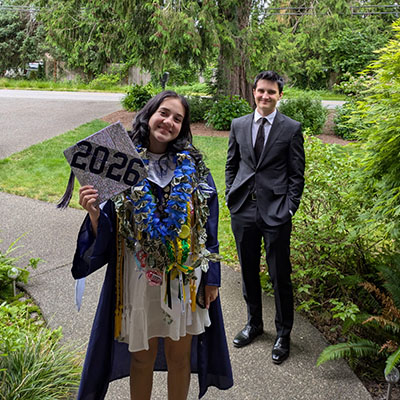 Now 18, Kaia spent the summer before college working at her dad’s tugboat repair company, as well as baby sitting and sewing and crocheting. She just started at Walla Walla University where she is studying to become a teacher — and hopes that T1D won't be a problem just yet.
“Fourteen days of infusions felt like a lot at the time, but it feels worth it in the grand scheme of things,” she said. “It’s a newer medicine and participating can help add to what doctors know about the medicine and how it works. So I wanted to do it because the medicine would help me, and it could help other people too.”
The Early T1D Program is one of many examples of how the Seattle Children’s team is advancing clinical care, leading research, and working to get the latest advances in science and medicine to people who can benefit from them.
“Families ask us about progress in T1D research all the time,” Martinez said. “So this has been a really exciting advance to tell them about, it really gives people hope.”
Learn More
If you are interested in screening for T1D, talk to your pediatrician. Seattle Children’s offers guidelines for when to screen for T1D and how to refer to endocrinology to receive care from the Early T1D program. [1]
Featured Researchers
Focus Areas Links
Related Centers & Programs
Related Articles

Understanding Why Type 2 Diabetes Can Be Worse in Young People
Published
Type 2 diabetes (T2D) is on the rise in children and teens — and young people may experience more severe complications than adults. Dr. Petter Bjornstad is working to learn why and what we can do about it.
Publication Q&A: Reduced Function of the Adaptor SH2B3 Promotes T1D via Altered Cytokine-Regulated, T cell Intrinsic Immune Tolerance
Published
Seattle Children’s immunology research gives new mechanistic insight into genetic risk for autoimmunity, leading to altered T cell function and Type 1 diabetes.
New Cell-Based Therapy Drives Progress Toward Diabetes Treatment, Prevention
Published
Using new gene-editing techniques, Dr. David Rawlings and his lab team have created a novel cell therapy to potentially transform the treatment of autoimmune diseases.