
Portman Research Group
Led by Dr. Michael Portman, the Portman Research Group is developing innovative ways to protect children's hearts from damage related to heart surgery and is improving how the medical community understands and treats Kawasaki disease.
The lab's myocardial protection program is unraveling the metabolic processes that govern how the heart responds to – and recovers from – surgery. The Portman team's research builds on its discovery that when infants supported by cardiopulmonary bypass are given triiodothryonine – a thyroid hormone – it shortens the time they need to spend on ventilators. The lab is working to understand why this hormone is effective and is identifying other nutritional supplements that could shorten recovery times and improve long-term survival for children who undergo heart surgery.
The Portman Research Group also leads a major Kawasaki disease research program that aims to eradicate heart damage caused by the condition. Portman and his colleagues are pursuing a new theory that could help illuminate the causes of Kawasaki disease (KD) and are making discoveries that could improve KD treatment.
Kawasaki Disease Research
Dr. Michael Portman explains how his team is uncovering what causes Kawasaki disease and pursuing better treatments for children.
Stipends for Training Aspiring Researchers (STAR) Program
Creating Research Opportunities for Underrepresented Minorities
In 1993, Dr. Michael Portman helped found the Stipends for Training Aspiring Researchers (STAR) program. Its mission is to increase the number of underrepresented students entering cardiology, pulmonary, hematology and sleep research. Portman is the program's principal investigator.
Each year STAR offers 12-week biomedical research internships to talented students who have completed at least one year of undergraduate studies. The program strongly encourages students from underrepresented minority groups (i.e., African American, American Indian/Alaska Native, Asian/Pacific Islander and Hispanic/Mexican American) to apply.
The STAR program has helped hundreds of underrepresented minority, economically and educationally disadvantaged, and disabled students learn the skills needed to participate in, and experience the excitement of, biomedical and biobehavioral research. More than 50 STAR alumni have completed professional or graduate degrees and dozens are currently in school, with many seeking PhD degrees. Several STAR alumni are teaching or conducting research at major colleges or universities.
The program is open to junior/senior level undergraduates and entering graduate students pursuing a master's/PhD in the biomedical/biobehavioral science fields. Undergraduates must have a 3.0 or greater grade point average, and entering graduates must be nominated by their departments.
For more information regarding the application process or mentoring, please contact Karlotta J. Rosebaugh. More information about STAR is available through its University of Washington Web page.
Myocardial Protection Program
Helping Children's Hearts Recover from Surgery
Heart surgery saves the lives of thousands of children with heart defects each year, but it comes with a price. When children are placed on mechanical heart support – such as cardiopulmonary bypass and extracorporeal membrane oxygenation (ECMO) – it can fundamentally weaken their hearts. The Portman Research Group is investigating what causes this damage and is developing new ways to protect against it.
The lab is unraveling the metabolic processes that govern how the heart responds to stress and injury and is identifying hormone and nutritional supplements that prevent damage and accelerate recovery. For instance, Portman's team made a key discovery when they found that giving a thyroid hormone called triiodothyronine to infants supported by cardiopulmonary bypass could reduce the time those infants spent on ventilators after surgery. This improves recovery times and reduces patient and parent stress, and may improve long-term outcomes.
The study that yielded this discovery, Triiodothyronine in Infants and Children During Cardiopulmonary Bypass (TRICC), was one of the largest and most successful pediatric clinical trials ever performed. Portman's team is pursuing a Phase III clinical trial to confirm these results.
Building on this research, Portman and his colleagues are conducting studies in animal models to understand exactly how thyroid hormone influences how the heart uses energy. As part of this project, they are investigating how other supplements, including pyruvate and fatty acids, affect cardiac metabolism and influence the recoveries of animal models placed on mechanical support. This research could set the stage for discoveries that further improve the lives of children who undergo heart surgery.
The lab also plans to pursue more clinical trials of thyroid hormone, including studies of whether other, more affordable, thyroid hormone drugs – including Triostat – can improve outcomes in patients with congenital heart disease worldwide.
Kawasaki Disease Program
Improving the Lives of Children With Kawasaki Disease
Kawasaki disease (KD) is an inflammatory condition affecting a child's eyes, lips, hands and coronary arteries. The disease is the leading cause of acquired heart disease in children in the U.S. and can lead, in rare cases, to heart attack and death. Many KD patients experience long-term coronary artery problems. The Portman Research Group is working to eradicate heart damage caused by KD.
Pursuing better treatments for Kawasaki Disease
The current treatment for KD is intravenous immunoglobulin (IVIG). Immunoglobulin consists of concentrated antibodies that have been extracted from donated blood. Infusing this product into KD patients can significantly reduce their risk of certain heart problems. But IVIG is effective in only 70% to 80% of cases. Approximately 20% to 25% of patients treated with IVIG have recurrent or persistent fever and inflammation, and these patients are at especially high risk for coronary artery disease. The Portman group is developing ways to improve outcomes for children treated with IVIG.
Dr. Portman and his colleagues made a key genetic discovery about why IVIG isn't effective in some patients. It is widely believed that IVIG works by binding to specific molecules – called FcGamma receptors, or FCGRs – on certain types of blood or inflammatory cells. Portman's team found that some patients have variations in the genes that regulate FCGRs, and that these variations lead to abnormal or mutated FCGRs that can't properly bind with the IVIG.
The lab is building on this finding through a study that collects blood and saliva samples from hundreds of KD patients. By analyzing these patients' genes, the study is searching for further clues on how genetic variations influence a patient's response to IVIG.
The Portman team made another potentially pivotal finding through a pilot study that found that when KD patients were treated with a combination of IVIG and the drug etanercept (commonly known as Enbrel), they had no recurrent fever and no new coronary artery inflammation. Now the lab is leading an FDA-sponsored clinical trial, which is taking place at six hospitals in the U.S. and Canada, to validate these results. Etanercept has been approved by the FDA as a treatment for rheumatoid arthritis and other inflammatory conditions, and the group's clinical trial could lay the foundation for using the drug in KD patients too.
Investigating Kawasaki Disease's causes
While KD's causes are not understood, Portman developed an intriguing hypothesis that eating soy products could influence a child's risk for KD. This could help explain why the disease is unusually common in Asian populations, particularly in Japanese children.
Soybeans and soy products are the richest sources of isoflavones, a plant hormone that resembles human estrogen. For many children, the earliest significant dietary exposure to isoflavones comes through breastmilk/chestmilk or soy-based infant formulas. Portman hypothesizes that one of these isoflavones, called genistein, may limit how FcGamma receptors function. This could impair children's immune systems and make them more susceptible to KD.
Portman outlined this theory in a recent paper in Pediatric Research. The paper explains how Portman and his colleagues analyzed data on soy consumption in thousands of Caucasian, Native Hawaiian and Japanese subjects. He compared this data with KD's incidence in Hawaiian populations. The data suggest that soy consumption is associated with a higher risk of Kawasaki disease among children under age 18.
The Portman Research Group is now pursuing a case-controlled study that analyzes soy consumption among children of different ethnic backgrounds in the U.S.
Philanthropy accelerates research
Portman's group is making dramatic advancements toward improving the lives of children with Kawasaki disease. This progress wouldn't be possible without private donations, which fund innovative pilot studies and make up for shortfalls in grants from federal agencies and private foundations. The KD KIDS Guild was recently established to solicit financial support for this research. To learn more about supporting the guild, email us. You can also donate online.
"Funding from private philanthropy gave me money to identify the genes that create susceptibility to Kawasaki disease. Because of this support, we are very close to finding a more effective treatment for the disease."
Partnership Opportunities
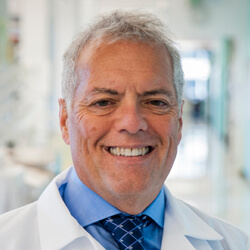
Michael A Portman, MD
Michael A. Portman, MD, is director of research in the Division of Cardiology at Seattle Children's Hospital and a professor in the Department of Pediatrics at the University of Washington School of Medicine. He is an attending physician and cardiologist at Seattle Children's Heart Center. Portman's research activities include conducting pharmacological clinical trials; leading basic science projects focused on cardiac metabolism and genetics; and mentoring future clinical researchers. Portman is also the principal investigator of the Stipends for Training Aspiring Researchers (STAR) program, whose goal is to increase the number of students entering cardiology, pulmonary, hematology and sleep research. He is an editorial board member of the American Journal of Physiology — Heart and Circulatory Physiology.
-
Jeremy Gillis
-

-

Interim Director, Center for Developmental Biology and Regenerative Medicine