
Sodora Lab
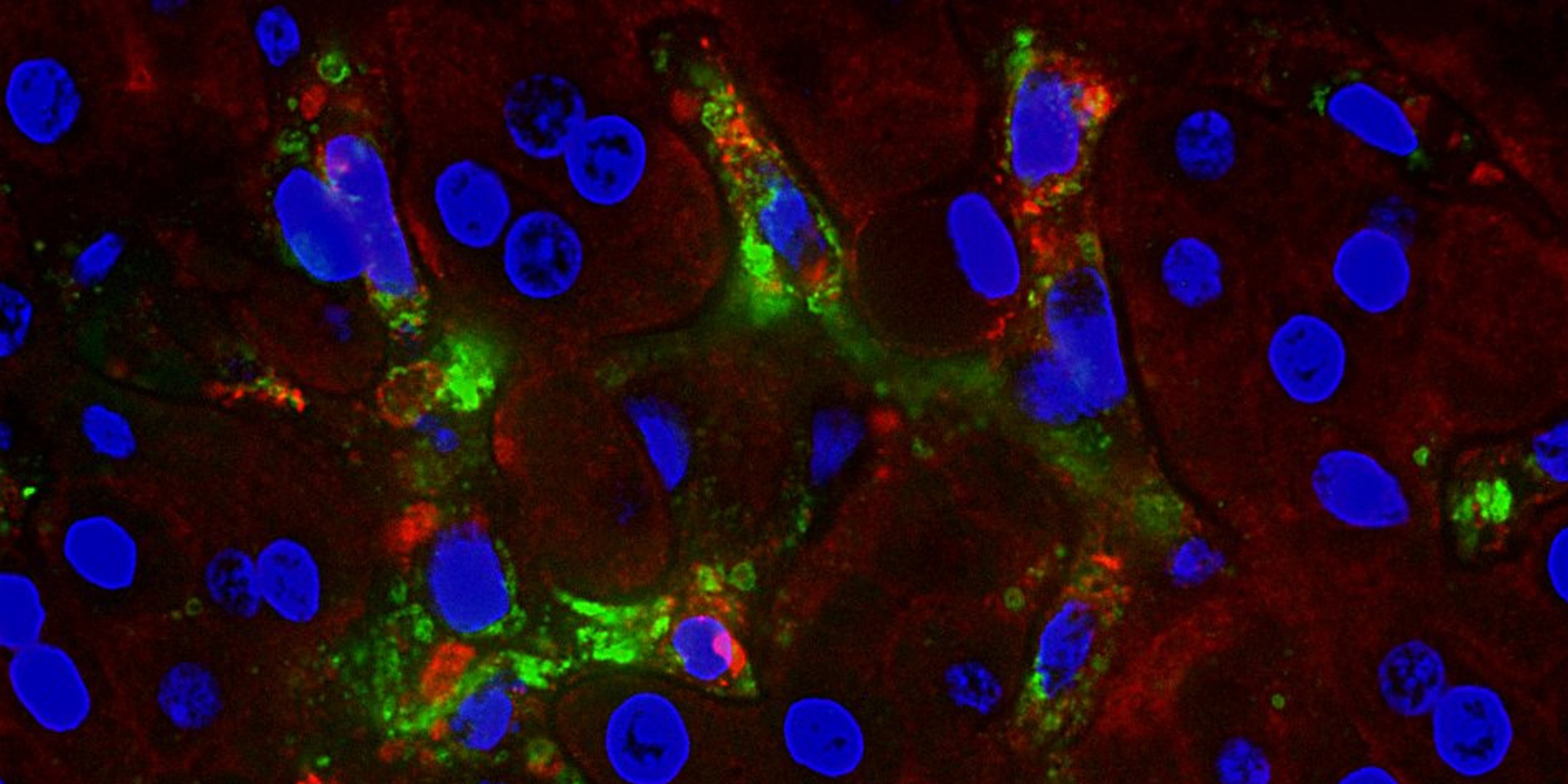
Work in the Sodora Lab primarily focuses on two principal areas of HIV research: HIV transmission and HIV-induced disease and immune factors that impact progression to AIDS. Collectively, these research strategies are designed to produce and contribute to novel vaccine approaches and immune therapies that will decrease the spread of HIV and/or prevent disease progression in HIV-infected people.
Our previous studies assessing SIV disease progression in non-human primates have uncovered key insights as to how HIV/SIV infection results in inflammation that fuels disease progression and onset of AIDS. Currently, we focus on immune inflammation and dysfunction that occurs in the liver during HIV/SIV infection as well as during ART treatment. An understanding of the role of virus-infected cells, as well as the liver-associated microbiota, will be important in unraveling the mechanisms driving immune dysfunction in the liver during HIV/SIV infection. These studies also provide insights with regard to the viral reservoirs that are present within the liver during suppressive ART therapy.
In addition, our lab uses the non-human primate model for HIV infection to better understand oral HIV transmission, which predominantly occurs during breastfeeding/chestfeeding. Previously, we determined that following a successful oral infection with SIV, the virus travels to local lymph node before dispersing throughout other lymphoid organs in the body within 1 to 2 days after infection. One current project seeks to expand upon this study through evaluating the differential disease outcomes observed in SIV infected infants by comparing rapid to typical progressing animals. Assessment of humoral immune dysfunction, and more specifically of why the rapid-progressing animals are unable to produce SIV-specific antibodies, will be a key part of this study.
We utilize our knowledge of the oral route of transmission to devise innovative approaches to deliver HIV vaccines via the oral mucosa. This project is a collaboration with the Sather Lab here at Seattle Children's Research Institute. Our focus is on vaccine delivery to the oral mucosa, assessment of the innate immune response following the vaccination and undertaking analyses to identify innate immune responses that are best for anti-HIV antibody production. Findings thus far have demonstrated that the oral mucosa is an effective vaccination site, and ongoing studies are designed to optimize the delivery as well as the anti-SIV humoral immune response to the vaccine.
Partnership Opportunities
Don Sodora, PhD
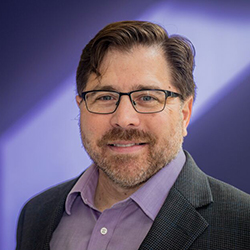
Don Sodora is a professor at the University of Washington and Seattle Children’s Research Institute. The Sodora Laboratory investigates the ability of HIV to be transmitted from mothers to their children, as well as to understand how an HIV infection leads to immune dysfunction and AIDS. Many of our studies utilize the SIV virus in rhesus macaques which is highly analogous to HIV infection. Our studies assessing HIV transmission have the long-term goal of developing an HIV vaccine and involve the assessment of the earliest events that occur after infection at a mucosal site (in collaboration with Noah Sather’s laboratory). Our immune dysfunction studies focus on HIV/SIV immunologic changes in the liver as well as unraveling the factors that result in rapid progression to AIDS. The long-term goal of these studies is to identify immune therapeutic approaches to inhibit HIV-associated disease progression.
My first memory of doing an ‘experiment’ was when I was ten years old taking notes and drawing pictures of the ants that lived on the wall of my home in Northern New Jersey. For undergraduate studies I attended Rutgers University, receiving a bachelor's degree in microbiology. From there I went to the University of Pennsylvania for my PhD which focused on evaluating structure of a Herpes Simplex Virus envelope protein. My postdoctoral research at Stanford University and the Aaron Diamond AIDS Research Center in New York City focused on genetic assessment of changes in HIV, as well as related animal viruses that are similar (FIV and SIV). My faculty positions have been at University of Texas, Southwestern Medical Center and the Center for Infectious Disease Research prior to joining University of Washington/Seattle Children’s Research Institute. Throughout my career I have trained several graduate students and postdoctoral fellows, and that training the next generation of scientists is an important part of my job. Outside of the lab, I enjoy spending time with my friends and family, traveling, walking in nature and taking photographs.
-
Nina Derby, PhD
Senior Research Scientist
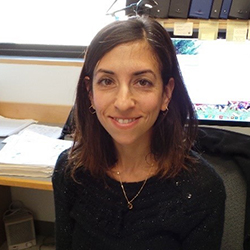
As a kid, I got a lot of stomach viruses that would keep me in bed. I would dream about my body as various parts of the military, defending me from illness, and I wondered about how the body makes us healthy again when we get sick. After obtaining a BA in biochemistry from Smith College in Northampton, Massachusetts, I moved to Seattle for a PhD in pathobiology at the University of Washington. There I studied immunology and what really makes up the body’s army. My research interests are in the innate host response to inflammation in tissues, especially as that caused by HIV infection. I am passionate about the impact of chronic inflammation on the liver. When I am not working, I am chasing my three wild and amazing children, cooking, and growing vegetables in my garden.
-
Brooke Johnson
Research Scientist I
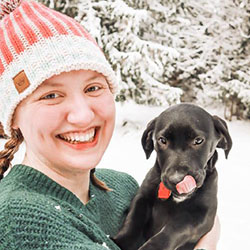
I attended Western Washington University where I received a BS in cell and molecular biology. Some of my research interests are spatial immunology, host-pathogen interactions, and women’s health. Outside the lab I enjoy taking my dog on adventures, consuming as much coffee as possible, and learning new things.
-
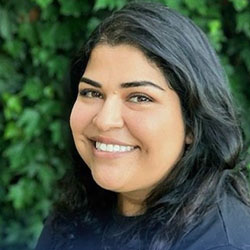
Angel Reddy
Research Technician II
I attended the University of Washington Tacoma where I received my BS in Biomedical Sciences. It was at UW Tacoma that I was inspired to pursue research as a career. I was also a former PREP Scholar at Oregon Health and Science University where I continued my scientific training and growth. I am excited to continue this growth in the Sodora Lab. As a whole, I am interested in host-pathogen interactions particularly in the context of mucosal surfaces. Outside of science, I love watching old sitcoms, playing board games, listening to audiobooks, and spending time with my friends and family.