
Meet the Invent Clinical Scholars
The Invent Clinical Scholars Program brings together top-tier clinical fellows dedicated to bridging the gap between patient care and scientific discovery.
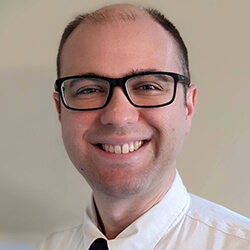 Russell Ault, MD, PhD
Baker Lab
Institute for Protein Design, University of Washington
Russell Ault, MD, PhD, is a physician-scientist and pediatric hematology-oncology fellow harnessing generative artificial intelligence (AI) for the molecular design of curative immunotherapies for children with high-risk cancers. As an Invent Clinical Scholar in the lab of David Baker, PhD, at the Institute for Protein Design, he is pursuing AI-guided de novo protein design of tumor-conditioned cytokine therapeutics for pediatric solid tumors. His goal is to enable the safe combination of the most potent myeloid- and T-cell-activating cytokines in armored CAR T-cells, with high-risk neuroblastoma as the initial disease focus.
Ault grew up in Cincinnati, where experiences at Cincinnati Children's first piqued his interest in biomedical research for children. He received his bachelor's degree in molecular biophysics and biochemistry from Yale University and earned his MD and PhD in immunology from The Ohio State University, exploring the immunology of tuberculosis with Dr. Joanne Turner. During his research-track pediatrics residency at the Children's Hospital of Philadelphia, he helped knit together a coast-to-coast collaboration with the Baker Lab and the Maris and Sgourakis Labs at CHOP, contributing to recent Nature and Science publications on de novo design of antibodies and peptide-MHC-I binders using RFdiffusion. He hopes to channel the exhilarating creativity of de novo protein design from GPU to bedside.
Outside the lab, Ault is an avid gardener currently exploring hydroponics and enjoys outdoor adventures in the Pacific Northwest with his wife, three sons and dog, Leopold.
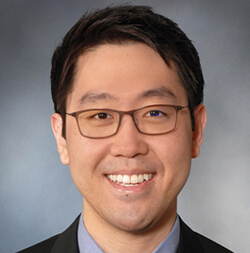 Andrew (Andy) Kim, MD, PhD
Chavkin Lab
Center for Developmental Biology and Regenerative Medicine, Seattle Children’s Research Institute
Dr. Andrew (Andy) Kim, MD, PhD, is a pediatric cardiology fellow at Seattle Children’s Hospital. As an Invent Clinical Scholar, he is interested in developing cellular, gene and protein-based therapies that target the underlying mechanisms of cardiovascular disease and improve long-term outcomes for children. In the lab of Nick Chavkin, PhD, Kim will investigate molecular and immune mechanisms underlying pediatric heart transplantation and heart failure, with a particular focus on identifying transcriptomic biomarkers predictive of early cardiac allograft failure. His work will integrate multi-omic approaches with clinical and longitudinal transplant data to develop more proactive, precision-based strategies for transplant surveillance and individualized therapy.
Kim earned his bachelor’s degree in biology from Duke University, where his early research at Duke Children’s Hospital focused on cardiac outflow tract development and congenital heart disease. During his post-baccalaureate fellowship at Pittsburgh Children’s, Kim helped establish high-resolution micro-CT and MRI approaches for high-throughput phenotyping of congenital heart disease in murine models, contributing to the identification of novel genes and mechanisms involved in cardiac malformations and cardiomyopathy. He later earned his MD and PhD from the University of Cincinnati College of Medicine and Cincinnati Children’s Hospital, where his graduate work identified monocytes and sterile inflammation as key drivers of mitral valve disease progression in Marfan syndrome, helping establish immune dysregulation as an important contributor to connective tissue-associated cardiovascular disease.
Kim is passionate about collaborative team science, mentorship and translating discoveries from bench to bedside. Throughout his training, he has mentored students and trainees in research design, scientific communication and career development while contributing to multidisciplinary collaborations spanning developmental biology, immunology, genetics, imaging and clinical cardiology. Outside of medicine and research, he enjoys spending time with his wife and family; exploring coffee culture and latte art; playing the violin; adventurous eating; and playing tennis.
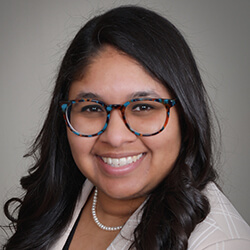 Tamara Thevarajah, DO, MS
Rau Lab
Ben Towne Center for Childhood Cancer and Blood Disorders Research, Seattle Children's Research Institute
Tamara Thevarajah, DO, MS, is a pediatric hematology-oncology fellow with an interest in translating advances in pediatric cancer biology, technology and therapeutics into more individualized approaches to risk assessment and treatment.
Under the mentorship of Rachel Rau, MD, she is investigating the use of next-generation sequencing to improve detection of central nervous system (CNS) disease in pediatric B-cell acute lymphoblastic leukemia.
Thevarajah completed medical school at Kansas City University College of Osteopathic Medicine, followed by a pediatric residency at the University of Nebraska Medical Center, Creighton University and Children’s Nebraska. Her prior research focused on retinopathy of prematurity; its relationship with maternal antecedents of preterm birth and bronchopulmonary dysplasia; and associated long-term clinical outcomes. Through this work, she translated clinical outcomes into evidence that informs patient care and developed a longstanding interest in risk prediction and early disease identification. This perspective informs her current work in pediatric oncology, where she seeks to leverage more sensitive methods of disease detection to inform CNS risk stratification and more precise treatment decisions for children with leukemia.
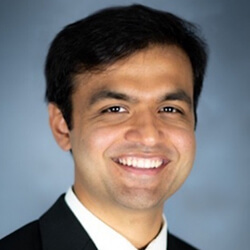 Sajal Tiwary, MD
Singh Lab
University of Washington
Sajal Tiwary, MD, is an adult infectious diseases clinical fellow pursuing post-doctoral research training in the lab of Pradeep Singh, MD. He completed his MD and internal medicine residency training at Washington University in St. Louis School of Medicine before moving to Seattle to start his infectious diseases training in 2025.
He has previously worked on projects in Drosophila neurobiology with Dr. Elizabeth Gavis; murine myocardial inflammatory profiling with Dr. Doug Mann; novel bacteremia diagnostics and healthcare-worker infections with Drs. Jennie Kwon and Christopher Farnsworth; and profiling carbapenemase-producing Enterobacterales with Dr. Sumanth Gandra. Tiwary is interested in the genetic and molecular underpinnings of the rapid development of antibiotic resistance among Gram-negative pathogens and leveraging these mechanisms for designing novel antibiotics and adjunctive agents.
He hopes to spend his time in the Singh Lab as an Invent Scholar cultivating a robust microbiology skillset; understanding and overcoming barriers in the antimicrobials development pipeline; and developing relationships with colleagues in the Invent community and beyond.
Outside of the lab and the hospital, Tiwary enjoys reading pretentious fiction, continuously re-learning the violin and viola, taking too many threes in pickup basketball and spiking his opponents in Super Smash Bros. Ultimate.
Affiliate Invent Clinical Scholars
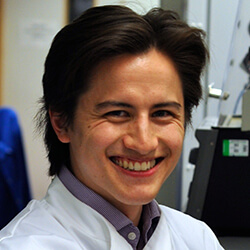 Andrew S. Ishizuka, MD, DPhil
King Lab
University of Washington
Andrew S. Ishizuka, MD, DPhil, is a clinical fellow in pediatric hematology-oncology at Seattle Children’s Hospital. In the lab of Neil King, PhD, he will be applying innovations in de novo protein design to enhance CAR-T cell efficacy.
Ishizuka has a particular interest in vaccines and immunotherapies. As a University of Washington undergraduate, he utilized transcriptomics and DNA vaccination to identify novel malaria T-cell antigens. During his graduate work in the NIH-Oxford program, he developed strategies for inducing tissue-resident CD8 T cells and translated a malaria vaccine from non-human primates through to phase 2 field efficacy studies. After earning his doctorate, he co-founded a biotech company, Avidea Technologies, that aimed to solve key manufacturing, safety and efficacy limitations of existing peptide-based immunotherapies. The core technology yields greater breadth and magnitude of T-cell responses by ensuring any T-cell epitope could be co-formulated with small molecule immunomodulators in uniform nanoparticles regardless of their underlying physicochemical properties. The company was acquired during his fourth year of medical school at Duke University. He oversaw the merger as senior vice president of translational research, and the technology entered clinical trials in 2025.
Ishizuka subsequently completed a pediatrics residency at Boston Children’s Hospital in the Accelerated Research Pathway. As a clinical fellow, he aims to develop new treatments that are more effective and less damaging to the developing bodies of young children.
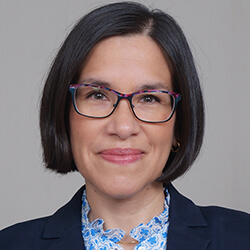 Lucía Luna Wong, MD, MSc, PhD
Buckner Lab
Center for Emerging and Re-Emerging Infectious Diseases, University of Washington
McDermott Lab
Center for Global Infectious Disease Research, Seattle Children's Research Institute
Lucía Luna Wong, MD, MSc, PhD, is an infectious disease postdoctoral clinical fellow at the University of Washington Division of Allergy and Infectious Diseases. As both a clinician and a researcher, Luna Wong is specializing in parasitic neglected tropical diseases (NTDs).
She completed undergraduate training in biology and zoology in her native Peru and earned her PhD in ecology and evolutionary biology from the University of Michigan, where she conducted extensive field and lab work to study the biodiversity and mechanisms of speciation of small Andean mammals. Driven by a growing fascination with infectious diseases, she set out to become a physician-scientist, studying medicine at Wayne State University and completing a residency in internal medicine at the University of Arizona.
Luna Wong joined the lab of Frederick Buckner, MD, in the Center for Emerging and Re-Emerging Infectious Diseases in 2025 to help identify candidate compounds that are safe and effective against Trypanosoma cruzi, the causative agent of Chagas disease. Her project is pursuing a novel strategy of exploiting targeted protein degradation (TPD) using proteolytic targeting chimeras (PROTACs) as therapeutics for trypanosome infections.
Currently, she is working with colleagues in UW Biochemistry and UW Pharmacology to develop functional PROTACs as proof of principle for the TPD approach in trypanosome parasites. Luna Wong is receiving additional mentorship from Suzanne McDermott, PhD, in the Center for Global Infectious Disease Research.