The Power of Research to Improve Emergency Department Care
Published
Featured Researchers





Abstract
By participating in research in Seattle Children’s Emergency Department, thousands of patients have helped generate evidence that improves care and outcomes for young people with acute injuries or illnesses.
A child has a seizure and their family calls 911. When the ambulance arrives, paramedics need to quickly give rescue medication to stop the child’s seizures and prevent brain injury. But calculating the proper dosage takes precious time.
Paramedics determine the child’s weight, calculate how many milligrams of medication they need, and then convert the number of milligrams into a proper dosage — all while getting the child in an ambulance, talking to scared families and rushing to the emergency department (ED).
That’s why researchers are asking an important question: Can a standard dosing chart eliminate the time it takes to do the calculations — and get kids the medicine they need faster?
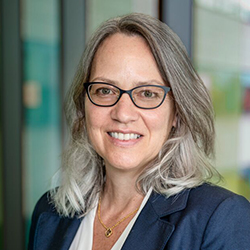
Eileen Klein, MD, MPH co-director of Emergency Medicine Research at Seattle Children's, and her colleagues are participating in this study through the Pediatric Emergency Care Applied Research Network (PECARN). Neil Uspal, MD Pediatric Emergency Medicine physician, leads this project at Seattle Children’s in partnership with Seattle Fire and King County Medic One.
“This is just one of the studies we’re working on, and it shows how conducting research and collecting data in the ED is critical,” Dr. Klein said. “It allows us to identify gaps in emergency care, refine our approaches, and ensure children and families receive the most effective care possible.”
Improving Emergency Care With Partners Across the Country
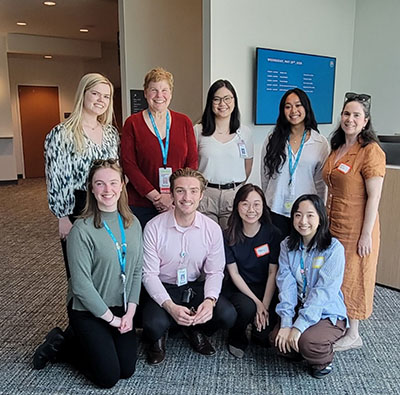 PECARN brings together emergency departments and emergency medical services agencies from more than 20 U.S. cities. Together, they can collect more data and find answers faster than any single ED could alone.
As a physician and researcher, Dr. Klein sees the impact of this research all the time. For example, one study that has significantly impacted ED care for kids is the PECARN Head Injury study, which helped standardize when a child with a head injury needs a CT scan.
"Many children come to the ED after a head injury, but very few of them actually need a CT scan," Dr. Klein said. "Now that we have criteria, I can print them out and walk the family through exactly how we know whether their child should get a CT scan. Families really appreciate that information. And it helps us limit a child’s exposure to radiation, because now we can be more certain we’re not doing CTs on children who don’t need them."
Seattle Children’s and PECARN are exploring many other exciting areas of ED research, including:
- When do children need CT scans for severe headaches?
- What is the right type of fluid to give to children with severe infections (sepsis)?
- What is the right amount of fluids to give children when helping them against a form of E coli that can damage the kidneys?
“PECARN has a rigorous process for choosing which research questions we ask because we want to make sure we’re asking important questions that can make a meaningful impact for children when they come to us for emergency care,” Dr. Klein said.
Honing Prevention for Severe Infections
Keeping kids out of the emergency room is another focus of Dr. Klein’s research. She sees many children who end up in the ED due to serious cases of respiratory infections like RSV and the flu. In an effort to change that, the ED research team, and infectious disease specialists Janet Englund, MD and Danielle Zerr, MD, MPH are part of the New Vaccine Surveillance Network. This CDC-backed program examines:
- How well current vaccines are working
- How often kids are hospitalized with vaccine-preventable disease
- How specific viral illnesses impact children who were previously healthy
- How viruses impact children with chronic illnesses
“Data from the New Vaccine Surveillance Network shows where prevention is working — and where we have gaps in prevention that can be mitigated by new prevention products. We aspire to keep children with preventable illnesses from getting sick enough to end up in the ED or being admitted to the hospital,” Dr. Klein said. “The information we collect is essential to making important decisions that affect public health.”
Why Philanthropy Matters More Than Ever
Thousands of Seattle Children’s patients have participated in ED studies — helping researchers answer important questions and improve care. Dr. Klein credits the high level of participation to her team’s ability to help families understand why research matters.
But sustaining that work takes ongoing funding. Several years ago, Dr. Klein and Julie Brown, MD, MPH established an endowment to support ED research. While the endowment is modest, Dr. Klein says every contribution helps — especially as National Institutes of Health (NIH) funding priorities shift and the future of federal research support becomes less certain.
“The data shows it again and again: Vaccines save lives, research saves lives,” Dr. Klein said. “NIH funding is critical to answering important questions that impact children and their families. Our team is deeply committed to this work — and its power to improve the lives of kids in our community and beyond.”