Current Research at the Gern Lab
Immunosuppressive Granuloma Microenvironments
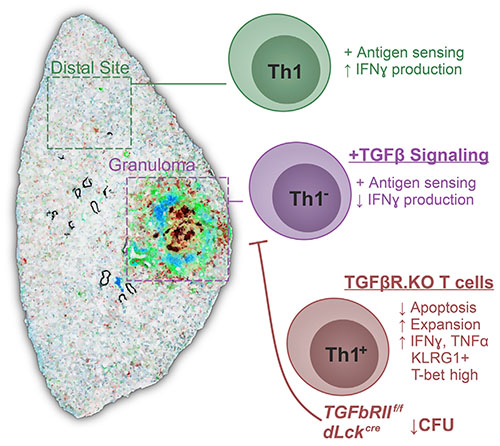 One of the main reasons immunity fails in TB is that immune cells cannot go to the right place. Furthermore, the granuloma environment limits cellular function even if they can traffic to the right place. Indeed, our previous work has found that T cell positioning and functioning are deficient within granulomas. A significant reason for this is the immunosuppressive cytokine TGFβ. We have found that when T cells no longer respond to TGFβ, they have improved function, live longer, and can improve infection outcomes.
Our lab is carefully characterizing the effects of TGFβ on immune cells within the granuloma in much more detail. Further, TGFβ is not the only immunosuppressive factor within granulomas. Therefore, we aim to determine what factors significantly inhibit immune responses to Mycobacterium tuberculosis within infected sites using our cutting-edge approaches.
The treatment for tuberculosis is challenging for patients. For uncomplicated pulmonary TB with no drug resistance, it involves four antibiotics for two months, followed by two antibiotics for four months, and often involves significant side effects. However, drug resistance makes treatment much more complex, involving medications with more side effects and prolonging the treatment duration by months. Our lab hopes to inform the design of improved treatments for TB by harnessing our knowledge of what is essential for protective immunity to inform the design of host-directed therapies (HDT). Such HDT could result in shorter treatment courses and less drug resistance.
Dissecting Granuloma Organization
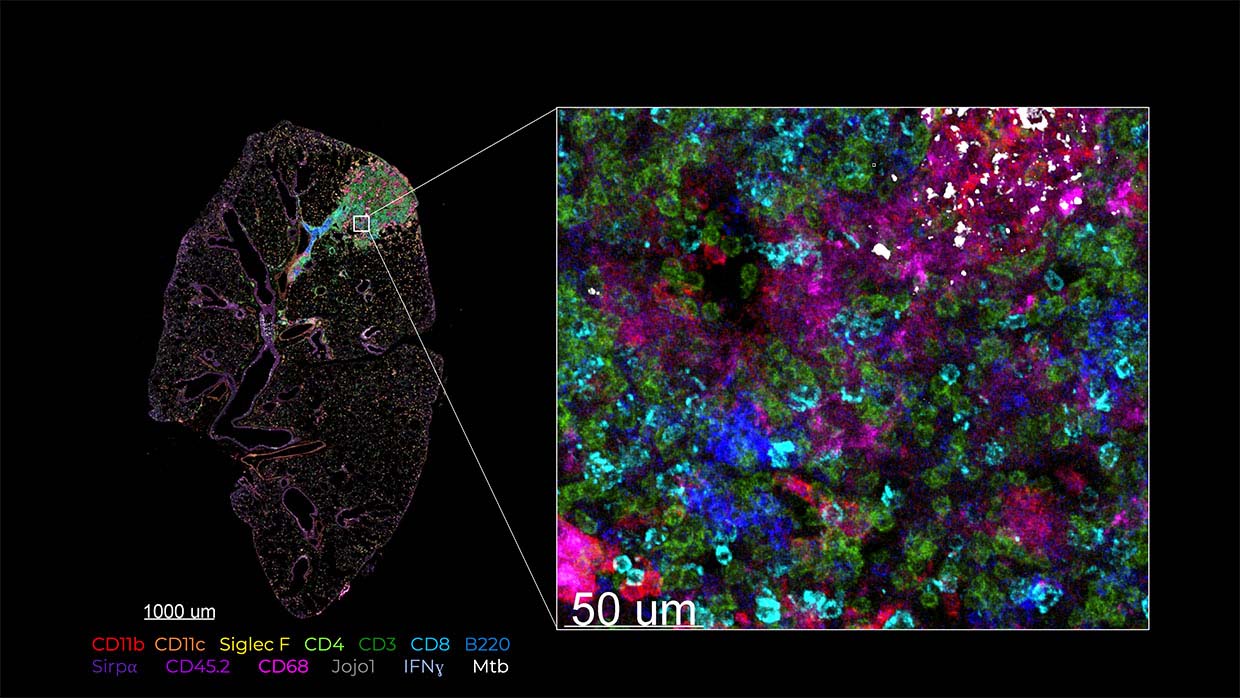
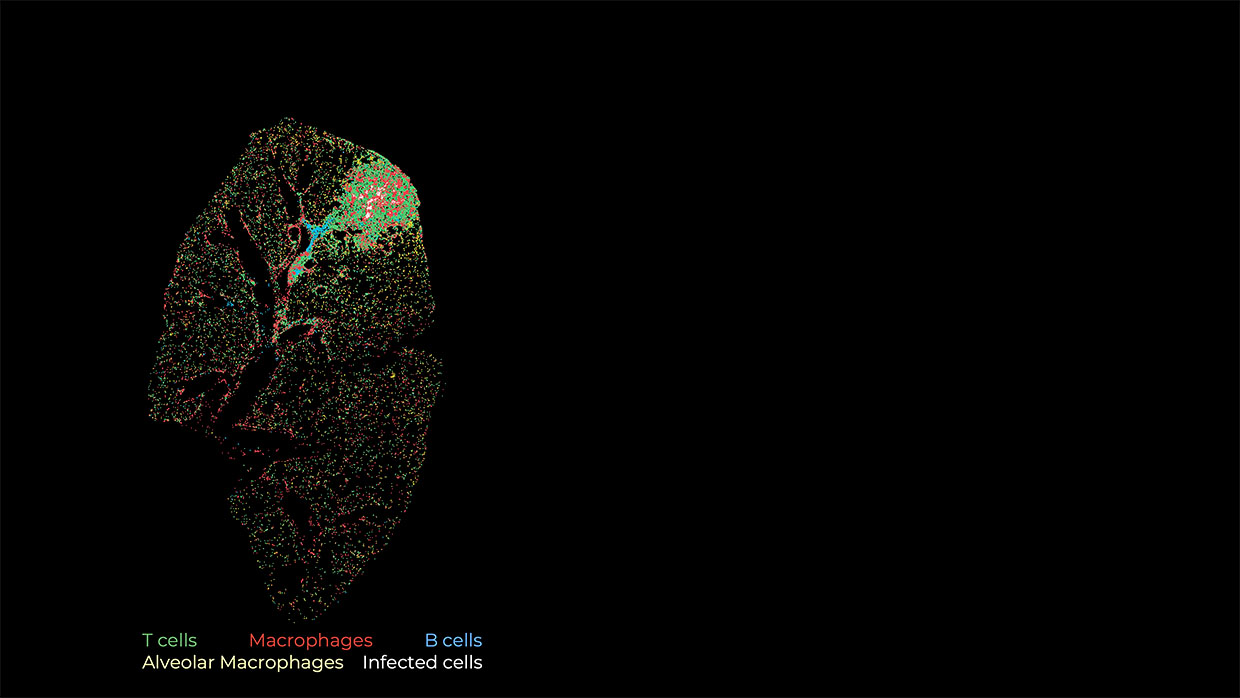
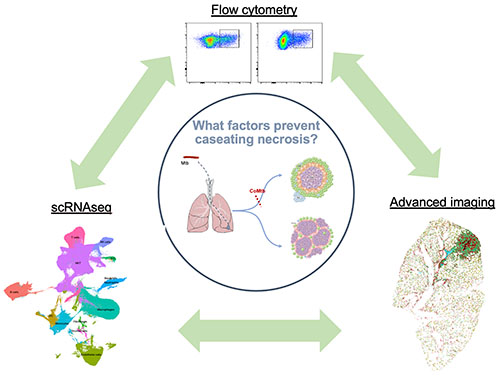 The stereotypic tuberculosis lesion is a granuloma with a necrotic core surrounded by a lymphocyte-rich cuff. In reality, tuberculosis can give rise to a broad spectrum of lesions, ranging from classic necrotic granulomas, all the way to pneumonia-like alveolitis. Autopsy studies from the pre-antibiotic era suggest that the presence of pre-existing immunity can skew lesions toward alveolitis. However, the mechanisms behind this observation, and the differences that occur within developing lesions to yield such a wide range of structures, are unclear.
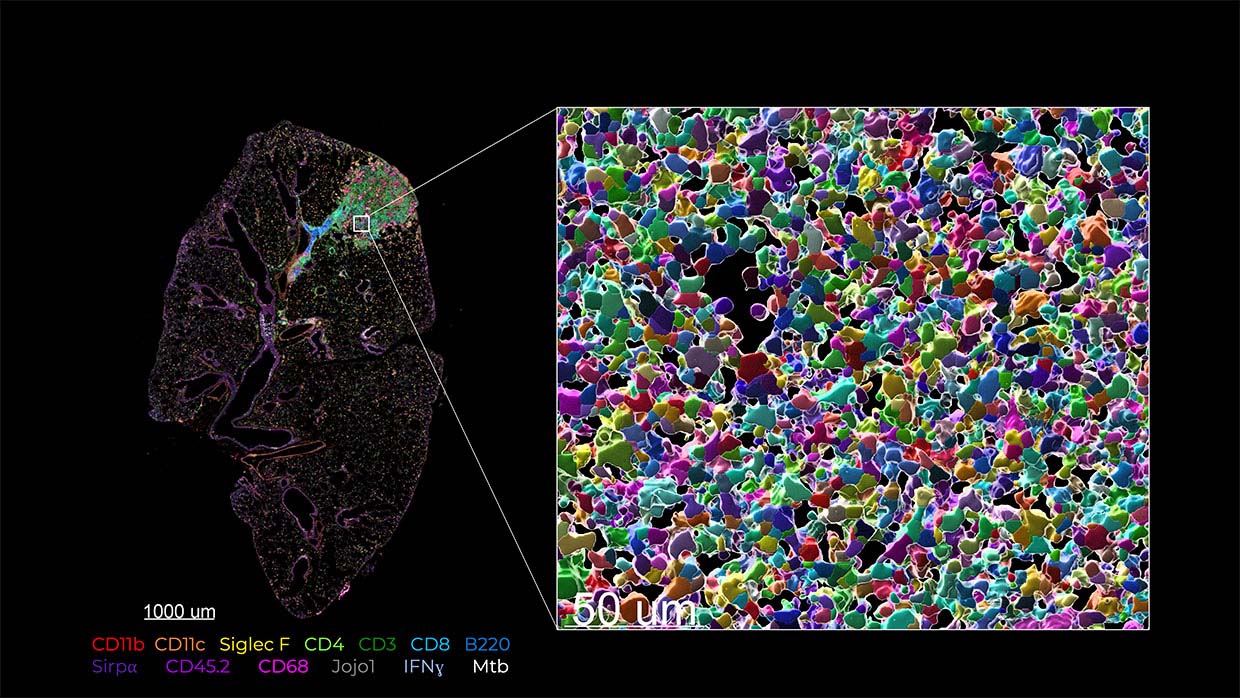
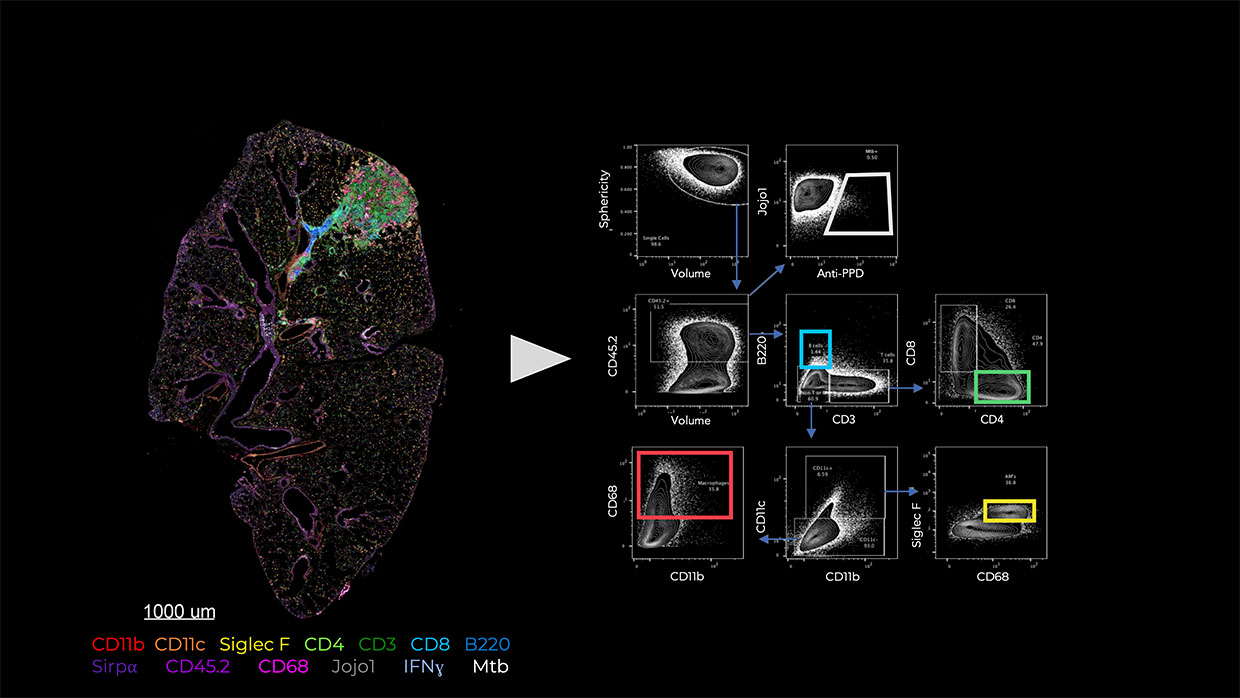
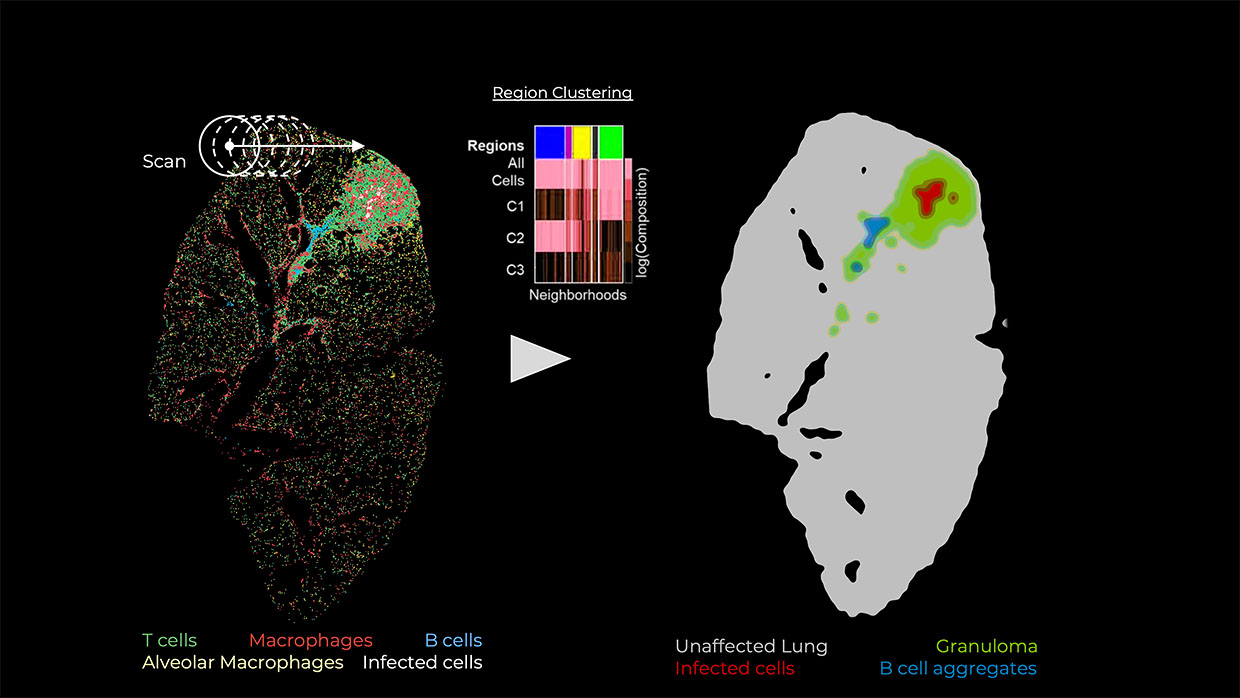
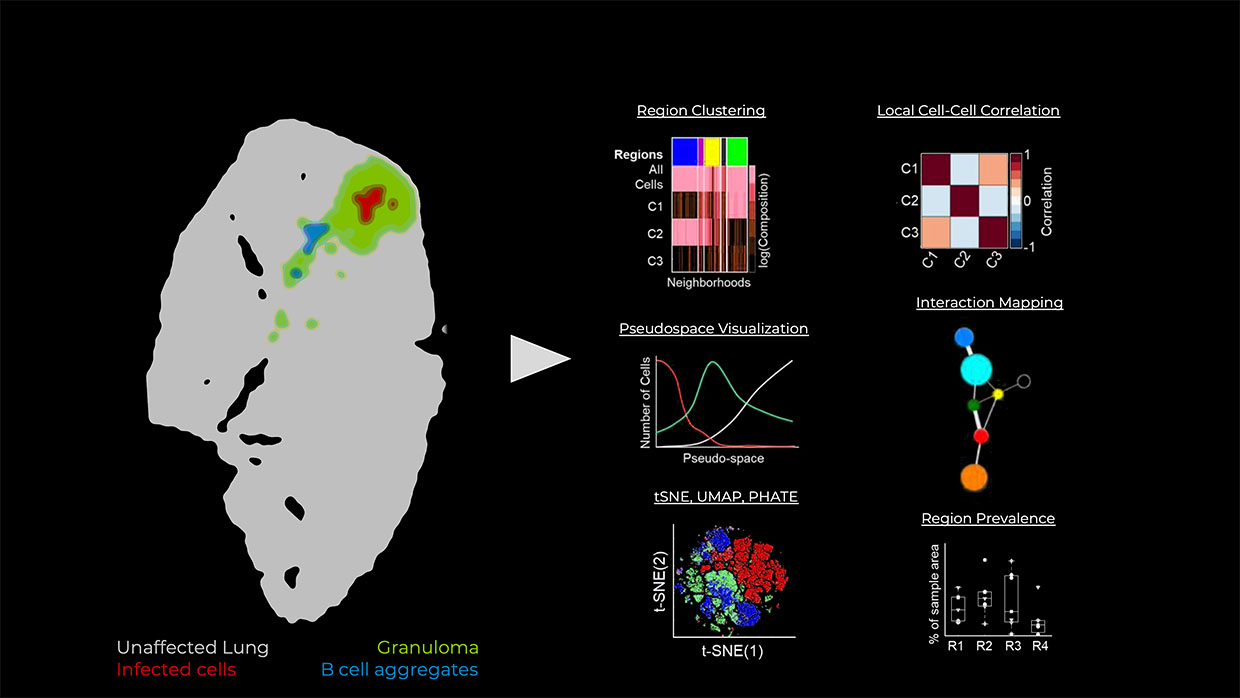
We are using a multimodal approach to understand what processes influence lesions to develop into such different structures. This approach includes multiple physiologic mouse models, human tissues, and advanced imaging techniques. This fundamental knowledge of what influences TB lesion development could inform the design treatments and vaccines to skew granulomas towards favorable structures.