
Aitchison Lab
The Power of Collaborative, Interdisciplinary Research
Our research builds on and drives advances in high-throughput technologies and computational biology (including affinity isolation of macromolecular complexes, mass spectrometry, microarrays, next-generation DNA sequencing, high-throughput microscopy and integrative modeling of structures and networks) to reveal systems-level insights into biology, with a focus on infectious diseases of global importance.
In the Aitchison Lab, we have spent several years using yeast as a tractable model system to develop technologies and systems biology approaches and to gain fundamental insights into cell biology. Building on these developments, advances in systems biology are being applied, through collaborative research programs, to dengue, HIV, trypanosomiasis, malaria and immune responses to infection. These diseases dramatically impact children and families.
The power of collaborative research and interdisciplinary research can transform the way science explores biological systems in their entirety to predict new behaviors and outcomes.
Systems Cell Biology
Systems cell biology melds high-throughput experimentation with quantitative analysis and modeling to understand critical processes that contribute to cellular organization and dynamics. Merging technology and computation offers an opportunity to objectively address unsolved cellular mechanisms, and has revealed emergent properties and helped to gain a more comprehensive and fundamental understanding of cell biology. The approaches developed to understand complexity of cells through a systems cell biology approach are broadly applicable in the context of pathogens and host cells responding to infection. Thus, we develop and apply these approaches in yeast to study nuclear organization and organelle biogenesis (nuclear pore complex structure/function and peroxisome biogenesis and function). We extend these approaches in the context of infectious disease, studying nuclear organization and organelle biogenesis in Plasmodium falciparum and trypanosomes. Similarly, network interrogation and modeling are applied to understand the complexity of cellular responses to pathogens.
Dynamic Interactomes
Most of the emergent properties of life are conferred by the dynamic interactions of two major classes of information-rich polymers, proteins and nucleic acids. These interactions form macromolecular machines and dynamic liaisons that transmit information and control cellular behaviors. Pathogenic alterations in molecular interaction networks (interactomes) underlie all diseases. Our understanding and modulation of biological systems, as well as their pathologies, thus relies on the ability to elucidate and interpret these interactions and their dynamics. For nucleic acids, recent advances have led to an explosion of genomic data. However, proteins are incredibly diverse in their abundance and their properties, making them highly versatile for the dynamic tasks at hand, but at the same time exceptionally difficult to analyze. It is for these reasons that the interactomic revolution still lags behind the genomic revolution.
The National Center for Dynamic Interactome Research (NCDIR) is a collaborative program that includes the Rockefeller University, the University of California at San Francisco, the Institute for Systems Biology and the Center for Global Infectious Disease Research at Seattle Children’s Research Institute. The program couples an established mass spectrometry resource, cell biology laboratories, a systems biology resource and a computational structural biology center. The NCDIR pioneers new and improved technical approaches and has integrated these technologies into a fundamentally novel “pipeline” approach to address the urgent need of the biomedical community for technologies that can rapidly, reliably and routinely reveal the dynamic cellular interactome. We begin by developing technologies for purifying and preserving, with high fidelity, various defined forms of the hierarchical arrangement of interactors surrounding any chosen macromolecule. We will then provide a comprehensive, highly quantitative, detailed temporal sampling of dynamic complexes. Such data are then used to generate structural and mechanistic models that are predictive, actionable and limit experiments to those that are most critical for advancing our understanding. The models aim to provide the biomedical community with the means for rational target-based intervention and drug design strategies. These approaches are beta-tested and refined via a selected set of collaborative projects that enter and exit our pipeline at any point, and which present specific technological roadblocks that have thus far limited the biomedical researchers.
Host-Pathogen Interactions During Virus Infection
All viruses depend on host cells for their life cycle. Dengue virus (DENV) is an important mosquito-borne virus that poses significant economic and public health burdens on much of the world, and is also believed to be a potential public health threat to the U.S. due to the recent geographical expansion of its mosquito vectors. Influenza is also a serious health concern, causing thousands of deaths in the U.S. each year and tens of thousands worldwide. In all cases of viral infection, the virus relies on host factors for replication and completion of the viral life cycle. Disruption of these interactions are potential targets for disruption of the virus’s ability to infect. Both the influenza and DENV genomes encode on the order of a dozen proteins and thus, the viruses rely on these few proteins to recruit numerous host factors. Large-scale, quantitative proteomics and molecular virology approaches are being used to identify host factors involved in the viral life cycles. Each interaction represents a putative drug target, and host proteins are systematically investigated for their roles in viral replication.
Partnership Opportunities
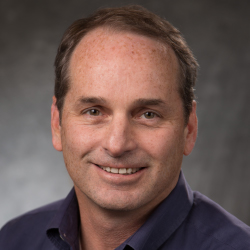
John Aitchison, PhD
John Aitchison, PhD, is an affiliate professor at the University of Washington and a president emeritus of the Center for Infectious Disease Research (CIDR), which joined CGIDR in October 2018. Aitchison previously held the position of chief science officer of CIDR to advance the mission through the development and application of systems biology approaches to infectious diseases. He received his PhD in biochemistry from McMaster University, Canada. He performed postdoctoral research in the Laboratory of Cell Biology at the Rockefeller University under the guidance of Professor Gunter Blobel (Nobel Laureate, 1999). Aitchison is a founding faculty member at the Institute for Systems Biology, where he served as senior vice president and executive director of integrative biology. Aitchison holds part-time, adjunct or affiliate faculty positions at the Institute for Systems Biology, University of Washington (biochemistry), the University of Alberta (cell biology) and the University of British Columbia (biochemistry). Outside of the lab, he enjoys spending time with his family, playing squash and racing sailboats.
-
Sara Afereti
Administrative Assistant Senior, Research
-
Senior Research Scientist, Management
-

Leslie Miller
Research Associate III
-
Bob Morrison
Senior Data Scientist
-
Research Scientist, Senior
-
Paul Olivier, PhD
Research Scientist, Senior
-
Therese Pacio
URM Intern
-
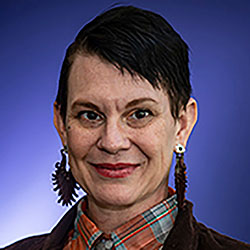
Tiffany Silver-Brace
Grants and Contracts Administrator
-
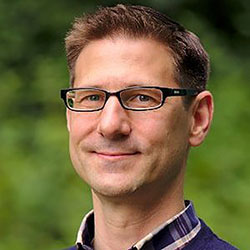
Jason Wendler, PhD
Lead Data Scientist