
Ahrens Lab
Improving adolescent health through research, support and community-centered programs
The Ahrens Lab is dedicated to improving adolescent health of those at highest risk of challenges during the transition to adulthood. Our work involves youth, family and community members as partners rather than participants. We collaborate with these partners to create and test interventions that address real-world health challenges facing teens and young adults.
Our research specifically centers on teens and young adults with higher health risks due to challenging early life experiences. Current and past grants have included substance use and overdose prevention as well as promotion of positive sexual and reproductive health outcomes.
Across all projects, we have a strong emphasis on practical, evidence-informed approaches that can be implemented and sustained beyond the research setting. We are committed to research that is inclusive, scalable and designed to make a meaningful impact on the health and well-being of adolescents, young adults and their families and communities.
Dr. Ahrens has received numerous grants from NIH/NIDA (UG3/UH3DA050189, UH3DA050189-S1, UH3DA050189-S2, R61/R33DA061846), NICHD (R21HD107311) as well as from the private foundations including the Conrad N. Hilton Foundation, the Pacific Hospital Preservation Development Association and OpenAI.
The POST Program: Support for young people transitioning out of Washington state’s juvenile rehabilitation system
The POST Program (Positive Outcomes through Supported Transitions) provides support to young people ages 12-25 who are transitioning out of Washington state juvenile rehabilitation back into the community. Our support coaches work one-on-one with youth and young adults to help them build a life that is meaningful to them.
The original NIH-funded POST Study utilized a sequential multiple assignment randomized trial design to test two interventions of different intensities based on the Adolescent Community Reinforcement Approach With Assertive Continuing Care model. This study showed that a flexible, supportive, intervention-emphasizing assertive case management focused on the youths’ own goals was associated with significantly reduced substance use among young people transitioning out of incarceration.
This project was originally funded by the National Institute on Drug Abuse and is now funded by the Washington state legislature.
The YOURS Project: Youth Overdose and Use Reductions in Rural Systems
The YOURS Study implements a codesign approach to develop and test a substance and overdose prevention program in rural juvenile legal systems. This project emphasizes legal system, youth, family and stakeholder partnerships to develop the model, local fit, implementation as well as behavioral outcomes (Hybrid Type II Stepped Wedge), and a focus on sustainability from the outset of the project.
We are currently working with rural juvenile county courts and other stakeholders across Washington state to build localized care navigator programs for young people who are involved in the county court system (or are at risk of becoming involved).
This project is funded by the National Institute on Drug Abuse.
PROTECT-AI, an artificial intelligence–powered overdose prevention tool designed specifically for youth
We're developing PROTECT-AI, an artificial intelligence–powered overdose prevention tool designed specifically for youth. This tool works as a supportive companion that checks in while someone is using substances alone.
This study will work directly with young people who have lived experience with mental illness and overdose to refine the tool's design and make sure it feels trustworthy, non-judgmental and works for people who need it most. Their input will shape a tool that could save lives by meeting young people where they are, using technology they're already comfortable with.
This research is funded by OpenAI and led by Seattle Children's in partnership with Boston Medical Center and Boston Children’s Hospital.
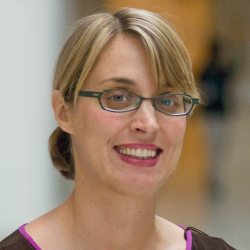
Kym R Ahrens, MD
Kym Ahrens, MD, MPH, is a researcher and general pediatrics, adolescent medicine and addiction medicine physician who has spent the past 25 years working to improve the health and well-being of adolescents and young adults. She has a special passion for caring for system-involved youth, both as a doctor and as a researcher. Dr. Ahrens is the medical director for Washington state’s juvenile rehabilitation system, where she strives to provide medical care and support that will support young people in building a life that they value.
-
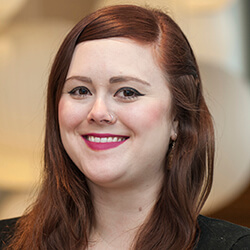
Katie Albertson
Manager
Katie Albertson is the research manager for the Ahrens Lab. She received a BA in psychology from the University of Washington and has a background in tobacco cessation counseling, patient services and program coordination. In her nearly 14 years at Seattle Children’s, her career has been dedicated to work that supports marginalized and vulnerable young people. She has supported Dr. Ahrens’s research on sexual health, foster youth, gender diverse youth and incarcerated young adults. Her favorite part of her work is seeing the positive differences made in the lives of young people. She believes in research as an important form of advocacy for voices that are often excluded and hopes to help improve the status quo for young people.
-
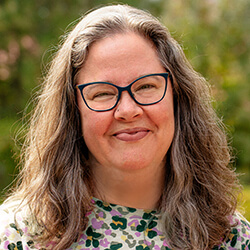
Alexis Coatney
Research Supervisor
Alexis Coatney has worked in pediatric clinical research for over 20 years at Seattle Children’s and the University of Washington. She is the administrative director of the POST Program. She has had the opportunity to work with families, children, teens and young adults in a variety of settings, most recently in the juvenile justice system. Previous projects have focused on reproductive and sexual health; mental health; oral health; medical training; environmental and occupational health; asthma; ADHD; and technology in the primary care setting. She has also dabbled in grants management and loves a budget.
-
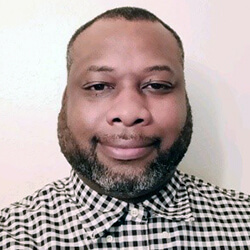
Shemonta Dean
Research Supervisor
Shemonta Dean is a clinical research supervisor and interventionist at Seattle Children’s Research Institute. He has spent the past 17 years working in the social justice field in supportive roles, assisting clients on their journey to a healthier lifestyle that doesn’t include drugs and alcohol. He enjoys working directly and indirectly with clients in all phases of life. In his current role, he works with youth and young adults before and after their release from Washington state’s juvenile rehabilitation system, using skills-based programs including the Adolescent Community Reinforcement Approach, motivational interviewing and trauma-informed techniques.
-
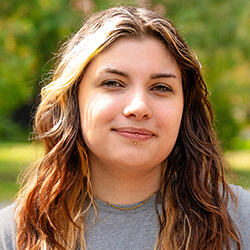
Liv Ellerton
Clinical Research Associate
Liv Ellerton received her BA in psychology from the University of Washington in 2023. After being a student volunteer for the Center for Child Health, Behavior and Development (CCHBD) at Seattle Children’s Research Institute during her senior year and loving the experience, she began working full-time at CCHBD right after graduation. She has a passion for aiding youth in underserved populations, with interests in mental health and trauma-informed practices. She plans on getting her PhD in public health. Outside of the lab, she's seen playing with her mini-Aussie and obsessing over houseplants and rocks.
-
Icela Gonzalez
Interventionist/Support Coach
Icela Gonzalez is a first-generation college graduate who earned her degree in law and justice, and sociology, from Central Washington University in 2018. She has over eight years of experience working directly with juvenile offenders, including six years as a counselor supporting adolescents and young adults. She is passionate about working with youth and helping them navigate challenges while recognizing their potential for growth and change. She is bilingual and fluent in Spanish, which allows her to better connect with and support the diverse communities she serves. She enjoys building meaningful relationships with the young people she works with and feels grateful to play a role in guiding them toward healthier choices and brighter futures.
-
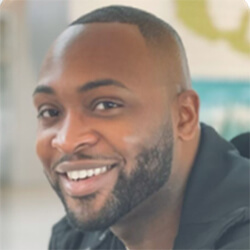
Rashaud Hayes
Interventionist/Support Coach
Rashaud Hayes graduated from Washington State University studying criminology in 2018. He has been working with underprivileged youth for the last 10 years. He started working with youth in the foster care system and then transitioned to helping juvenile offenders within the past six years. he is very passionate about working with the younger generation, as he understands that most do not intend to go down the wrong path; they may not know any other path other than the one they are on. He is passionate about making sure the youth can see all points of view when making decisions. "You don't know what you don't know" is a quote he often uses. The favorite part of his job is watching youth solve problems themselves with skills they have learned to build through the POST Program. This is a very rewarding feeling, and he hopes to continue this as the program continues to serve more youth in the community.
-
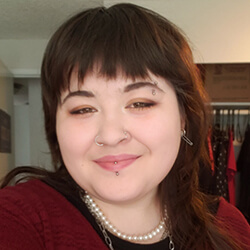
Lexie Kolberg
Clinical Research Associate
Lexie Kolberg received her BA in psychology and social and cultural analysis from New York University, where she first discovered her love for research through volunteering in cognitive development labs. She has been a clinical research coordinator for POST since 2022. Her favorite part of her job is talking with the POST youth and she plans to continue working with people who are incarcerated throughout her career. She hopes to continue her training and education through pursuing a PhD in the near future.
-
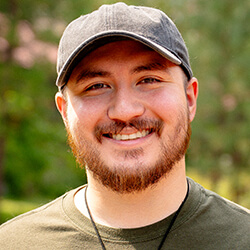
Dom Peña
Interventionist/Support Coach
-
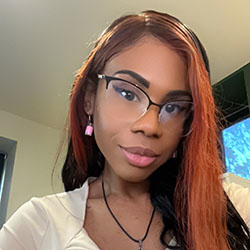
Dominique Savage
Interventionist/Support Coach
Dominique Savage graduated with her BA in Communications from New York University, MA in Communications: Communities and Networks and MA in Applied Child & Adolescent Psychology from University Of Washington. She has experience working as a therapist serving the Neurodiverse community and youth with Substance Use Disorder. She is especially passionate about working with marginalized communities and recognizes the importance of honoring the cultural, social and systemic factors that shape each person's lived experience to strengthen coping skills, build resilience and cultivate meaningful growth while deepening their connection to themselves, their relationships and their community. She hopes to continue her training and education through pursuing a PhD in the near future.