|
These directions will help you care for your child after they have had their appendix removed. |
How do I care for my child after surgery? |
Skin around the cutThere may be a small amount of drainage on the dressing that covers the cut right after surgery. If skin glue (dermabond) was used to cover the cut, it is OK to bathe and shower 2 days after surgery, but no tub bathing or swimming for a week after surgery. If Steri-Strips were used to cover the cut, then it is OK to shower 2 days after surgery, but no tub bathing or swimming for a week after surgery. These will usually fall off or peel off in 10 to 14 days. The cut will be closed with dissolvable stitches. You will not see any stitches on the outside skin. |
DietYour child can eat their normal foods after they leave the hospital. |
Pain and comfortWe partner with you and your child to prevent and relieve pain as completely as possible. You know your child best. No matter the level of your child’s pain, believe they are hurting and respond right away. After a surgery your child is likely to have some pain and discomfort. Your child may need pain medicine for a few days at home. Most children can use an alternating schedule of acetaminophen (Tylenol) and ibuprofen (Motrin, Advil) for the first 3 days after surgery for pain. In addition to medicine prescribed for pain, we will work with you to create a plan that encourages coping activities to treat pain and provide support. Help your child get better, faster with good pain treatment. A slow return to activity will help keep your child comfortable. Heat and ice can also help treat pain. We encourage you to take an active part in your child’s recovery by talking with your child’s care team about options for your child. |
ActivityYour child may be able to return to their normal activity 2 weeks after surgery. In some cases, your child’s surgeon may want your child to be less active for a longer time, and they will tell you. |
Return to schoolMost children are ready to return to school a couple of days after coming home from the hospital. |
Medical follow-upWe will call you about 5 working days after you leave the hospital to see how your child is doing. If your child needs follow-up, telemedicine, or in-person general surgery clinic appointments are available. |
When do I call the doctor?If you have concerns about your child, call the General Surgery clinic at 206-987-2794 (option 4), during the day. After hours or on the weekends, call 206-987-2000 and ask the operator for the general surgeon on call. Please call if your child has any of these symptoms:
|
Where can I learn more about my child’s medical record and hospital information?MyChart may give you or your child access to your medical record, healthcare team and hospital information. If you would like to create an account, go to our website at seattlechildrens.org and click on “MyChart” on the blue navigation bar near the top of the homepage. Based on your or your child’s age and medical status, choose from one of the options under the heading “Need an Account?” After you submit the form, a member of our registration team will send you an email with further instructions. If you have questions or need help with signing up for a MyChart account, please call the MyChart Help Desk at 206-987-4444 or send an email to [email protected]. |
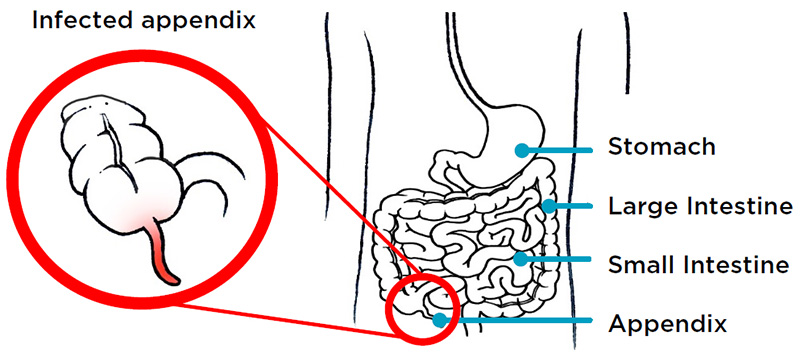
What is an appendectomy?Appendectomy is the surgery that removes the appendix. The appendix is a small, narrow pouch attached to the large intestine. When the appendix becomes infected and inflamed (appendicitis)if it is not removed, the appendix can perforate (a hole can form, or it can break or rupture). This can spread infection around the belly and make your child very sick.
|
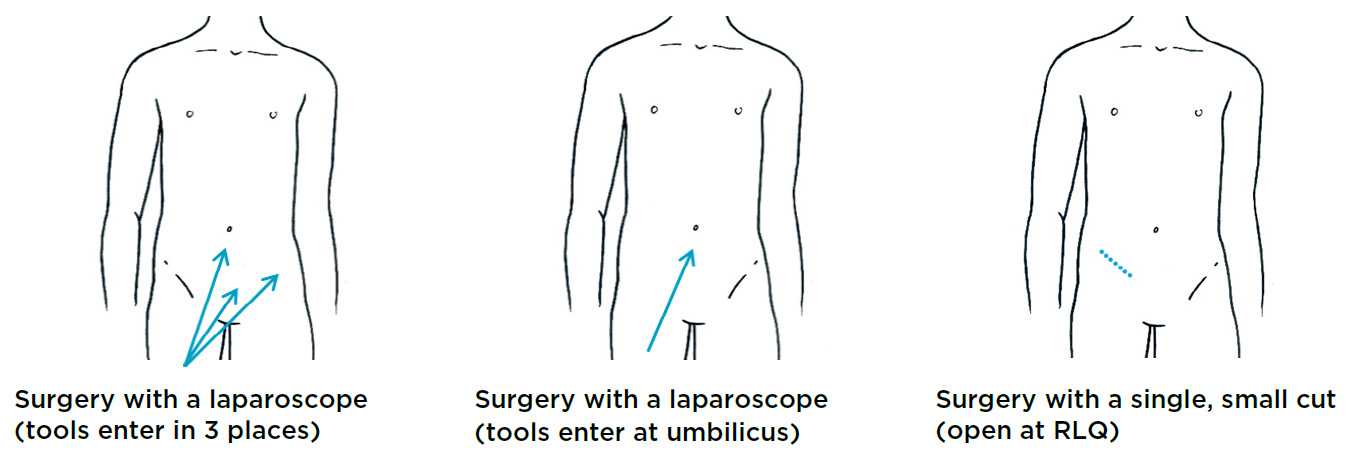
What happened during appendectomy surgery?We gave your child an intravenous line (IV). This is a thin tube that goes into a blood vessel. It is used to give your child fluids, pain medicine and antibiotics, to protect against infection. We gave your child medicine to make them sleep without pain during their surgery (anesthesia). The surgeon removed the appendix using 1 of 3 methods. They either used a laparoscope, which is a thin tool that has a tiny camera and light on the end, or they may have removed the appendix through a single, small cut. If you would like to learn more about the surgery, ask your child’s health care provider. |
|
|
|
To Learn More
Free Interpreter Services

|