Augmentative and Alternative Communication (AAC)
-
Español PDF
What is augmentative and alternative communication (AAC)?
- Augmentative means additional and alternative means different. AAC includes all forms of communication, other than talking (oral speech), that we use to express thoughts, needs, wants and ideas. We all use AAC when we make facial expressions or gestures, use symbols or pictures, or write.
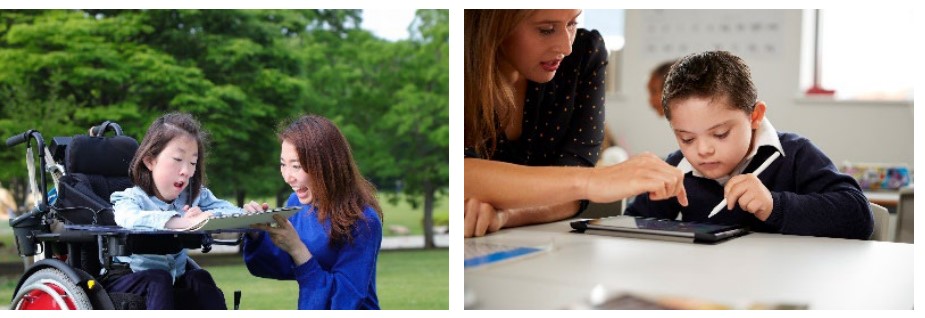
- Children with severe speech or language problems rely on AAC to supplement existing speech or to help communicate when speech is not functional. Special augmentative aids are available to help children express themselves. These may include picture and symbol communication boards and electronic devices.
- AAC can help increase social interaction, school performance and feelings of self-worth.
- Using AAC does not stop your child from talking if they are able to. The AAC devices and aids help them communicate.
Who benefits from AAC?
When a child has complex communication needs because of a specific medical diagnosis, AAC can help.
A child may have trouble with speech due to:
- Cerebral palsy
- Autism spectrum disorder
- Developmental language delays
- Progressive neurological disorders
- Certain genetic disorders
- Getting their tongue, lips and jaw to move correctly for talking (apraxia) and other motor speech disorders
- Acquired language disorders due to stroke or traumatic brain injury
- Temporary medical conditions such as a breathing tube in the front of the neck (tracheostomy)
Where can I find more information?
- American Speech Language Hearing Association
asha.org - International Society for Augmentative Alternative Communication
isaac-online.org
What are the types of AAC systems?
Here are some types of AACs:
Unaided communication systems
These rely on the user’s body to convey messages. Examples include eye pointing, gestures, body language and sign language.

Aided communication systems
These require the use of tools or equipment in addition to your child’s body. Aided communication methods can range from paper and pencil to communication books or boards to devices that produce voice output (speech generating devices or SGDs) or written output. Electronic communication aids allow your child to use picture symbols, letters, words and phrases to create messages. Devices can be programmed to produce different spoken languages.

Who do I call to make an appointment?
Call Speech and Language Services at 206-987-2104.