Skip to navigation menu Skip to content
  • MyChart
  • Telemedicine
  • Healthcare Professionals
  • Careers
  • Alerts
  • Donate Now
  • I want to …
      • Go to MyChart
      • Find a Doctor
      • Make an Appointment
      • Find a Location
      • Visit ED or Urgent Care
      • Get Driving Directions
      • Refill a Prescription
      • Contact Children's
      • Pay My Bill
      • Estimate My Cost
      • Apply for Financial Assistance
      • Request My Medical Records
      • Find Patient Education
      • Volunteer
      • Donate
      • Refer and Manage a Patient
Search
Search
  • Your Visit
  • Conditions
  • Clinics
  • Research
  • Health & Safety
  • Giving
  • Press Room
  • I want to …
      • Go to MyChart
      • Find a Doctor
      • Make an Appointment
      • Find a Location
      • Visit ED or Urgent Care
      • Get Driving Directions
      • Refill a Prescription
      • Contact Children's
      • Pay My Bill
      • Estimate My Cost
      • Apply for Financial Assistance
      • Request My Medical Records
      • Find Patient Education
      • Volunteer
      • Donate
      • Refer and Manage a Patient
Donate Now
  • Main Menu
  • On This Page

    Jump to a section on this page:

Restless Legs Syndrome

  • Español PDF

What is restless leg syndrome?

Restless legs syndrome is a movement disorder in which a child or adolescent experiences uncomfortable sensations in the legs during periods of rest or sitting still. The sensations are usually described as creepy, crawly, tingling or painful. Some parents interpret their child’s complaints as “growing pains.”

Rubbing the legs may make them feel better. Because of the leg discomfort and increased leg movements, it often takes a long time for a child with restless legs syndrome to fall asleep at bedtime.

A second sleep disorder that often goes along with restless legs syndrome is periodic limb movement disorder (PLMD). This is also a movement disorder in which the legs kick or twitch during sleep. Unlike restless legs syndrome disorder, a child with PLMD is usually not aware of the symptoms, although a parent may observe kicking and restless sleep. The only symptom may be daytime fatigue that is a result of the disturbed sleep.

What causes restless leg syndrome?

Restless legs syndrome can run in families, and thus there is likely a genetic basis to some cases. It can also be related to low iron stores in the brain, even in the absence of anemia. In addition, some children with chronic diseases, such as diabetes and kidney disease, are at increased risk for developing restless legs syndrome. Some medicines can also worsen restless legs syndrome.

What are the symptoms of restless leg syndrome?

The symptoms of restless legs syndrome include:

  • Leg discomfort. Children or adolescents often describe these uncomfortable leg sensations as creepy, crawly, painful or tingling. These sensations usually occur at bedtime but can also occur at other times of inactivity, such as during long car rides or while watching a movie.
  • Leg movements. To relieve the leg discomfort, children and adolescents with restless legs syndrome often have an irresistible urge to move their legs, whether by tossing and turning while lying in bed, or by walking or running about at bedtime.
  • Sleep disruption. Children and adolescents with restless legs syndrome often take a long time to fall asleep because of the leg discomfort and need to move. They not only have problems falling asleep but may also have difficulty staying asleep.
  • Bedtime behavior problems. Because of the difficulty with falling asleep, parents may report that their child is a problem at bedtime due to not staying in bed.
  • Daytime sleepiness. The difficulties with falling asleep and staying asleep can result in significant daytime sleepiness.
  • Behavior and academic problems. Children and adolescents with restless legs syndrome may have daytime behavior and academic problems, such as hyperactivity, impulsivity and irritability, which is the result of the sleep disruption

How is restless legs syndrome diagnosed?

There is no definitive test for restless legs syndrome, so diagnosis is made based on the description of symptoms. A medical history and physical examination will also be done to exclude other problems. Finally, an overnight sleep study may be recommended to evaluate for other sleep disorders, especially PLMD.

How is restless legs syndrome treated?

Treatment for restless legs syndrome may involve any of the following:

  • Change bedtime habits. Given that the leg discomfort gets worse the longer the child or adolescent lies in bed, it is usually better for the child to wait to get into bed until she is ready to turn out the light. Therefore, the bedtime routine, such as reading stories, should all occur out of bed.
  • Avoid caffeine. Caffeine can make restless legs syndrome worse; so all caffeine should be avoided. Caffeine can be found in many sodas, tea and coffee, but also in chocolate and medicines (e.g., Midol, Excedrin).
  • Reduce the discomfort. Massage, cold compresses or a heating pad may provide temporary relief.
  • Rule out iron deficiency. Low levels of iron can contribute to restless legs syndrome symptoms, so an iron supplement may be prescribed.
  • Consider medication. For children and adolescents with restless legs syndrome who have significant sleep disruption, medication may be recommended. There are a number of different types of medications that can help.


© Mindell JA & Owens JA (2003) A Clinical Guide to Pediatric Sleep: Diagnosis and Management of Sleep Problems. Philadelphia: Lippencott Williams & Wilkins. Used with permission.

To Learn More

  • Sleep Medicine
    206-987-5072
  • Ask your child’s healthcare provider
  • seattlechildrens.org/patient-education

Free Interpreter Services

  • In the hospital, ask your nurse.
  • From outside the hospital, call the toll-free Family Interpreting Line, 1-866-583-1527. Tell the interpreter the name or extension you need.
Seattle Children's Hospital

Seattle Children’s offers free interpreter services for patients, family members and legal representatives who are deaf or hard of hearing or speak a language other than English. Seattle Children’s will make this information available in alternate formats upon request. Call the Family Resource Center at 206-987-2201. This handout has been reviewed by clinical staff at Seattle Children’s. However, your needs are unique. Before you act or rely upon this information, please talk with your healthcare provider.

© 2026 Seattle Children’s, Seattle, Washington. All rights reserved.

10/01/2026
PE1793
Patient and Family Education | Sleep Medicine

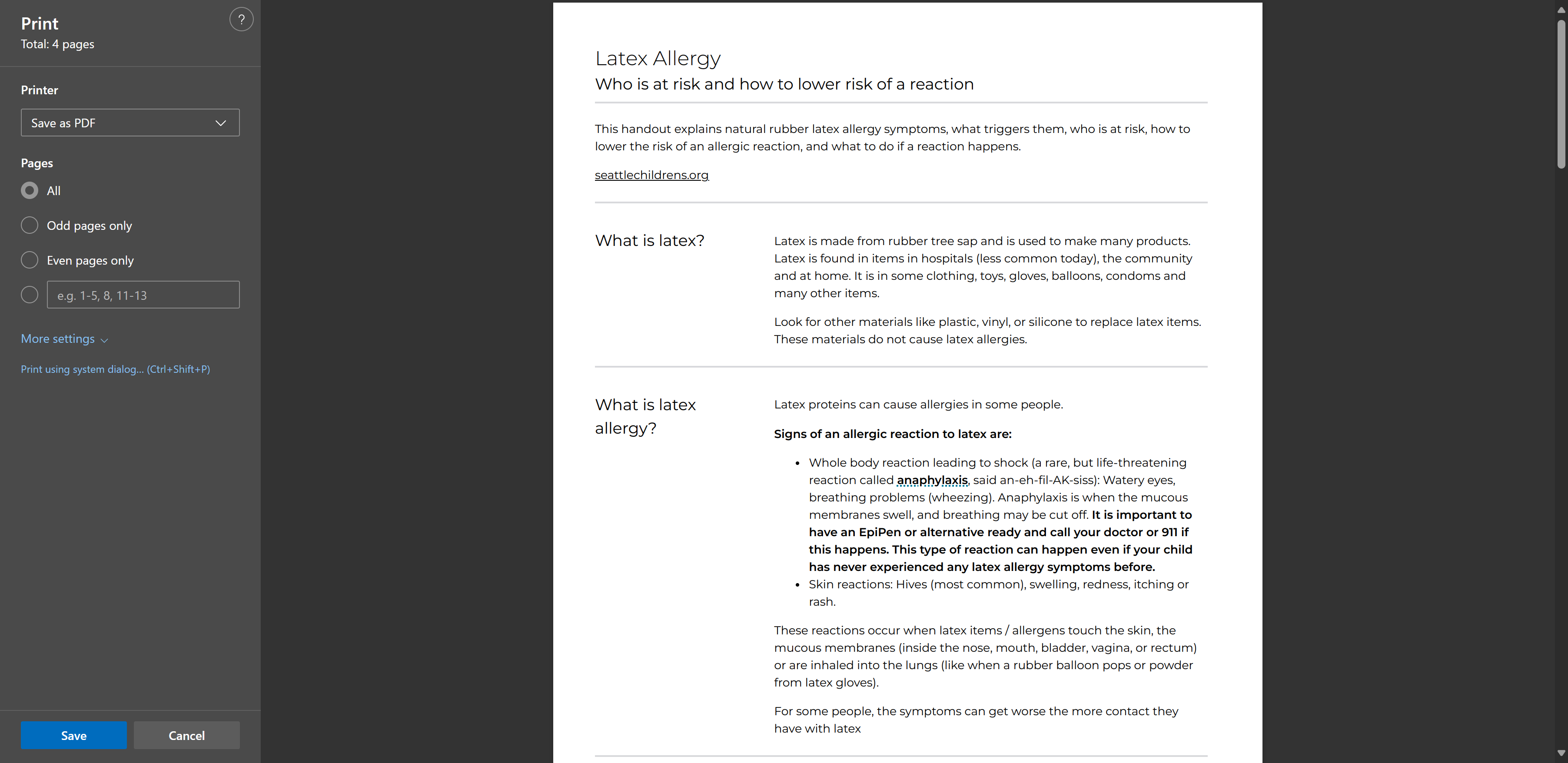
Download Instructions

To download as a PDF, choose "Save as a PDF" in the print dialog, then click "Save".

screenshot of print dialog

About Us
  • About Seattle Children’s
  • Contact Us
  • Locations
  • Visiting Seattle Children’s
  • Press Releases
  • Growing for Future Grown-Ups
  • Price Transparency
Community
  • Healthcare Professionals
  • Events
  • Classes
  • Volunteering
Experience and Outcomes
  • Advancing Healthcare Experience and Outcomes
  • Values
  • Nondiscrimination and Interpreters Notice
  • Accessibility and Special Needs
About This Site
  • About This Website
  • Feedback
  • Terms of Use
  • Privacy
  • My Health My Data
  • Notice of Privacy Practices
  • Employees
  • Working From Home and Remote Access Help
  • Vendors

©2026 Seattle Children’s Hospital

4800 Sand Point Way NE, Seattle, WA 98105

206-987-2000 866-987-2000 (toll-free) 206-987-0391 (TTY)

U.S. News & World Report Best Children's Hospitals Honor Roll Badge Forbes America's Best Large Employers Magnet Recognized Nursing Program Children's Miracle Network Hospitals

Seattle Children’s complies with applicable federal and other civil rights laws and does not discriminate, exclude people or treat them differently based on race, color, religion (creed), sex, gender identity or expression, sexual orientation, national origin (ancestry), age, disability, or any other status protected by applicable federal, state or local law. Financial assistance for medically necessary services is based on family income and hospital resources and is provided to children under age 21 whose primary residence is in Washington, Alaska, Montana or Idaho.