Skip to navigation menu Skip to content
  • MyChart
  • Telemedicine
  • Healthcare Professionals
  • Careers
  • Alerts
  • Donate Now
  • I want to …
      • Go to MyChart
      • Find a Doctor
      • Make an Appointment
      • Find a Location
      • Visit ED or Urgent Care
      • Get Driving Directions
      • Refill a Prescription
      • Contact Children's
      • Pay My Bill
      • Estimate My Cost
      • Apply for Financial Assistance
      • Request My Medical Records
      • Find Patient Education
      • Volunteer
      • Donate
      • Refer and Manage a Patient
Search
Search
  • Your Visit
  • Conditions
  • Clinics
  • Research
  • Health & Safety
  • Giving
  • Press Room
  • I want to …
      • Go to MyChart
      • Find a Doctor
      • Make an Appointment
      • Find a Location
      • Visit ED or Urgent Care
      • Get Driving Directions
      • Refill a Prescription
      • Contact Children's
      • Pay My Bill
      • Estimate My Cost
      • Apply for Financial Assistance
      • Request My Medical Records
      • Find Patient Education
      • Volunteer
      • Donate
      • Refer and Manage a Patient
Donate Now
  • Main Menu
  • On This Page

    Jump to a section on this page:

Narcolepsy

  • Español PDF

Narcolepsy appears to be a disorder of the part of the central nervous system that controls sleep and wakefulness.

What is narcolepsy?

Narcolepsy is a chronic (lifelong) disorder that affects the brain and is characterized by a permanent and overwhelming feeling of sleepiness. Narcolepsy affects many children, and most cases go undiagnosed and untreated. Although it is a relatively uncommon condition, its impact on a child’s life can be dramatic. It affects children of all genders equally, and symptoms usually develop after puberty, with most people reporting the first symptoms of narcolepsy between the ages of 15 and 30.

What are the symptoms of narcolepsy?

The symptoms of narcolepsy can appear all at once or they can develop slowly over many years. The four most common symptoms are:

  • Excessive daytime sleepiness. It is usually the first symptom of narcolepsy. Children with narcolepsy often report feeling tired all the time. They tend to fall asleep not only in situations in which many people feel sleepy (after meals or during a dull lecture), but also when most people would remain awake (while talking to someone or writing a letter). Individuals with narcolepsy may also fall asleep at dangerous times (like when driving a car).
  • Cataplexy. Cataplexy is the sudden, brief loss of muscle control triggered by a strong emotion, such as laughter, anger, or surprise. In children, cataplexy can also occur spontaneously. Cataplexy can range from subtle weakness in the face or slurred speech, to complete collapse. Cataplexy is sometimes the first symptom of narcolepsy but can also develop several years after daytime sleepiness.
  • Sleep paralysis. Sleep paralysis is a feeling of being paralyzed, including being unable to talk or move for a brief period, either when falling asleep or after waking up. Touching the person usually causes the paralysis to disappear.
  • Hypnagogic hallucinations. These are vivid, dream-like experiences that are difficult to distinguish from reality, occurring at sleep onset or after awakening. The images are often scary, such as of strange animals or prowlers, and are particularly frightening because the child is awake but has no control over the action.

A child or adolescent with narcolepsy may also have other symptoms like:

  • Automatic behavior is the performance of familiar, routine, or boring tasks without full awareness or later memory of doing them. Sometimes a child may actually fall asleep and continue an activity, but not recall having done it when awakened. Examples of automatic behavior include writing a letter or doing homework.
  • Disturbed nighttime sleep frequently occurs in children and adolescents with narcolepsy. Although they have difficulty staying awake during the day, they may also wake frequently during the night. These multiple nighttime awakenings make the daytime sleepiness even worse.
  • Other symptoms commonly seen in children and adolescents with narcolepsy include unexplained weight gain, early onset puberty, difficulty concentrating, and symptoms of depression including lack of motivation. These symptoms may interfere with your child’s ability to keep up in school and should be discussed with their healthcare provider right away.

What causes narcolepsy?

Although narcolepsy has been broadly studied, its exact cause is not known. Narcolepsy is a disorder of the part of the central nervous system that controls sleep and wakefulness. Cataplexy, sleep paralysis, and hypnagogic hallucinations occur because of REM (rapid eye movement) sleep intrusion into wakefulness. Narcolepsy can run in families, but many children with narcolepsy do not have relatives who are affected. Narcolepsy is not caused by psychiatric or psychological problems.

How is narcolepsy diagnosed?

Narcolepsy is usually diagnosed by medical history, an overnight sleep study, and nap study the following day. The nap study evaluates for daytime sleepiness and involves taking four or five naps separated by 2 hours throughout the day. The length of time needed to fall asleep and whether REM sleep occurs is recorded.

How is narcolepsy treated?

There is no cure for narcolepsy, but its symptoms can usually be controlled so that a child or adolescent with narcolepsy can lead a normal life. The treatment plan usually involves lifestyle changes, medicine and education.

  • Medicine. One or more medicines are usually prescribed to control excessive daytime sleepiness and cataplexy. Caffeine should be avoided in the late afternoon and evening, so that nighttime sleep is not disturbed.
  • Lifestyle changes. The effective treatment of narcolepsy requires not only medicines but also adjustments in lifestyle. The following suggestions can lead to substantial improvement:
    • Follow a strict sleep-wake schedule that ensures adequate sleep. Your child should go to bed and get up at the same time each day.
    • Take scheduled short naps once or twice each day, as needed
    •  Increase physical activity; avoid boring or repetitive tasks.

Avoid activities that can be dangerous, such as driving, swimming or cooking, except during times when you know your child will be alert.

Education is important

Narcolepsy can be a devastating disorder if family, friends, and teachers do not understand it, so education is essential. Daytime sleepiness may be mistaken for laziness, boredom or lack of ability. The experiences of cataplexy and dreaming during wakefulness may be wrongly seen as a psychiatric problem. Be sure to educate family members and help your child’s friends and their parents understand narcolepsy. Most importantly, make sure your child’s teachers understand the disorder. Small adjustments in the classroom, such as being seated in the front of the class and being chosen to run classroom errands, can make a tremendous difference in a child’s academic performance.

© Mindell JA & Owens JA (2003). A Clinical Guide to Pediatric Sleep: Diagnosis and Management of Sleep Problems. Philadelphia: Lippincott Williams & Wilkins. Used with permission.

To Learn More

  • Sleep Medicine
    206-987-5072
  • Ask your child’s healthcare provider
  • seattlechildrens.org/patient-education

Free Interpreter Services

  • In the hospital, ask your nurse.
  • From outside the hospital, call the toll-free Family Interpreting Line, 1-866-583-1527. Tell the interpreter the name or extension you need.
Seattle Children's Hospital

Seattle Children’s offers free interpreter services for patients, family members and legal representatives who are deaf or hard of hearing or speak a language other than English. Seattle Children’s will make this information available in alternate formats upon request. Call the Family Resource Center at 206-987-2201. This handout has been reviewed by clinical staff at Seattle Children’s. However, your needs are unique. Before you act or rely upon this information, please talk with your healthcare provider.

© 2026 Seattle Children’s, Seattle, Washington. All rights reserved.

01/01/2025
PE1281
Patient and Family Education | Sleep Medicine

Download Instructions

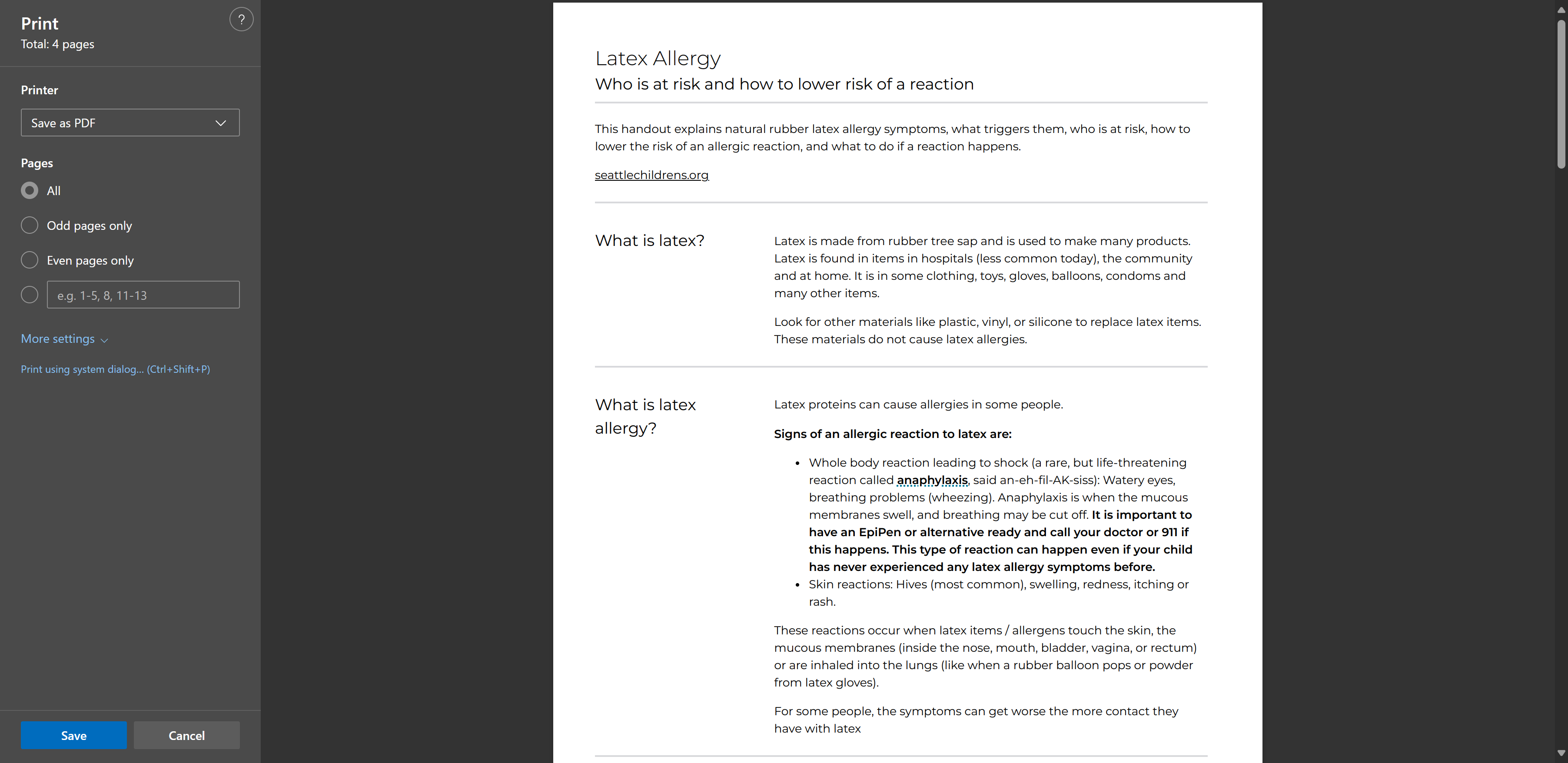
To download as a PDF, choose "Save as a PDF" in the print dialog, then click "Save".

screenshot of print dialog

About Us
  • About Seattle Children’s
  • Contact Us
  • Locations
  • Visiting Seattle Children’s
  • Press Releases
  • Growing for Future Grown-Ups
  • Price Transparency
Community
  • Healthcare Professionals
  • Events
  • Classes
  • Volunteering
Experience and Outcomes
  • Advancing Healthcare Experience and Outcomes
  • Values
  • Nondiscrimination and Interpreters Notice
  • Accessibility and Special Needs
About This Site
  • About This Website
  • Feedback
  • Terms of Use
  • Privacy
  • My Health My Data
  • Notice of Privacy Practices
  • Employees
  • Working From Home and Remote Access Help
  • Vendors

©2026 Seattle Children’s Hospital

4800 Sand Point Way NE, Seattle, WA 98105

206-987-2000 866-987-2000 (toll-free) 206-987-0391 (TTY)

U.S. News & World Report Best Children's Hospitals Honor Roll Badge Forbes America's Best Large Employers Magnet Recognized Nursing Program Children's Miracle Network Hospitals

Seattle Children’s complies with applicable federal and other civil rights laws and does not discriminate, exclude people or treat them differently based on race, color, religion (creed), sex, gender identity or expression, sexual orientation, national origin (ancestry), age, disability, or any other status protected by applicable federal, state or local law. Financial assistance for medically necessary services is based on family income and hospital resources and is provided to children under age 21 whose primary residence is in Washington, Alaska, Montana or Idaho.