Skip to navigation menu Skip to content
  • MyChart
  • Telemedicine
  • Healthcare Professionals
  • Careers
  • Alerts
  • Donate Now
  • I want to …
      • Go to MyChart
      • Find a Doctor
      • Make an Appointment
      • Find a Location
      • Visit ED or Urgent Care
      • Get Driving Directions
      • Refill a Prescription
      • Contact Children's
      • Pay My Bill
      • Estimate My Cost
      • Apply for Financial Assistance
      • Request My Medical Records
      • Find Patient Education
      • Volunteer
      • Donate
      • Refer and Manage a Patient
Search
Search
  • Your Visit
  • Conditions
  • Clinics
  • Research
  • Health & Safety
  • Giving
  • Press Room
  • I want to …
      • Go to MyChart
      • Find a Doctor
      • Make an Appointment
      • Find a Location
      • Visit ED or Urgent Care
      • Get Driving Directions
      • Refill a Prescription
      • Contact Children's
      • Pay My Bill
      • Estimate My Cost
      • Apply for Financial Assistance
      • Request My Medical Records
      • Find Patient Education
      • Volunteer
      • Donate
      • Refer and Manage a Patient
Donate Now
  • Main Menu
  • On This Page

    Jump to a section on this page:

Sensory Processing Challenges (SPC)

Advanced strategies: Ideas for changes at home*

  • Español PDF

This handout has suggestions for parents to help increase or reduce sensations for your child who has challenges with sensory input. *Make sure your child is safe at all times. If you have any questions about safety or if something is right for your child, ask your therapist.

Ways to help your child notice sensation – low registration

Movement

  • Have your child reach and bend to get their clothing in the morning to get moving. Don’t do too much for them. Encourage them to do things on their own.
  • Have your child swing, slide, and play running games or a sport.
  • Have your child help with household chores and carry grocery bags.

Touch

  • Play dress-up with costumes made of all kinds of fabrics.
  • Have your child apply lotion to their skin.
  • Offer vibrating toys and objects.

Seeing

  • Provide art projects using lots of colors (paint-by-number, color paper, glitter).
  • Play with jigsaw puzzles. Help your child notice all types of shapes, sizes, and colors of objects.

Hearing

  • Play upbeat music in the background during mealtime or homework time.
  • Play with musical instruments. If possible, have them start learning to play an instrument.

Ways to help your child get more or enough sensation – sensation seeking

Movement

  • Ride a bike on bumpy surfaces with lots of hills (wearing a helmet).
  • Spin around in an office chair, swing, or merry-go-round.
  • Encourage movement activities with pushing, pulling, jumping, and climbing.
  • Log roll down a grassy hill.

Touch

  • Wear a bracelet with all kinds of bead textures and sizes (smooth, bumpy, rough).
  • Have your child play barefoot on grass, sand, mud, carpet, or tile floor.
  • Offer vibrating objects and toys.

Seeing

  • Put up bright pictures and posters in their room.
  • Prepare foods with lots of colors.
  • Look at objects in nature through binoculars or use a cellphone camera to zoom in.

Hearing

  • Bring along a music device or cellphone with headphones when going out.
  • Allow background music or TV to be on during homework.

Ways to help your child limit sensation – sensory sensitivity

Movement

  • Simplify their wardrobe with limited choices and numbers of clothes.
  • Be aware they may be less able/willing to move their bodies easily.
  • Teach them repetitive movements that will help them feel more confident and successful over time.
  • Create routines for dressing, mealtime, bathing, and grooming.

Touch

  • Figure out which food flavors and textures your child likes.
  • Have your child wear form-fitting, seamless clothing.
  • If they like the feeling of water, take a bath as part of a bedtime routine.

Seeing

  • Limit the number of colors (1-3) in foods at each meal.
  • Reduce the amount of light in your child’s room/play space.
  • Offer sunglasses or a hat in bright environments.

Hearing

  • Allow your child to wear headphones when going to a loud space.
  • Softly play your child’s favorite song at bedtime.
  • Have 1 person talk at a time during meals.

Ways to help your child feel more comfortable with sensation – sensation avoiding

Movement

  • Create routines for dressing, mealtime, bathing, and grooming.
  • Keep toys or school supplies in an easy-to-find location.
  • Encourage movement activities with pushing, pulling, carrying, or jumping.

Touch

  • Avoid touching your child lightly or when they do not expect it. Get their permission to hug or touch.
  • Give your child bear hugs when they are ready or ask for it.
  • Cut off the tags in clothing or buy clothing without tags.

Seeing

  • De-clutter your child’s living and play spaces.
  • Avoid bright and fluorescent lights.

Hearing

  • Avoid background noises during homework or other times when your child needs to focus.
  • Allow your child to wear headphones when going out of the house.

Where can I learn more?

  • Beyond Behaviors: Using Brain Science and Compassion to Understand and Solve Children’s Behavioral Challenges, Mona Delahook, 2019.
  • Raising a Sensory Smart Child: The Definitive Handbook for Helping Your Child with Sensory Processing Issues, Revised and Updated Edition Lindsey Biel and Nancy Peske, 2009.
  • Self-Reg: How to Help Your Child (and You) Break The Stress Cycle and Successfully Engage With Life, Stuart Shanker, 2017.
  • Sensory Integration and the Child: 25th Anniversary Edition A. Jean Ayers, 2005.
  • Supporting Children to Participate Successfully in Everyday Life by Using Sensory Processing Knowledge, “Infants & Young Children” Winnie Dunn, 2007.
    journals.lww.com/iycjournal/fulltext/2007/04000/supporting_children_ to_participate_successfully_in.2.aspx

To Learn More

  • Occupational and Physical Therapy
    206-987-2113
  • Ask your child’s healthcare provider
  • seattlechildrens.org/patient-education

Free Interpreter Services

  • In the hospital, ask your nurse.
  • From outside the hospital, call the toll-free Family Interpreting Line, 1-866-583-1527. Tell the interpreter the name or extension you need.
Seattle Children's Hospital

Seattle Children’s offers free interpreter services for patients, family members and legal representatives who are deaf or hard of hearing or speak a language other than English. Seattle Children’s will make this information available in alternate formats upon request. Call the Family Resource Center at 206-987-2201. This handout has been reviewed by clinical staff at Seattle Children’s. However, your needs are unique. Before you act or rely upon this information, please talk with your healthcare provider.

© 2026 Seattle Children’s, Seattle, Washington. All rights reserved.

12/01/2024
PE1111
Patient and Family Education | Occupational Therapy/Physical Therapy

Download Instructions

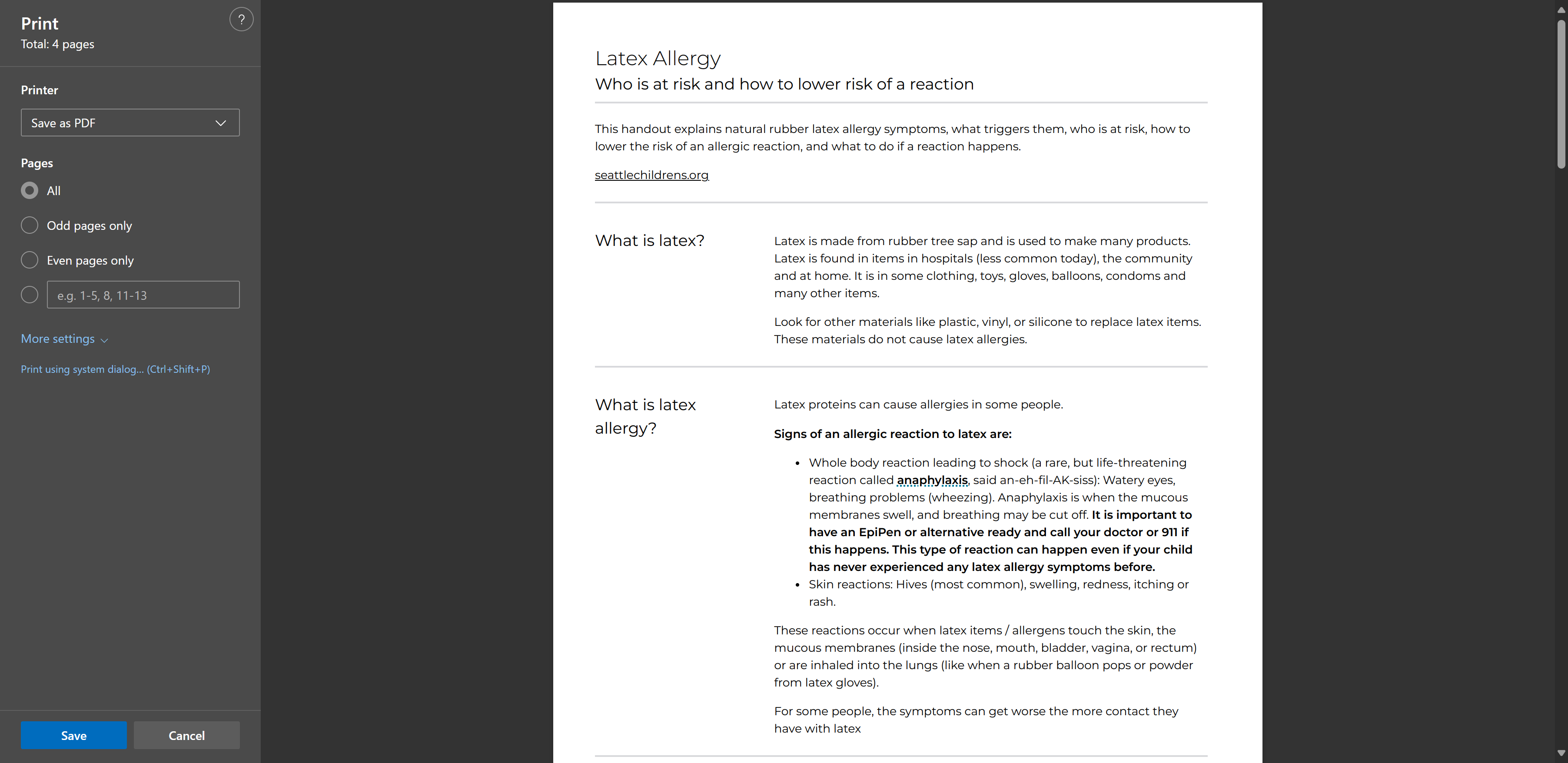
To download as a PDF, choose "Save as a PDF" in the print dialog, then click "Save".

screenshot of print dialog

About Us
  • About Seattle Children’s
  • Contact Us
  • Locations
  • Visiting Seattle Children’s
  • Press Releases
  • Growing for Future Grown-Ups
  • Price Transparency
Community
  • Healthcare Professionals
  • Events
  • Classes
  • Volunteering
Experience and Outcomes
  • Advancing Healthcare Experience and Outcomes
  • Values
  • Nondiscrimination and Interpreters Notice
  • Accessibility and Special Needs
About This Site
  • About This Website
  • Feedback
  • Terms of Use
  • Privacy
  • My Health My Data
  • Notice of Privacy Practices
  • Employees
  • Working From Home and Remote Access Help
  • Vendors

©2026 Seattle Children’s Hospital

4800 Sand Point Way NE, Seattle, WA 98105

206-987-2000 866-987-2000 (toll-free) 206-987-0391 (TTY)

U.S. News & World Report Best Children's Hospitals Honor Roll Badge Forbes America's Best Large Employers Magnet Recognized Nursing Program Children's Miracle Network Hospitals

Seattle Children’s complies with applicable federal and other civil rights laws and does not discriminate, exclude people or treat them differently based on race, color, religion (creed), sex, gender identity or expression, sexual orientation, national origin (ancestry), age, disability, or any other status protected by applicable federal, state or local law. Financial assistance for medically necessary services is based on family income and hospital resources and is provided to children under age 21 whose primary residence is in Washington, Alaska, Montana or Idaho.