Skip to navigation menu Skip to content
  • MyChart
  • Telemedicine
  • Healthcare Professionals
  • Careers
  • Alerts
  • Donate Now
  • I want to …
      • Go to MyChart
      • Find a Doctor
      • Make an Appointment
      • Find a Location
      • Visit ED or Urgent Care
      • Get Driving Directions
      • Refill a Prescription
      • Contact Children's
      • Pay My Bill
      • Estimate My Cost
      • Apply for Financial Assistance
      • Request My Medical Records
      • Find Patient Education
      • Volunteer
      • Donate
      • Refer and Manage a Patient
Search
Search
  • Your Visit
  • Conditions
  • Clinics
  • Research
  • Health & Safety
  • Giving
  • Press Room
  • I want to …
      • Go to MyChart
      • Find a Doctor
      • Make an Appointment
      • Find a Location
      • Visit ED or Urgent Care
      • Get Driving Directions
      • Refill a Prescription
      • Contact Children's
      • Pay My Bill
      • Estimate My Cost
      • Apply for Financial Assistance
      • Request My Medical Records
      • Find Patient Education
      • Volunteer
      • Donate
      • Refer and Manage a Patient
Donate Now
  • Main Menu
  • On This Page

    Jump to a section on this page:

After Pectus Surgery

  • Español PDF

This handout describes how to care for your child at home and at school after they have had surgery to repair a sunken chest (pectus).

Basic precautions to follow after surgery

Have your child follow these guidelines until your surgeon tells you that they can stop.

  • No pushing or pulling.
  • Do not lift anything greater than 8 pounds (equal to a gallon of milk) for 2 months after surgery.
  • No excessive twisting at their trunk.
  • Do not lie or roll on their side.
  • Do not raise their elbows above shoulder level.

Bathing

  • Your child can start taking showers 2 days after surgery.
  • To avoid reaching overhead, keep bathing items like shampoo, soap and conditioner at lower levels.
  • Your child will need to bend their head forward to wash their hair. They should be careful not to lift their elbows above shoulder level.

Clothes

  • Have your child wear loose-fitting and button-down shirts.
  • To put on a t-shirt, have your child put their arms through the sleeves first and bring the shirt up to their shoulders. Then, bend their head down and pull the shirt over their head.
  • To take off shirts, they need to remove their arms from the sleeves first, and then bend their head forward to pull it over their head.

Meals

  • Your child will not be able to reach upper shelves.
  • Put frequently used items like cups, glasses, plates and food items on lower shelves.

Sleeping

  • Your child will have to sleep on their back for about 4 weeks. No side sleeping.
  • Your child can try sleeping in a recliner. Or prop pillows under their upper back to put them in a raised position in bed.
  • We can provide you with a foam wedge, if needed, to help your child with positioning options if lying flat is not comfortable.
  • Your child will eventually be able to sleep on their side again. If it doesn’t hurt, it is OK.

Exercise

  • Walking is the best exercise to help your child recover from surgery. It will keep their lungs and heart healthy while helping their strength and endurance.
  • Avoid formal training exercises like weightlifting, machine workouts or sports drills until the surgery team clears your child.
  • Avoid activities which increase the chance of your child falling or having a sudden impact to their chest (bike riding, skateboarding, ball play, etc.).

Driving

  • Your child may not drive while they are taking any pain medication. This may be up to 6 weeks.
  • Once they are cleared to start driving again, make sure they can turn to check their blind spot or behind them without producing pain.

Return to school

  • Your child will need to stay out of school for 2 to 3 weeks after surgery.
  • When your child returns to school, they will not be allowed to lift or carry backpacks or shoulder bags.
  • Consider asking for a 2nd set of books (1 for home, 1 for school) if possible.
  • If your child has an upper-level locker, ask if they can use a lower-level locker during their recovery.
  • Your child may not take part in PE (physical education) until the surgery team says it’s OK.

Posture

  • Your child should keep an upright posture when standing and sitting. They should not slump or slouch while sitting.
  • This will help to keep the bar in place and promote deeper breathing to maintain their lung health during early recovery.

To Learn More

  • Occupational and Physical Therapy
    206-987-2113
  • Ask your child’s healthcare provider
  • seattlechildrens.org/patient-education

Free Interpreter Services

  • In the hospital, ask your nurse.
  • From outside the hospital, call the toll-free Family Interpreting Line, 1-866-583-1527. Tell the interpreter the name or extension you need.
Seattle Children's Hospital

Seattle Children’s offers free interpreter services for patients, family members and legal representatives who are deaf or hard of hearing or speak a language other than English. Seattle Children’s will make this information available in alternate formats upon request. Call the Family Resource Center at 206-987-2201. This handout has been reviewed by clinical staff at Seattle Children’s. However, your needs are unique. Before you act or rely upon this information, please talk with your healthcare provider.

© 2026 Seattle Children’s, Seattle, Washington. All rights reserved.

01/01/2024
PE2768
Patient and Family Education | Occupational Therapy/Physical Therapy

Download Instructions

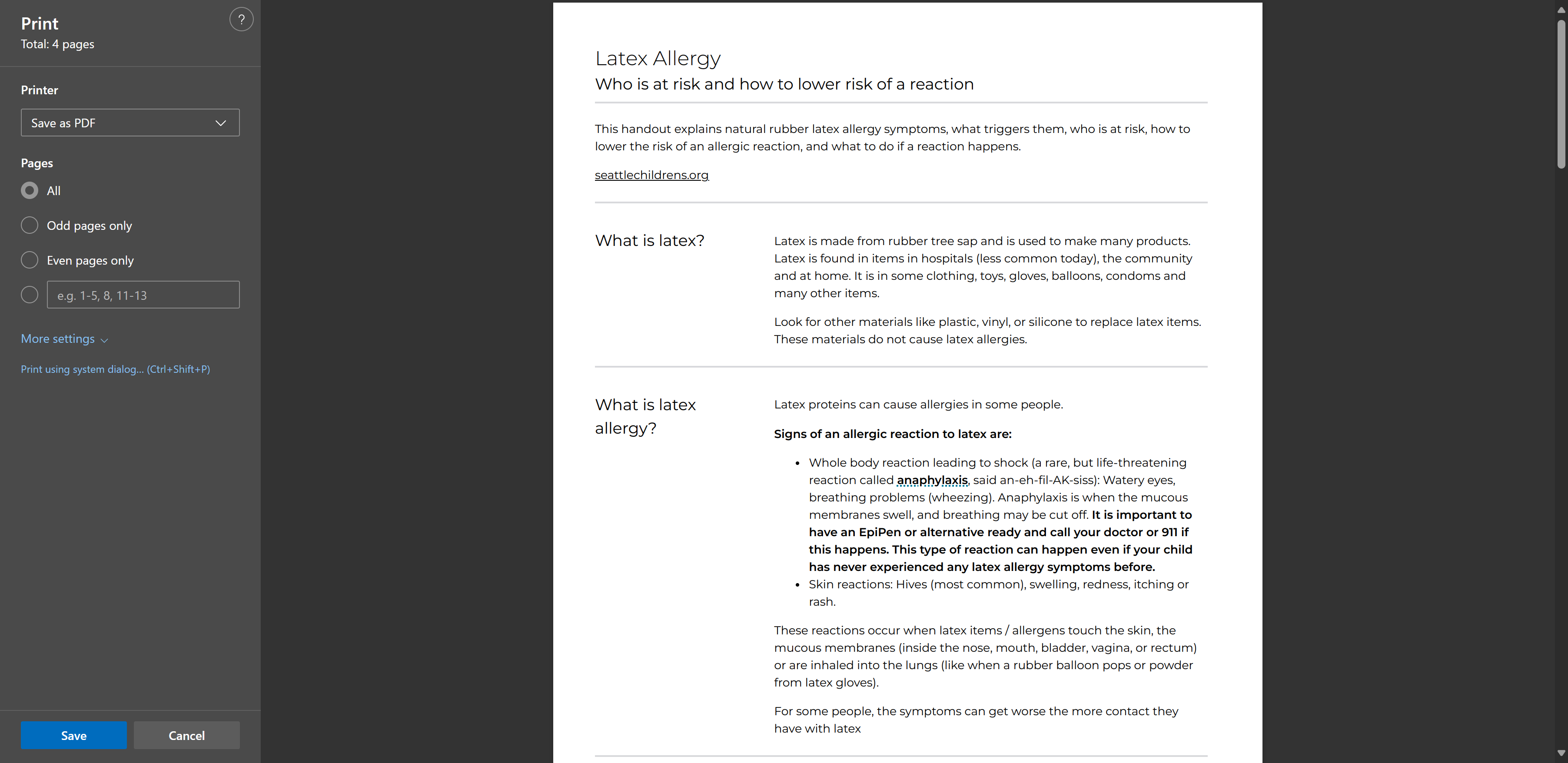
To download as a PDF, choose "Save as a PDF" in the print dialog, then click "Save".

screenshot of print dialog

About Us
  • About Seattle Children’s
  • Contact Us
  • Locations
  • Visiting Seattle Children’s
  • Press Releases
  • Growing for Future Grown-Ups
  • Price Transparency
Community
  • Healthcare Professionals
  • Events
  • Classes
  • Volunteering
Experience and Outcomes
  • Advancing Healthcare Experience and Outcomes
  • Values
  • Nondiscrimination and Interpreters Notice
  • Accessibility and Special Needs
About This Site
  • About This Website
  • Feedback
  • Terms of Use
  • Privacy
  • My Health My Data
  • Notice of Privacy Practices
  • Employees
  • Working From Home and Remote Access Help
  • Vendors

©2026 Seattle Children’s Hospital

4800 Sand Point Way NE, Seattle, WA 98105

206-987-2000 866-987-2000 (toll-free) 206-987-0391 (TTY)

U.S. News & World Report Best Children's Hospitals Honor Roll Badge Forbes America's Best Large Employers Magnet Recognized Nursing Program Children's Miracle Network Hospitals

Seattle Children’s complies with applicable federal and other civil rights laws and does not discriminate, exclude people or treat them differently based on race, color, religion (creed), sex, gender identity or expression, sexual orientation, national origin (ancestry), age, disability, or any other status protected by applicable federal, state or local law. Financial assistance for medically necessary services is based on family income and hospital resources and is provided to children under age 21 whose primary residence is in Washington, Alaska, Montana or Idaho.