Skip to navigation menu Skip to content
  • MyChart
  • Telemedicine
  • Healthcare Professionals
  • Careers
  • Alerts
  • Donate Now
  • I want to …
      • Go to MyChart
      • Find a Doctor
      • Make an Appointment
      • Find a Location
      • Visit ED or Urgent Care
      • Get Driving Directions
      • Refill a Prescription
      • Contact Children's
      • Pay My Bill
      • Estimate My Cost
      • Apply for Financial Assistance
      • Request My Medical Records
      • Find Patient Education
      • Volunteer
      • Donate
      • Refer and Manage a Patient
Search
Search
  • Your Visit
  • Conditions
  • Clinics
  • Research
  • Health & Safety
  • Giving
  • Press Room
  • I want to …
      • Go to MyChart
      • Find a Doctor
      • Make an Appointment
      • Find a Location
      • Visit ED or Urgent Care
      • Get Driving Directions
      • Refill a Prescription
      • Contact Children's
      • Pay My Bill
      • Estimate My Cost
      • Apply for Financial Assistance
      • Request My Medical Records
      • Find Patient Education
      • Volunteer
      • Donate
      • Refer and Manage a Patient
Donate Now
  • Main Menu
  • On This Page

    Jump to a section on this page:

Schroth Method for Scoliosis Treatment

The Schroth Method uses physical therapy to treat scoliosis. It uses exercises to strength muscles, support posture and tone certain areas.

What is the Schroth method of physical therapy?

The Schroth Method is a type of physical therapy based on the concept that scoliosis can be improved by changing the forces that act on the spine. This is done using exercises to strengthen muscles, support posture and tone certain areas. With the Schroth Method, your child is encouraged to become active in their own therapy. Exercises are taught and practiced many times in a variety of positions to challenge the body’s strengths and weakness.

The Schroth Method has been used in Europe for many decades. There is growing research and some evidence that Schroth can be effective, but scientific studies that prove it will reduce the scoliotic curve are not yet completed. Scoliosis specific exercises have been shown to have a positive impact on reducing curve progression, improving posture, improving lung and organ function, pain management, and quality of life. The Schroth Method is among the most studied and widely used methods of physical therapy scoliosis-specific exercise.

What are the goals of Schroth physical therapy?

The main goal of the therapy is to prevent the curvature from progressing. Other goals include:

  • Better posture and body mechanics (the way the body moves)
  • Less pain (if present)
  • More strength and flexibility
  • Better breathing capacity
  • Better endurance and tolerance to activities
  • Improving the appearance of your child’s back and body
  • Prevention or delay of surgery
  • Improved bracing results

Bracing for scoliosis

The goal of bracing is to reduce the chance of a curve getting large enough in magnitude to require surgery. The chances of a curve progressing to the point of needing surgery is cut in half if a brace is used in an actively growing child with scoliosis between 20 and 40 degrees. The patients with the greatest potential for success with Schroth are similar to the patients with the greatest potential for success with bracing, so often the back brace is combined with Schroth therapy rather than either therapy used alone.

Our team approach

We take a team approach to helping treat your child’s scoliosis. An orthopedic physician, a certified Schroth therapist, and the orthotic (bracing) experts will work together to coordinate all aspects of your child’s care.

Is Schroth therapy for everyone?

Schroth therapy is not recommended for all children with scoliosis. We treat children with spinal curves of over 20 degrees,* children 11 or older with a significant risk of curve progression, and children whose spine and bones are not finished growing. Your Orthopedic doctor can answer questions about whether this program is right for your child.

What can you expect?

Evaluation

Your child will have a full orthopedic evaluation, usually including X-rays, to see whether Schroth therapy would be a good fit. If your child is a candidate for this treatment, they will also have a complete 80-minute postural and breathing evaluation with a physical therapist. The therapist will work with your child and you to create the best plan of care that meet your child’s needs, goals and expectations. Fitting and wearing of a brace also may be part of the treatment plan.

Treatment

  • Your child is taught scoliosis-specific exercises and scheduled for physical therapy appointments once per week for 8 to 12 sessions. This may vary based on your child’s needs.
  • Once your child learns their exercises, they will do them at home for 20 to 30 minutes per day.
  • They will also have periodic follow-up appointments with their therapist, doctor and orthotist.
  • If your child’s curve continues to progress, the physical therapy program may be discontinued.

Billing and payment

Billing and payment for scoliosis treatment is like other physical therapy services. You have the option of billing insurance or paying privately. You must have a referral from one of our Seattle Children’s orthopedic providers to register in the Schroth Physical Therapy Program.

Where are we located and how can we be contacted?

Sports Physical Therapy: Contact us at 206-987-6400

Seattle Children’s Hospital Main Campus: 4800 Sand Point Way NE, Seattle, WA 98105
Bellevue Clinic and Surgery Center: 1500 116th Ave. NE, Bellevue, WA 98004
South Clinic in Federal Way: 34920 Enchanted Pkwy. S, Federal Way, WA 98003
North Clinic in Everett: 1815 13th St., Everett, WA 98201
Odessa Brown Children’s Clinic at Othello: 3939 S Othello St., Suite 101, Seattle, WA 98118

* “Cobb angle” is the standard radiographic (X-ray) measure of spine curve magnitude.

To Learn More

  • Sports Physical Therapy
    206-987-6400
  • Orthotics and Prosthetics
    206-987-8448
  • Ask your child’s healthcare provider
  • seattlechildrens.org/patient-education

Free Interpreter Services

  • In the hospital, ask your nurse.
  • From outside the hospital, call the toll-free Family Interpreting Line, 1-866-583-1527. Tell the interpreter the name or extension you need.
Seattle Children's Hospital

Seattle Children’s offers free interpreter services for patients, family members and legal representatives who are deaf or hard of hearing or speak a language other than English. Seattle Children’s will make this information available in alternate formats upon request. Call the Family Resource Center at 206-987-2201. This handout has been reviewed by clinical staff at Seattle Children’s. However, your needs are unique. Before you act or rely upon this information, please talk with your healthcare provider.

© 2026 Seattle Children’s, Seattle, Washington. All rights reserved.

03/01/2023
PE1714
Patient and Family Education | Orthopedics and Sports Medicine

Download Instructions

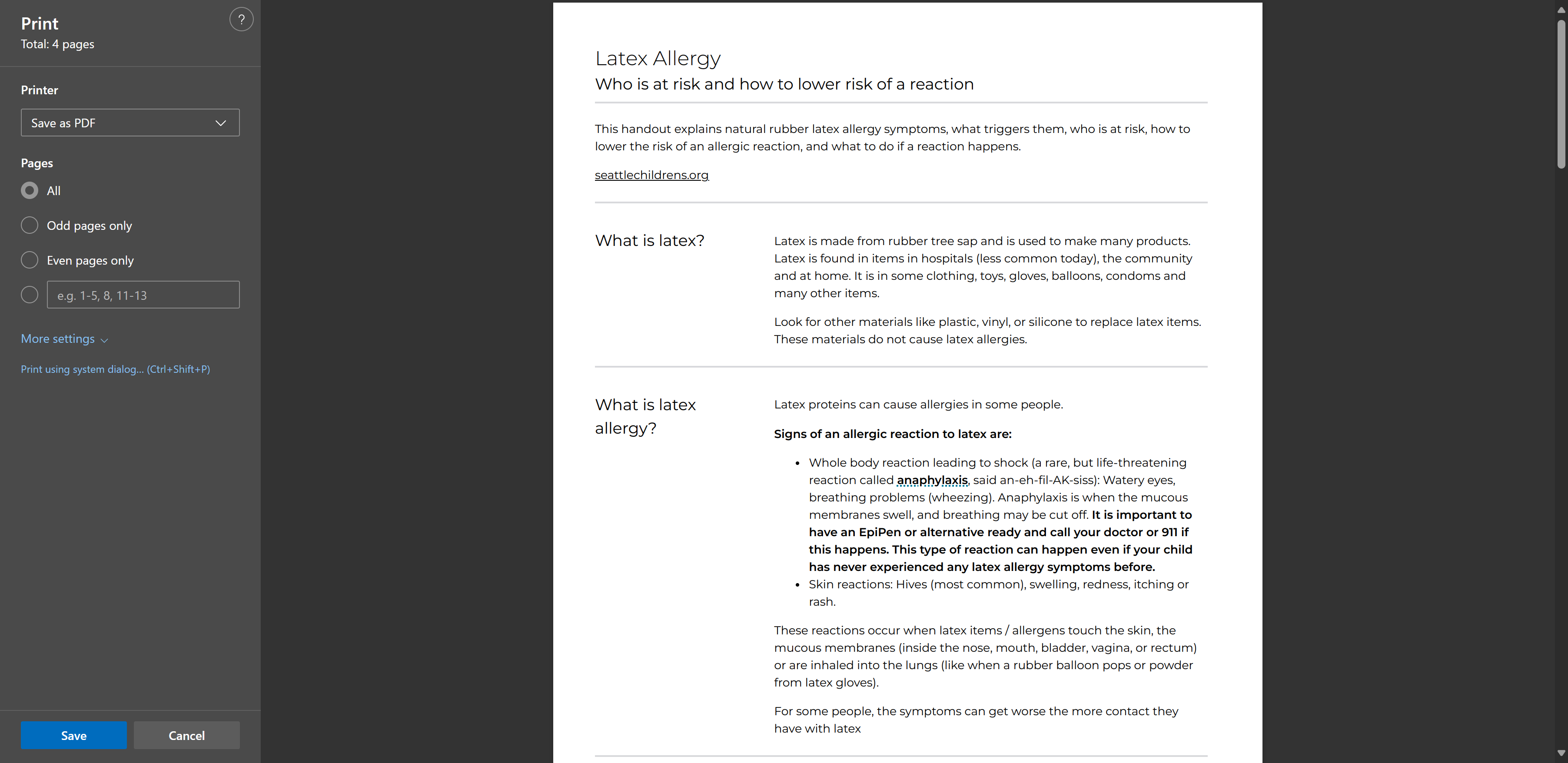
To download as a PDF, choose "Save as a PDF" in the print dialog, then click "Save".

screenshot of print dialog

About Us
  • About Seattle Children’s
  • Contact Us
  • Locations
  • Visiting Seattle Children’s
  • Press Releases
  • Growing for Future Grown-Ups
  • Price Transparency
Community
  • Healthcare Professionals
  • Events
  • Classes
  • Volunteering
Experience and Outcomes
  • Advancing Healthcare Experience and Outcomes
  • Values
  • Nondiscrimination and Interpreters Notice
  • Accessibility and Special Needs
About This Site
  • About This Website
  • Feedback
  • Terms of Use
  • Privacy
  • My Health My Data
  • Notice of Privacy Practices
  • Employees
  • Working From Home and Remote Access Help
  • Vendors

©2026 Seattle Children’s Hospital

4800 Sand Point Way NE, Seattle, WA 98105

206-987-2000 866-987-2000 (toll-free) 206-987-0391 (TTY)

U.S. News & World Report Best Children's Hospitals Honor Roll Badge Forbes America's Best Large Employers Magnet Recognized Nursing Program Children's Miracle Network Hospitals

Seattle Children’s complies with applicable federal and other civil rights laws and does not discriminate, exclude people or treat them differently based on race, color, religion (creed), sex, gender identity or expression, sexual orientation, national origin (ancestry), age, disability, or any other status protected by applicable federal, state or local law. Financial assistance for medically necessary services is based on family income and hospital resources and is provided to children under age 21 whose primary residence is in Washington, Alaska, Montana or Idaho.