Skip to navigation menu Skip to content
  • MyChart
  • Telemedicine
  • Healthcare Professionals
  • Careers
  • Alerts
  • Donate Now
  • I want to …
      • Go to MyChart
      • Find a Doctor
      • Make an Appointment
      • Find a Location
      • Visit ED or Urgent Care
      • Get Driving Directions
      • Refill a Prescription
      • Contact Children's
      • Pay My Bill
      • Estimate My Cost
      • Apply for Financial Assistance
      • Request My Medical Records
      • Find Patient Education
      • Volunteer
      • Donate
      • Refer and Manage a Patient
Search
Search
  • Your Visit
  • Conditions
  • Clinics
  • Research
  • Health & Safety
  • Giving
  • Press Room
  • I want to …
      • Go to MyChart
      • Find a Doctor
      • Make an Appointment
      • Find a Location
      • Visit ED or Urgent Care
      • Get Driving Directions
      • Refill a Prescription
      • Contact Children's
      • Pay My Bill
      • Estimate My Cost
      • Apply for Financial Assistance
      • Request My Medical Records
      • Find Patient Education
      • Volunteer
      • Donate
      • Refer and Manage a Patient
Donate Now
  • Main Menu
  • On This Page

    Jump to a section on this page:

Plica Syndrome and Fat Pad Impingement

What is plica syndrome?

The plica is a fold of joint lining (synovium) that may become thickened and swollen. This is known as plica syndrome.

What is fat pad impingement?

The fat pad is fatty tissue below the knee cap (patella) between the end of the thigh bone (femur) and the shin bone (tibia). The fat pad can become swollen and pinched between the bones with knee movement. This is known as fat pad impingement.

What are common signs and symptoms?

Pain in the front of the knee, usually on the inner side. Pain typically occurs with bending of the knee such as running, kneeling, squatting, and sitting for long periods of time, getting up from a seated position, and going up and down stairs. The knee can click, lock, or pop. Swelling is occasionally seen.

How does it happen?

It can be caused by direct injury such as a fall onto the knee or a direct blow. It may occur after repeated injury to the fat pad or plica during activities or sports that involve repetitive bending and straightening of the knee. The injury causes swelling and thickening of the fat pad and plica, which can be painful.

What treatment options are available?

Initial treatment includes medications and ice to relieve pain and reduce swelling, stretching and mild strengthening exercises, and modification of activities that cause the symptoms.

Medication

Two types of medication may be used. In most cases, a combination of these methods will be chosen:

  • Nonsteroidal anti-inflammatories (NSAIDs): medications such as Advil (ibuprofen), Aleve (naproxen), or Mobic (meloxicam) are often recommended. Ask your child’s care provider about how much to take and how often to take them. For the best results, have your child take them consistently.

Steroid injections: Your child’s care provider may recommend an injection in the office. This medicine reduces swelling of the plica and fat pad.

Physical therapy

Your child’s care provider may give your child exercises to be done at home. Your child may be referred to a physical therapist or athletic trainer if needed.

Surgery

Your child’s care provider may recommend an outpatient, minimally invasive procedure called an arthroscopy. During surgery, your child’s care provider will remove the plica and part of the fat pad to eliminate painful popping and pinching that occurs with knee movement.

How long will it take for my child to recover?

Full recovery will depend on how the problem was treated. Most patients treated without surgery fully recover in 6 to 12 weeks.

If your child is treated with an arthroscopy, they may need crutches for 1 to 2 weeks after surgery. Following a dedicated physical therapy program after surgery, most patients return to athletic activities in 8 to 12 weeks.

To Learn More

  • Orthopedics and Sports Medicine
    206-987-2109
  • Ask your child’s healthcare provider
  • seattlechildrens.org/patient-education

Free Interpreter Services

  • In the hospital, ask your nurse.
  • From outside the hospital, call the toll-free Family Interpreting Line, 1-866-583-1527. Tell the interpreter the name or extension you need.
Seattle Children's Hospital

Seattle Children’s offers free interpreter services for patients, family members and legal representatives who are deaf or hard of hearing or speak a language other than English. Seattle Children’s will make this information available in alternate formats upon request. Call the Family Resource Center at 206-987-2201. This handout has been reviewed by clinical staff at Seattle Children’s. However, your needs are unique. Before you act or rely upon this information, please talk with your healthcare provider.

© 2026 Seattle Children’s, Seattle, Washington. All rights reserved.

01/01/2026
PE3012
Patient and Family Education | Orthopedics and Sports Medicine

Download Instructions

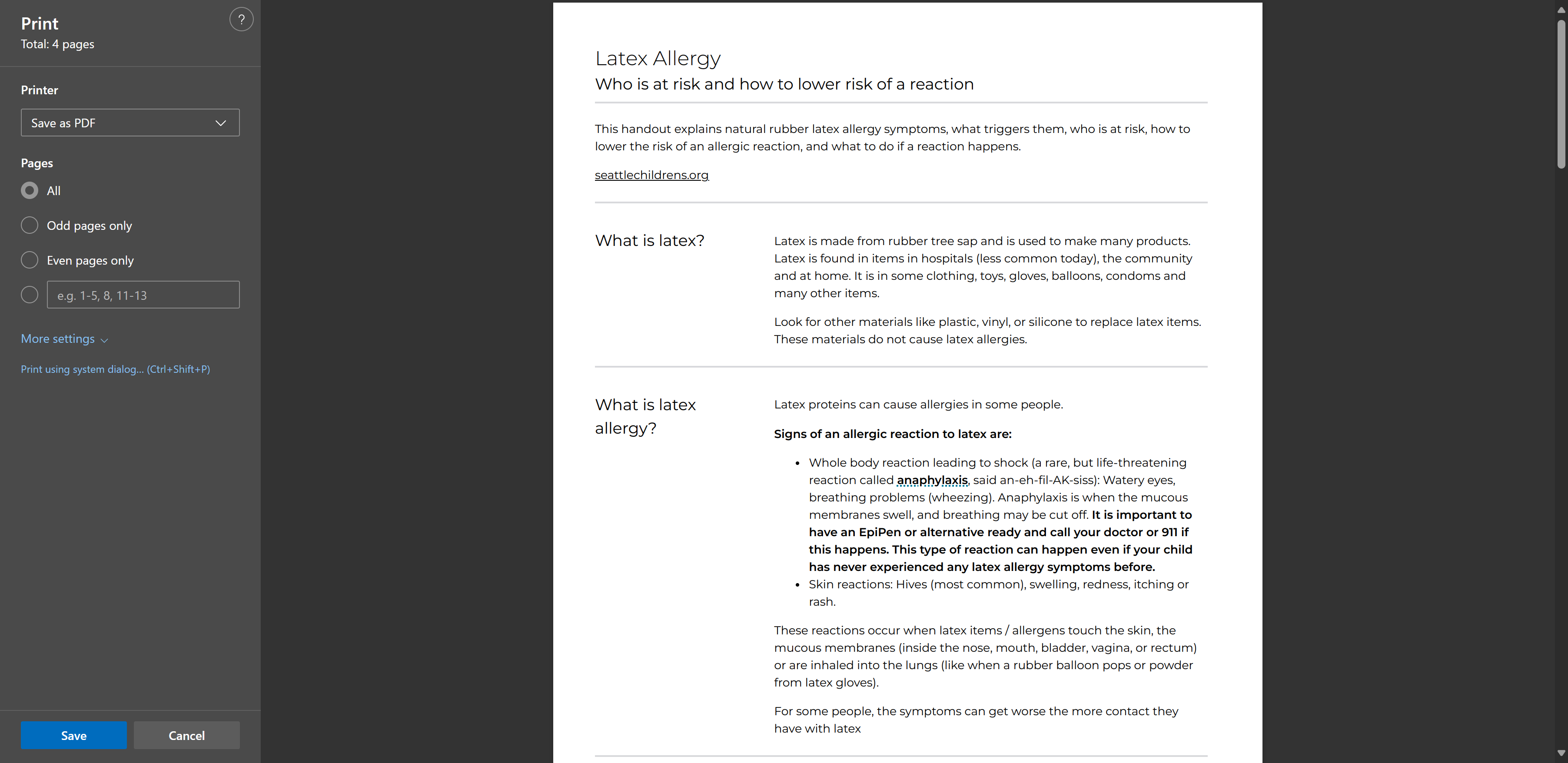
To download as a PDF, choose "Save as a PDF" in the print dialog, then click "Save".

screenshot of print dialog

About Us
  • About Seattle Children’s
  • Contact Us
  • Locations
  • Visiting Seattle Children’s
  • Press Releases
  • Growing for Future Grown-Ups
  • Price Transparency
Community
  • Healthcare Professionals
  • Events
  • Classes
  • Volunteering
Experience and Outcomes
  • Advancing Healthcare Experience and Outcomes
  • Values
  • Nondiscrimination and Interpreters Notice
  • Accessibility and Special Needs
About This Site
  • About This Website
  • Feedback
  • Terms of Use
  • Privacy
  • My Health My Data
  • Notice of Privacy Practices
  • Employees
  • Working From Home and Remote Access Help
  • Vendors

©2026 Seattle Children’s Hospital

4800 Sand Point Way NE, Seattle, WA 98105

206-987-2000 866-987-2000 (toll-free) 206-987-0391 (TTY)

U.S. News & World Report Best Children's Hospitals Honor Roll Badge Forbes America's Best Large Employers Magnet Recognized Nursing Program Children's Miracle Network Hospitals

Seattle Children’s complies with applicable federal and other civil rights laws and does not discriminate, exclude people or treat them differently based on race, color, religion (creed), sex, gender identity or expression, sexual orientation, national origin (ancestry), age, disability, or any other status protected by applicable federal, state or local law. Financial assistance for medically necessary services is based on family income and hospital resources and is provided to children under age 21 whose primary residence is in Washington, Alaska, Montana or Idaho.