Skip to navigation menu Skip to content
  • MyChart
  • Telemedicine
  • Healthcare Professionals
  • Careers
  • Alerts
  • Donate Now
  • I want to …
      • Go to MyChart
      • Find a Doctor
      • Make an Appointment
      • Find a Location
      • Visit ED or Urgent Care
      • Get Driving Directions
      • Refill a Prescription
      • Contact Children's
      • Pay My Bill
      • Estimate My Cost
      • Apply for Financial Assistance
      • Request My Medical Records
      • Find Patient Education
      • Volunteer
      • Donate
      • Refer and Manage a Patient
Search
Search
  • Your Visit
  • Conditions
  • Clinics
  • Research
  • Health & Safety
  • Giving
  • Press Room
  • I want to …
      • Go to MyChart
      • Find a Doctor
      • Make an Appointment
      • Find a Location
      • Visit ED or Urgent Care
      • Get Driving Directions
      • Refill a Prescription
      • Contact Children's
      • Pay My Bill
      • Estimate My Cost
      • Apply for Financial Assistance
      • Request My Medical Records
      • Find Patient Education
      • Volunteer
      • Donate
      • Refer and Manage a Patient
Donate Now
  • Main Menu
  • On This Page

    Jump to a section on this page:

Botox Treatment for Chronic Migraine Headaches

What is Botox treatment for chronic migraines?

OnabotulinumtoxinA (Botox) is a medicine used to treat chronic migraine headaches to help make them less severe and less frequent.

To give the treatment, your child’s healthcare provider uses a needle to inject a very small amount of Botox into 30 or more spots on your child’s head, neck and shoulders.

Is it right for my child?

We may recommend Botox treatment if your child:

  • Has chronic migraines (15 or more headache days per month for at least 3 months)
  • Has tried at least 2 to 3 preventive oral medicines for several months that have not made their headaches better, such as topiramate (Topamax), amitriptyline (Elavil) or propranolol (Inderal).

How does it work?

We believe Botox for chronic migraines works by changing how the nerves in the muscles of the head and jaw carry pain messages to the brain.

Will it make my child’s headaches go away?

  • Your child should start to notice fewer headaches 7 to 14 days after the Botox injections. It should last about 12 weeks.
  • If the injections help your child, they can get repeat injections every 12 weeks to keep headaches away.
  • If your child does not experience fewer headaches after the first treatment, they can repeat the treatment 12 weeks after the first injections. Some children will experience fewer headaches only after the 2nd or 3rd treatment.

Is it safe?

Botox for chronic migraine treatment was approved in 2010 by the FDA (Food and Drug Administration) for people 18 years and older. It has been used as a treatment for people under 18 for years, although this has not been approved by the FDA. This is considered an off-label use.

What are the possible side effects of Botox treatment?

Botox works near the injection sites, so it usually does not cause side effects that affect the whole body. When there are side effects, the symptoms are usually mild. Some possible side effects are:

  • Pain at the injection site. This pain should only last a few minutes.
  • Worse head and neck pain for a few days after the injections. You can usually treat this with anti-inflammatory medicines like ibuprofen (Advil, Motrin) or naproxen sodium (Aleve). Do not lift heavy things or carry a backpack until symptoms improve.
  • Droopy eyelids for up to 12 weeks.
  • Weak chewing and neck muscles for up to 12 weeks.

How do I schedule a treatment?

If you would like your child to have Botox injections to treat chronic migraine, follow these steps:

  1. Talk to your neurology provider about Botox to prevent migraines.
  2. Talk to your insurance company about what costs they will cover. Even if Botox is covered by insurance, you may have to pay extra charges for this treatment.
  3. After you and your neurology provider decide to go ahead with Botox treatment, it may take about 1 month for your insurance company to approve or deny the medicine. So, we schedule the 1st Botox treatment at least 1 month after the visit when we ordered the Botox.
  4. Your child’s healthcare provider may need to write a letter of medical necessity to your insurance company.
  5. We will not do the 1st Botox treatment until we have insurance approval.
  6. Clear any issues, like outstanding balances, with your insurance company well before the planned injection visit. Any issues can delay your child’s treatment.

For any questions about scheduling and approvals, call our office coordinators 206-987-2078 or contact your insurance company.

How do I help prepare my child for Botox treatment?

  • If your child is nervous about the treatment, ask us about options to help them feel more comfortable about the injections. We can arrange to have other services (we call it Child Life) available to assist with stress-reduction during the procedure. Please let us know if you think a Child Life Specialist could help your child.
  • For age-specific tips to help prepare your child, see our webpage “Your Child’s Clinic Visit: Preparing Your Child.” Scroll down to Tips for Preparing Your Child.
    seattlechildrens.org/preparing-your-child
  • Here are links to more information about Botox for chronic migraine from the American Migraine Foundation:
    americanmigrainefoundation.org/resource-library/faq-botox-for-migraine

To Learn More

  • Neurosciences Center
    206-987-2078
  • Ask your child’s healthcare provider
  • seattlechildrens.org/patient-education

Free Interpreter Services

  • In the hospital, ask your nurse.
  • From outside the hospital, call the toll-free Family Interpreting Line, 1-866-583-1527. Tell the interpreter the name or extension you need.
Seattle Children's Hospital

Seattle Children’s offers free interpreter services for patients, family members and legal representatives who are deaf or hard of hearing or speak a language other than English. Seattle Children’s will make this information available in alternate formats upon request. Call the Family Resource Center at 206-987-2201. This handout has been reviewed by clinical staff at Seattle Children’s. However, your needs are unique. Before you act or rely upon this information, please talk with your healthcare provider.

© 2026 Seattle Children’s, Seattle, Washington. All rights reserved.

08/01/2026
PE3237
Patient and Family Education | Neurosciences Center

Download Instructions

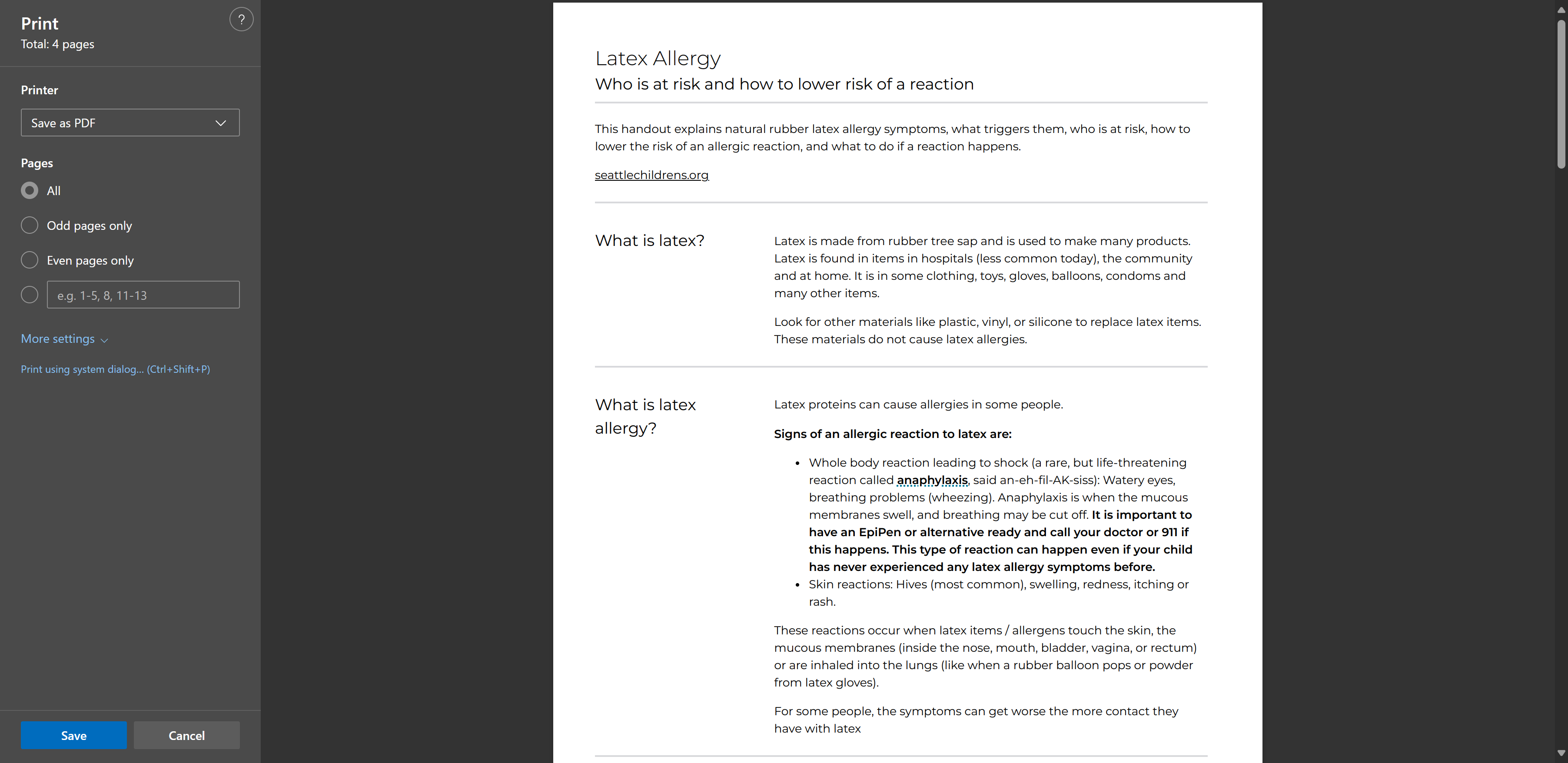
To download as a PDF, choose "Save as a PDF" in the print dialog, then click "Save".

screenshot of print dialog

About Us
  • About Seattle Children’s
  • Contact Us
  • Locations
  • Visiting Seattle Children’s
  • Press Releases
  • Growing for Future Grown-Ups
  • Price Transparency
Community
  • Healthcare Professionals
  • Events
  • Classes
  • Volunteering
Experience and Outcomes
  • Advancing Healthcare Experience and Outcomes
  • Values
  • Nondiscrimination and Interpreters Notice
  • Accessibility and Special Needs
About This Site
  • About This Website
  • Feedback
  • Terms of Use
  • Privacy
  • My Health My Data
  • Notice of Privacy Practices
  • Employees
  • Working From Home and Remote Access Help
  • Vendors

©2026 Seattle Children’s Hospital

4800 Sand Point Way NE, Seattle, WA 98105

206-987-2000 866-987-2000 (toll-free) 206-987-0391 (TTY)

U.S. News & World Report Best Children's Hospitals Honor Roll Badge Forbes America's Best Large Employers Magnet Recognized Nursing Program Children's Miracle Network Hospitals

Seattle Children’s complies with applicable federal and other civil rights laws and does not discriminate, exclude people or treat them differently based on race, color, religion (creed), sex, gender identity or expression, sexual orientation, national origin (ancestry), age, disability, or any other status protected by applicable federal, state or local law. Financial assistance for medically necessary services is based on family income and hospital resources and is provided to children under age 21 whose primary residence is in Washington, Alaska, Montana or Idaho.