|
Blood and marrow transplants (BMT) can cause problems (side effects and complications). This handout gives a short summary of the most common problems. The problems are different for every person. Not all people have every problem. The problems your child may have depend on many factors, including their type of transplant, their general health, and treatments to get them ready for transplant (conditioning). |
What problems are common after transplant?
|
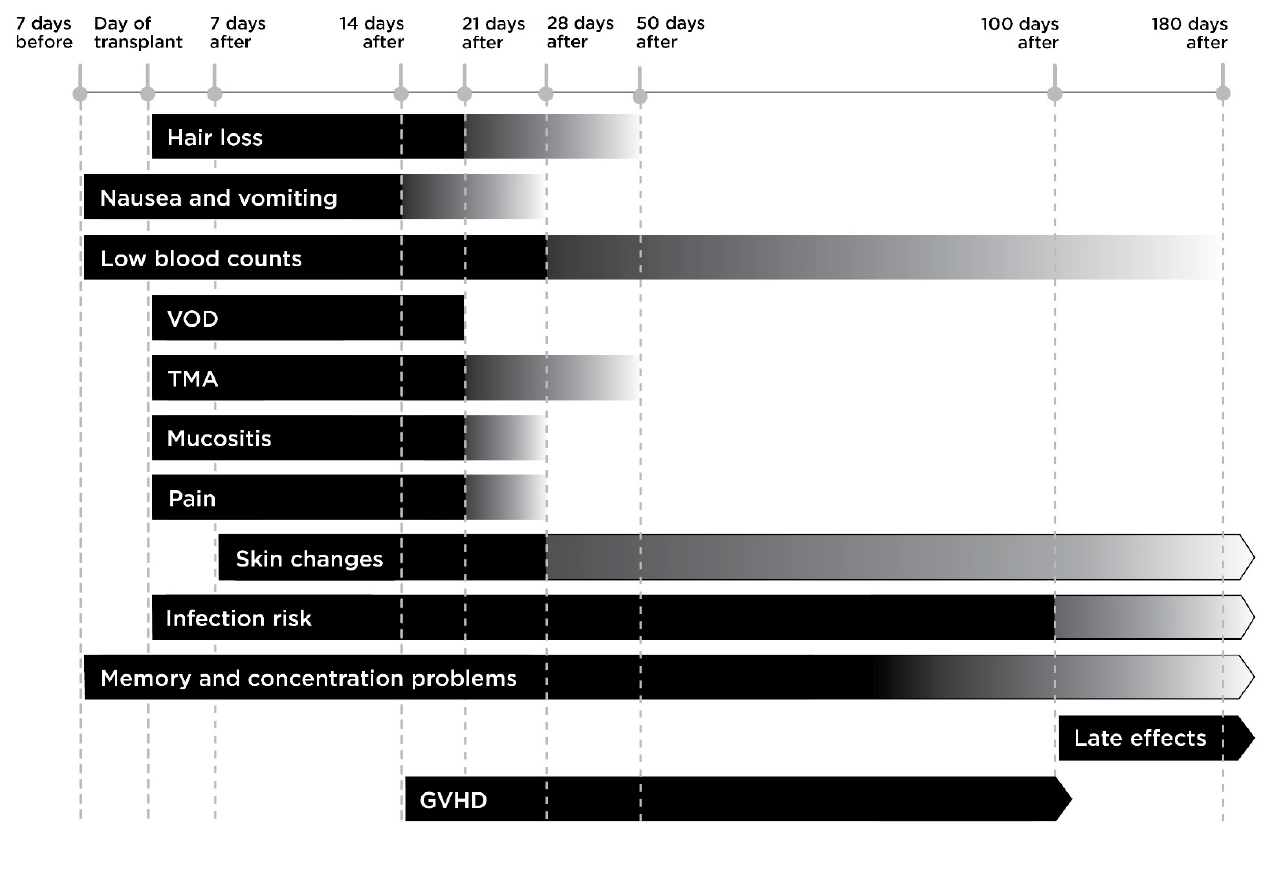
When do most problems happen?Some problems happen soon after the conditioning regimen, some happen several weeks after transplant, and others may happen several months or years later (late effects). Everyone who has received chemotherapy or radiation is at risk for developing late effects, which may include difficulty going back to school and re-establishing relationships, hormone problems, infertility, ongoing mental health changes (anxiety and depression), secondary cancers, as well as problems with the heart, kidneys, lungs, memory and concentration. Routine follow-up care with your transplant team is crucial to monitor for late effects of treatment. This chart shows when these problems most commonly happen throughout treatment |
|
|
AnxietyAnxiety during and after transplant therapy may show up as nervousness, tension, panic or fear. Anxiety can also show as physical symptoms such as upset stomach, sweaty palms, fast heartbeat, shaking and a flushed face. Facing a life-threatening illness and intensive treatment can cause a lot of anxiety. There are things that can help. The goal is to help your child reduce their anxiety with strategies that work for them. For more information, read “Anxiety Disorder: Facts for Families” at seattlechildrens.org/pdf/PE1492.pdf |
ConstipationIt is common for a person receiving a transplant to develop constipation, especially if they are taking opioids for pain. Constipation can develop because of inactivity, some medicines, changes in the body, dehydration, lack of fiber and depression. Bowel movements may become small, infrequent and hard. If your child is experiencing constipation, talk with your care team for more information and resources. |
DepressionLiving with a life-threatening illness and experiencing intense treatment can be emotionally traumatizing. Most people experience feelings of helplessness, despair and sadness during treatment. After being in treatment for so long, it can be hard to re-adjust normalcy, including re-establishing and maintaining relationships. If these feelings persist, your child may have depression. Symptoms of depression can include loss of appetite, changes in sleep patterns, lack of energy and inability to focus. Depression during and after treatment is common. We have experts that can help. It is normal for people to require therapy and anti-depressant medicines to help throughout the transplant experience. If your child has had symptoms of depression or has been on anti-depressants before, be sure to tell your care team so we can make sure your child is safe and give resources to you and your child. If your child is in suicidal crisis or emotional distress, call or text the Suicide & Crisis Lifeline at 988 for free and confidential support 24 hours a day, 7 days a week. For more information, see “Depression: Facts for Families” at seattlechildrens.org/pdf/PE1287.pdf. |
DiarrheaDiarrhea is frequent soft or loose bowel movements. Diarrhea can be caused by chemotherapy, radiation, medicines, post-transplant complications, food and beverage choices, and emotional distress. Report diarrhea to your care team right away because it can make your child dehydrated. It can also help your care team diagnose a new infection or transplant-related complications, including graft-versus-host disease (GVHD). For more information and additional resources, talk with your care team. |
Disease recurrenceWe hope the transplant is a successful treatment of your child’s disease. However, there are times when it may come back. We will watch your child closely to catch this early if it happens. We schedule frequent follow-up exams and tests (including blood tests, bone marrow aspirations and biopsies, and imaging studies). We also check strength of the graft (percentage of donor cells vs. your child’s original cells in their body) with a lab test called a chimerism test. We will talk with you about long-term follow-up at your visits. |
FallsTransplant treatment can cause your child to fall more than usual because they may be:
Tell your care team if your child has a history of confusion with any nausea or pain medicines so we can help keep your child safe and prevent falls in the clinic and when you leave the hospital. |
FatigueFatigue is excessive and unusual tiredness that does not get better after sleep. It is a common side effect of transplant therapy. It can be caused by intensive treatments, medicines, anemia, stress, nausea, vomiting, mouth sores, taste changes, heartburn, diarrhea, decreased nutrition, abnormal sleep patterns and feelings of depression. It can help to create routines around sleep and meal schedules, exercise, bathing and brushing teeth. If you are struggling to get your child to exercise or maintain routines, talk to your care team for suggestions. |
Feelings of uncertaintyThe transplant process may cause your child to experience a lot of feelings of uncertainty. They may struggle with the changes in their life. The treatment process can be long and may not have a clear ending. It can be hard to know how to plan ahead. This is especially challenging because all people respond differently to treatment and complications are not always easy to predict. If your child feels this way, talk with your care team about where your child is at in the transplant process and steps to reach your child’s goals. |
FeverFever and chills can be signs of infection. Your child can get an infection easily after chemotherapy, radiation, while on immunosuppressive medicines and when their blood counts are low. Call right away if your child has a fever. Their body cannot fight infections as easily after transplant. Always seek help when your child has a fever. For more information, see “When to Call for Help” at seattlechildrens.org/pdf/PE3797.pdf |
Graft failureGraft failure is when the body does not accept new stem cells (graft). When this happens, the new stem cells do not make their way into the bone marrow and multiply. This life-threatening complication is rare but can lead to serious bleeding and infection. If your child was transplanted for a reason other than cancer, graft failure can lead to problems with your child’s disease coming back. In most cases, the treatment for this complication is a second transplant. Your care team will address this with you in detail if it becomes relevant to your child’s treatment. |
Graft-Versus-Host Disease (GVHD)If your child had an autologous transplant, GVHD is not a problem that can happen because it only happens when there are cells from a donor. GVHD can happen after an allogeneic transplant when the immune cells from the donor do not recognize your child’s body. The donor cells may attack your child’s organs, usually the skin, gastrointestinal tract and liver. Your care team will try to prevent severe GVHD with medicines that suppress the immune system. Most people who receive transplants from donors (allogeneic) get some amount of GVHD. If your child was transplanted for cancer, sometimes having mild GVHD can help your child from getting sick again (relapse). This is called graft versus leukemia (or graft versus tumor) effect. For more information and additional resources, talk with your care team. |
Hormone problemsTransplant therapy can cause some hormone (endocrine) problems including thyroid disorders, adrenal insufficiency, post-transplant high blood sugar (hyperglycemia), poor growth and reduced bone density. The thyroid gland makes hormones that help control the body’s growth and development, muscle and digestive function, and bone maintenance. The adrenal gland makes a hormone (cortisol) that helps the body when it is under stress (for example, fighting an infection). Depending on your child’s conditioning regimen and some of the other medicines your child takes (for example, steroids), these glands may not work the way they are supposed to. The prolonged use of immunosuppressive medicines, including steroids, can also cause post-transplant high blood sugar. Some children experience slow or stunted growth and development after transplant. Reduced bone density is common with this therapy. Some medicines (steroids) affect calcium and vitamin D levels in the body, which can cause weakness and bone loss over time. Other factors that may also negatively impact bone density include lack of sun exposure, kidney problems, thyroid problems, and decreased levels of physical activity. Your child’s care team will watch for these complications (lab tests and scans). Treatments will be discussed with you and your child by your care team if they are needed for your child’s care. |
InfectionInfections that cause mild symptoms in people with normal immune systems can cause serious illness in people that have weakened immune systems, like during and after transplant. Your child may get infections from things in the environment that do not normally cause infection. Even when you follow all the infection prevention strategies, your child may still get an infection. Your child’s risk for infection depends on the medicines they are taking and complications they have after transplant, as well as the type of transplant they have. If your child has an autologous transplant, their immune system will recover more quickly than an allogeneic transplant. Tell your care team about any signs of infection immediately. It can take at least 1 year for your child’s immune system to fully work the way it should after an allogeneic transplant. The highest risk is within the first 100 days, or longer if your child has GVHD or is taking immunosuppressive medicines. The first 100 days is when your child’s new stem cells start creating white blood cells (WBCs). WBCs help protect the body by fighting bacterial, viral and fungal infections. Your child will be given medicines to prevent infection until their body can fight infection on its own. For more about how to prevent infections in your child, see these handouts:
|
InfertilityTreatments such as chemotherapy, surgery and radiation can cause changes that affect fertility. Depending on your child’s conditioning regimen and treatments received before transplant, your child may be at risk of infertility. To make sure your child is prepared for this, every person undergoing transplant is scheduled for a fertility consult with the onco-fertility team. They will review your child’s risks and any fertility preservation options that may be possible. For more information, see “Fertility and Cancer and Blood Disorders” at seattlechildrens.org/pdf/PE1027.pdf. |
Kidney problemsHaving a transplant can cause damage to the kidneys. Having enough liquids (appropriate hydration) is very important during and after transplant to keep the kidneys as healthy as possible. Your child may need more fluids than normal due to the medicines they are taking. The body does not work well when there is not enough fluid (dehydration). Your child can get dehydrated from medicines, diarrhea, vomiting, fevers, sweating or not drinking enough fluid. Dehydration can cause weakness, dizziness, rapid heartbeat and confusion. Until your child is able to drink enough fluid on their own, they may need IV fluids at home or in clinic for hydration. If your child needs IV fluids at home, you will be taught how to do this. For more information and additional resources, talk with your care team. The medicines during transplant (immune suppression, antibiotics and anti-viral medicines) can be harmful to the kidneys. During the transplant process, we will talk with you about how much fluid your child must drink (fluid goals) and what medicines your child will need to protect their kidneys. Another kidney complication that can be very serious is TMA (Thrombotic Microangiopathy). This is when cells in the kidneys become damaged, slowing blood flow and causing problems with other organs. We will watch for this closely after transplant and do extra tests if needed. There are treatments if this happens. |
Low blood countsLow blood counts include low ANC (neutropenia), low red blood cells (anemia) and low platelets (thrombocytopenia). How long blood counts are usually low depends on the type of transplant and is different for each person. Before your child’s body accepts the transplanted cells and the blood and immune cells start multiplying on their own (engraftment), their blood counts will be low. Engraftment is considered successful when your child has an absolute neutrophil count (ANC) of 500 or more for at least 2 days. Engraftment usually happens 2 to 6 weeks after transplant (usually 3 weeks). Neutropenia is when there are not enough white blood cells (neutrophils). The blood test for this is called absolute neutrophil count (ANC). Anemia is when there are not enough red blood cells in the body. Red blood cells carry oxygen throughout the body. The blood tests for red blood cell counts are hemoglobin and hematocrit. Anemia can cause tiredness, dizziness and headache. Thrombocytopenia (low platelets) can cause bleeding. Platelets are a part of the blood that stop bleeding by forming a clump of blood cells (blood clot or scab). If your child has low platelets, you might see signs of bleeding, such as nosebleeds and bleeding gums. Injuries, vigorous exercise, deep massage and certain medicines can cause bleeding. Your care team may have special instructions to avoid injury while platelet counts are low. If your child’s blood counts are low, they may need blood transfusions. Platelets are usually the last cell type to multiply on their own, so it is not uncommon to need more frequent platelet transfusions. For more information, see the blood counts section in the handout “What to Expect – Blood and Marrow Transplant” at seattlechildrens.org/pdf/PE3785.pdf. |
Low self-esteemTransplant treatment can be hard on your child’s self-esteem. Weight loss or gain, loss of stamina, skin reactions, and a puffy face are all examples of changes that can impact how your child views their body. Most of the side effects that affect appearance and stamina go away after treatment. For more information, read “Coping with Body Changes During Blood and Marrow Transplant” at seattlechildrens.org/pdf/PE3816.pdf. |
Lung problemsYour child may have difficulty breathing during and after their transplant treatment. Possible symptoms include shortness of breath, wheezing and cough. Infection in the lungs, fluid in the lungs, inflammation in the space between the cells of the lungs, and bleeding can all cause breathing problems. The most common cause of breathing problems during transplant is infection (like bacterial or viral pneumonia). Your child should exercise to help their lungs work their best. Help your child keep their lungs healthy by encouraging them to get up, move around and take big breaths every day. Part of your child’s ongoing care after transplant will be pulmonary function tests (PFTs) every year to check for complications of the lungs that can come later (bronchiolitis obliterans and diffuse alveolar hemorrhage). Your care team will talk about options for treatment if these problems happen. For more information, see “Staying Active in the Hospital for Children” at seattlechildrens.org/pdf/PE2721.pdf or “Staying Active in the Hospital for Teens” at seattlechildrens.org/pdf/PE2720.pdf. |
Memory and concentration problemsChanges in memory and concentration are common during and after transplant. The changes may improve as they start feeling better, but it is possible that they may have mild problems in this area for a long time. Your child’s ability to remember and concentrate may change from day to day. Since your child may have good and bad days, it may be helpful to create routine strategies to support your child when they have a challenging day:
For more information, see our handout “School Services and Enrichment Activities” at seattlechildrens.org/pdf/PI811.pdf and “Neuropsychology Evaluation” at seattlechildrens.org/pdf/PE3750.pdf. |
MucositisSome treatments can cause swelling, breakdown and redness (inflammation) of the lips, tongue, mouth, throat, and gastrointestinal tract. This is known as mucositis. If your child has mucositis, they might have:
Swelling in the mouth can make it hard to swallow and breathe. This can be painful and can make eating, drinking and sleeping difficult. Your child needs to get enough nutrition during transplant, so your care team will help make a plan for this until their symptoms improve. Your child’s ability to fight infection is weakened by their treatment. Bacteria can get into cracks and sores. Cleaning the mouth and teeth can help prevent this from happening, even if your child is not able to brush with a toothbrush or floss. Your care team may suggest using a mouth wash made from baking soda and water. Sodium bicarbonate oral rinse Ingredients:
Directions: Combine the baking soda and water. Mix well. Have your child swish the solution around in their mouth for 30 seconds. Follow your care team’s instructions for when and how often to do this. |
Nausea and vomitingNausea and vomiting are very common side effects during and after transplant therapy. Causes of nausea and vomiting include:
We want to prevent nausea and vomiting because it is easier to prevent than to stop once it begins. Your child’s doctors will prescribe anti-nausea medicines (antiemetics) before radiation and chemotherapy. Some anti-nausea medicines can make you feel tired. Others can make you feel jittery and restless. Tell your care team about how the medicines make your child feel so they can find what works best for your child, or if nausea does not get better with the medicines prescribed for nausea. |
PainOur goal is to help your child get better faster with good pain treatment. Your child may feel pain and soreness at various times related to their treatments and procedures. We are here to prevent and relieve pain as much as possible. The care team is looking to partner with you to provide what is best for your child, including medicines and other treatments to ease pain. Comfort is important and we respond to pain right away. Your child may have pain during their treatment. Most pain can be treated with pain medicines or other treatments. We will work with you and your child to plan the best possible way to control the pain. We use different types of pain medicines thoughtfully to meet the goals of care and prevent addiction. As your child needs less pain medicines, we will help support your child in how to do this safely (wean). You and your transplant team can ask for help from a specialized pain team to help manage your child’s pain during certain times of your child’s treatment. A change or increase in pain does not always mean that your child’s disease has returned or is getting worse. Pain can be caused by many reasons unrelated to your child’s diagnosis. |
Peripheral neuropathyYour child may have injury to the nerves in their body outside of the brain and spinal cord (peripheral neuropathy). It can cause pain, numbness, burning, tingling, tremors, and weakness in the hands and feet. It can also make it difficult to feel temperature. It usually gets better over time. Chemotherapy and immunosuppressive drugs prescribed for chronic GVHD, such as cyclosporine and tacrolimus, can cause this side effect. For more, see “Peripheral Neuropathy” at seattlechildrens.org/pdf/PE3815.pdf. |
Sexual health problemsTreatments such as chemotherapy, surgery and radiation can cause changes that can affect intimacy and sexuality. After transplant, it is common to have less of a desire to have sex, erectile dysfunction and vaginal dryness. Practicing safe sex is an important part of infection prevention. People who are sexually active are at a higher risk of sexually transmitted infections (STIs) when immunosuppressed. If appropriate, the care team will discuss these topics to prepare for the physical changes and limitations that may happen. For more information, see “Sexuality and Medical Therapies: My Sex Life” at seattlechildrens.org/pdf/PE920.pdf and “Sexuality and Medical Therapies: Pregnancy” at seattlechildrens.org/pdf/PE921.pdf. |
Skin changesSkin changes and breakdown can happen from radiation, chemotherapy, medicines, corticosteroids, moisture on the skin like sweat or drool, diarrhea, not getting enough nutrients, decreased activity and GVHD. The skin is the first protection to germs in the environment. It can leave your child open to infection and loss of fluid and electrolytes. |
Secondary cancersDepending on your child’s conditioning regimen and treatments they had before transplant, they may be at risk of getting cancers that are not related to their primary disease. Your team will talk with you about the risks. Most secondary cancers happen 5 to 10 years after transplant, but they can develop after 10 years as well. |
Sleep problemsIt is common for your child to have changes to their sleep patterns during treatment. Medicines, pain, change in normal activity patterns, hospital stays and distress can all impact sleep. During hospital stays, some people start sleeping more during the day, and then stay up at night (flipping days and nights). To maintain a normal day and night schedule for your child, we will help you create and maintain routines for their daily activity. We will try to minimize interruptions at night when your child is sleeping. Creating routines like opening the shades every morning at 10 a.m. can help your child stay on a normal schedule. You can ask for Child Life to help support daily schedule planning. For information and tips about maintaining sleep routines, see “Sleep Hygiene for Children” at seattlechildrens.org/pdf/PE1066.pdf. |
Veno-Occlusive Disease (VOD)Veno-Occlusive Disease (VOD) is also known as sinusoidal obstructive syndrome (SOS). It is when tiny blood channels (called sinusoids) in the liver become blocked. It is a dangerous complication because it can impact the normal function of the liver as well as other organs. Early diagnosis is very important because it can become severe, permanent and can cause death. VOD happens as a side effect of the treatment your child had before the transplant (conditioning). It usually happens from taking Busulfan and Melphalan. There are medicines that can treat it, but sometimes it requires additional clinical care including a stay in the ICU, dialysis, and draining to remove fluid that collects in the abdomen. VOD usually happens within 3 weeks of an allogeneic transplant. It is more common in people that had liver problems before transplant and people with acute GVHD. Signs and symptoms of VOD include:
|
|
To Learn More
Free Interpreter Services

|