Early Referral Matters: From Hearing Evaluation to Cochlear Implant Care
August 5, 2026
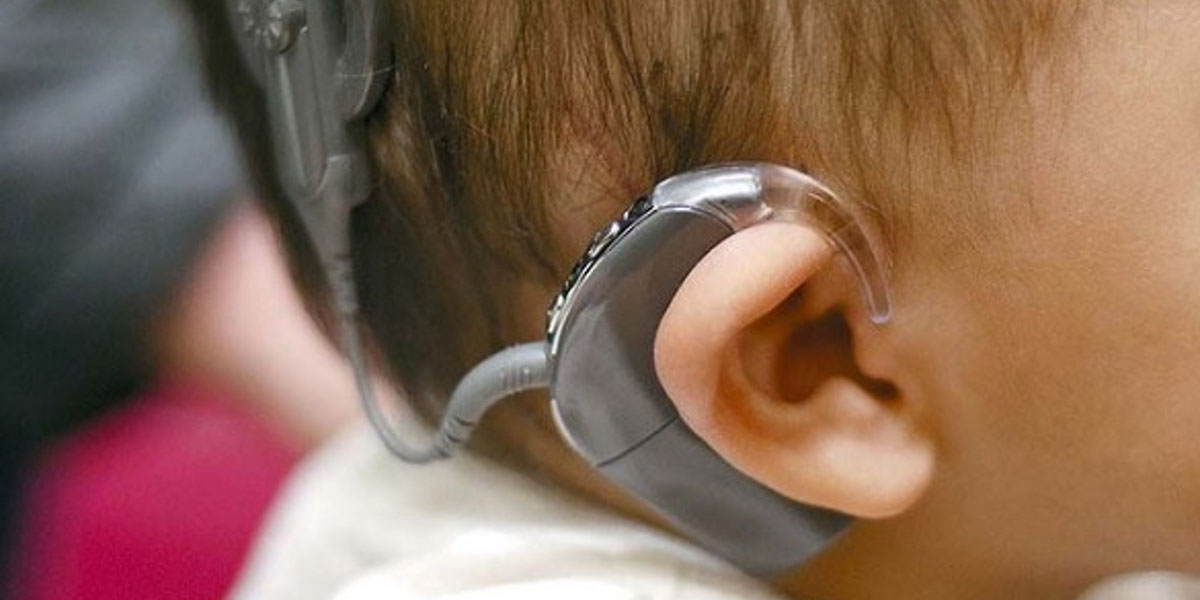
Don’t wait to make a referral. That’s the key message the Seattle Children’s Audiology team wants to emphasize with community providers who suspect an infant or toddler patient may have hearing problems.
“Early identification and intervention for hearing issues are critical to help a child’s brain learn how to identify sounds and develop spoken language,” said Dr. Erin Christianson, Division Head, Seattle Children’s Audiology. “If there’s any indication that a baby or young child may be struggling to hear, please refer them to Seattle Children’s as soon as possible for clinical help. The first two years of life are the peak window for auditory cortex development. Delays in referring patients with suspected hearing loss can compromise their abilities for spoken language later. When in doubt, refer early.”
Hearing problems can come from a variety of causes, at any time of life. Sometimes patients are born with hearing loss, or it may come later after they have started using spoken language and hearing the world around them. Watch for signs of patient hearing loss over time, due to illness or injury, and refer them to Seattle Children’s for help. Additionally, if a patient with a hearing aid is still experiencing language or developmental delays, consider referring them to Seattle Children’s for intervention and support.
Cochlear Implants Can Make Life-Changing Benefits for Patients
Patients with more severe hearing loss may not benefit enough from a hearing aid to support spoken language development and may be considered for a cochlear implant (CI). Unlike a traditional hearing aid, which simply amplifies sound into the auditory system, a CI is a surgically implanted electronic medical device that bypasses damaged parts of the inner ear (cochlea) to directly stimulate the auditory nerve, sending electrical signals that the brain can learn to interpret as meaningful sounds, words and language.
For patients born with significant hearing loss or those who experience progressive hearing loss over time, an implant can provide critical access to sound needed for them to develop spoken language and safely navigate their environment. Because these implants can make such a huge difference in quality of life for patients, the FDA recently approved cochlear implants for children with normal hearing in one ear and profound hearing loss in the other (single-sided deafness).
Patients who may be candidates for a CI should be referred to the Seattle Children’s Childhood Communication Center, which is home to the Cochlear Implant Program. For all other hearing issues please refer patients to Seattle Children’s Audiology Program, which will triage incoming requests and may flag new patients and transfer them to the Childhood Communication Center if they are a good candidate for a CI.
If a patient is a good candidate for a CI referral, keep in mind that Seattle Children’s:
- Has the first and longest-standing pediatric-dedicated CI program in the region
- Utilizes telehealth appointments whenever possible to make appointments easier for families
- Offers specialized care to help children with complex medical needs, such as vestibular dysfunction or developmental delays alongside their hearing loss
- Provides a multidisciplinary, comprehensive and collaborative team that includes experienced surgeons, audiologists, psychologists (to support family expectations/readiness) and specialists in auditory habilitation therapy
Surgery is only the beginning of lifelong CI care. Seattle Children's provides wrap-around care, device programming (mapping), and specialized auditory-verbal therapy from infancy up to age 21 to ensure patients are set up for long-term success with their new hearing capabilities.
Providing Comprehensive Care and Specialized Services
Unlike other programs that serve both adults and children, every surgeon, audiologist, psychologist and therapist on the Seattle Children’s cochlear implant team is an expert exclusively in pediatric development and care, to ensure the best possible outcomes for young patients. Along with standard hearing issues, Seattle Children’s is equipped to handle the most medically and anatomically complex cases in the region, which is why many medical centers refer their most complicated cases to the team.
Seattle Children’s specializes in infant vestibular and balance testing and is the only pediatric program in the region providing this type of diagnostic testing and screening for young children and infants. Additionally, Seattle Children’s offers advanced diagnostic capabilities like auditory brainstem response testing that evaluates hearing and auditory nerve function without requiring behavioral responses from the patient, making it ideal for newborns and other children who are unable to participate in standard hearing tests.
Helping Patients With Improved Access Options
The Seattle Children’s Audiology team is taking steps to make life easier for busy families trying to keep up with medical appointments, so the team is continually expanding its capabilities to provide more opportunities for remote consultation visits and also has plans to expand its services in the South Puget Sound area.
To learn more, visit the Cochlear Implant Program page and the Childhood Communication Center refer a patient page.