
Eosinophilic Gastrointestinal Disorders (EGID) Program
Contact the Eosinophilic Gastrointestinal Disorders (EGID) Program
What is the Eosinophilic Gastrointestinal Disorders (EGID) Program?
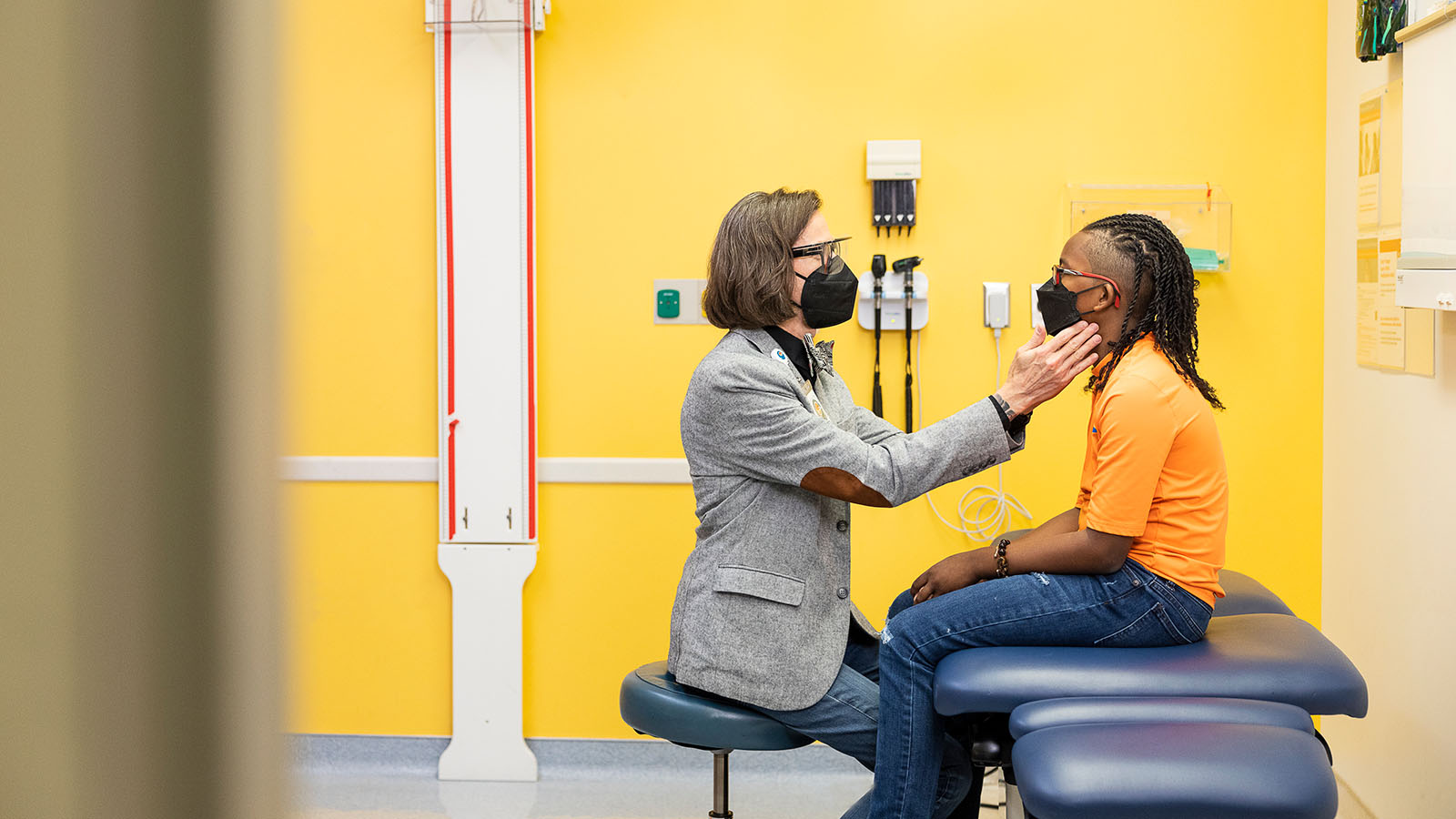
The Eosinophilic Gastrointestinal Disorders (EGID) Program sees children diagnosed with EGIDs who need a higher level of care and support than they have been able to find elsewhere.
Our team partners with your child’s other healthcare providers to understand your child’s health needs and help make sure they get the best possible results from their treatment.
What are EGIDs?
EGIDs are a group of conditions with GI symptoms. Common symptoms include:
- Difficulty swallowing (dysphagia)
- Vomiting
- Abdominal pain
- Less growth or weight gain than is typical for your child’s age
- Food getting stuck in the tube that carries food from the mouth to the stomach (esophagus) (also called food impaction)
- GI bleeding
- Diarrhea
- and low iron
What causes EGIDs?
EGIDs are triggered when your child’s immune system responds to an . The response leads to swelling and injury (inflammation) in the from too many eosinophils (ee-oh-SIN-oh-fills), a type of white blood cell.
Types of EGIDs
There are several types of EGIDs, named for the part of the digestive tract that’s affected, including:
- (EoE)
- (EoG)
- (duodenitis, jejunitis and ileitis)
Why might my child need this program?
Most children with EGIDs can get the care they need from a gastroenterologist in their community. But some need more advanced or innovative testing or an expert second opinion to decide on a treatment plan. Some children have complications — health problems that could come from EGIDs, especially if it took years to get a diagnosis, which is common with these conditions. Our experts help with situations like these.
If you suspect your child might have an eosinophilic gastrointestinal disorder and they haven’t been diagnosed, talk with your child’s primary care provider about seeing a gastroenterologist.
Services We Provide
Seattle Children’s EGID Program uses a wide range of tools to evaluate your child’s condition. These tools include tests that aren’t available anywhere else in the WAMI region (Washington, Alaska, Montana and Idaho) — the esophageal string test (EST) and transnasal endoscopy (TNE).
If your child has been diagnosed with EoE and they are getting care from a pediatric gastroenterologist, they may be able to have the EST or TNE at Seattle Children’s.
If your child has been diagnosed with an EGID and they need more support or evaluation, their doctor can refer them for a full evaluation and treatment recommendations from our multidisciplinary team.
We follow guidelines from groups like these for how to diagnose and treat EGIDs:
- American Partnership for Eosinophilic Disorders (APFED)
- Consortium of Eosinophilic Gastrointestinal Disease Researchers (CEGIR)
- North American Society for Pediatric Gastroenterology, Hepatology and Nutrition (NASPGHAN)
Multidisciplinary EGID clinic
Our clinic brings together a team of experts from many areas of healthcare to see your child on the same day.
- Typically, patients start by having a pulmonary function test. This helps us check if your child might have a lung condition or other breathing problem that can be linked with EGIDs.
- Next, your child will see several EGID Program team members, 1 at a time. They include an /, a , a , a with a focus on swallowing and eating and a registered nurse/nurse coordinator.
- Our research coordinators and research scientist meet with you to explain any studies at Seattle Children’s that are open to your child so you can think about taking part.
- Our team’s meets with families to talk about how the condition is affecting their life at home and school.
- We also have a to help with the effects of EGID on your child’s mental health. Both the social worker and psychologist have training in the issues that families face when a child has an eosinophilic disorder.
- A Child Life expert can help your child feel more at ease and cope with procedures, lab draws and other aspects of getting care.
Together, the team will recommend a plan custom-made for your child. It may include further tests, treatments, information about managing their condition, mental health resources, ways to support your child at school or other steps to help your child and family.
To make sure treatment is improving your child’s quality of life, we may schedule your child for follow-up visits and ask you to answer survey questions about how your child is doing.
Tests and procedures
To get more details about your child’s condition or to treat it, the gastroenterologist may use 1 or more of these tests or procedures:
- (EGD)
- (motility test)
- (EnteroTrack)
Research to improve quality of life
The EGID Program team works on research to advance care and improve quality of life and other outcomes for children with eosinophilic disorders, including studies on medicines and nutrition. If your child qualifies to join a study, we’ll talk with you about the option to take part.
Our research includes:
- A to collect data on children treated with the medicine dupilumab (Dupixent) for EoE (EDESIA)
- A study on using dupilumab to treat EoG (ENGAGE)
- A study comparing different approaches to diet changes (eliminating dairy with or without using formula)
- A project to assess the skills of providers doing transnasal endoscopy in children (NOSE UP study)
Ways to connect and advocate
Living with EGID can be challenging. There are many ways to connect with Seattle Children’s experts and other families who know what it’s like. Through the EGID Program, we have:
- A leadership council for teens with EGIDs and their families to connect with and support other families who have a new diagnosis
- An advisory board for families to engage with each other, share their experiences and help us improve care
- A listserv for families who want to subscribe to our email list (email us to join)
- An EGID Guild for families who want to fundraise and advocate for EGID care and research
Scheduling an Appointment
- If you would like an appointment with the EGID Program, ask your child’s primary care provider or gastroenterologist to refer you.
- If you have a referral, see how to schedule an appointment at Seattle Children’s.
- Learn about Gastroenterology and Hepatology resources, such as useful links, videos and recommended reading for you and your family.
Eosinophilic Gastrointestinal Disorders Program Team
Leadership
-

Michael Keith Pickens, DO, FAAP
Medical Director, Eosinophilic Gastrointestinal Disorders (EGID) Program
Teams


Contact Us
For more information, contact Gastroenterology and Hepatology at 206-987-2521. If you would like an appointment, ask your child’s gastroenterologist for a referral.
Providers, see how to refer a patient. Patients can be referred to the EGID Program for a multidisciplinary clinic evaluation and treatment recommendations, or they can be referred for only an esophageal string test or transnasal endoscopy.
Paying for Care
Learn about paying for care at Seattle Children’s, such as insurance coverage, billing and financial assistance.
Social workers
Alisha Eastman, MSW, LICSW
Tessie Ottaway-Chung, MSW, LSWAIC
Back to Top