How Music Therapy Supports Autistic and IDD Clients
April 30, 2026
By Jeremiah Nelson, MTL, MT-BC
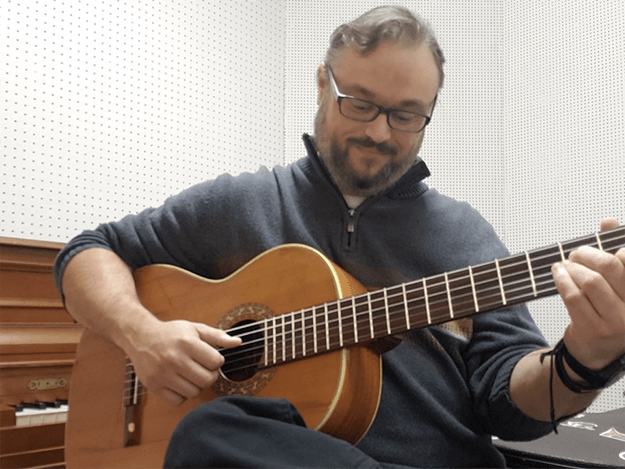 First, a little about me. I’m Jeremiah Nelson, a licensed, board-certified music therapist and the owner of Around the Sound Music Therapy, a private practice based north of Seattle in the Mill Creek area. Before entering this field, I spent about a decade working in the wine industry. During COVID, I started seriously reevaluating a career change that would both fulfill me personally and help others. Music had always been a constant in my life, and I had a long-standing interest in psychology. Music therapy ended up being a natural intersection of both.
I now primarily work with autistic individuals and people with intellectual and developmental disabilities (IDDs), including many adults, a population that is often underserved when it comes to therapeutic services.
What Music Therapy Is
Music therapy is often misunderstood as simply playing music or providing entertainment. In reality, it is a clinical, goal-oriented practice. Music therapists complete a specialized degree, a supervised internship and a national board certification process.
In sessions, music is used intentionally to support non-musical goals. That might include communication, emotional regulation, social interaction or building coping skills. The music itself is the tool, not the end goal.
It is also particularly effective for non-speaking or minimally verbal clients. Music provides alternative ways to communicate through rhythm, vocalization, movement and shared musical structure. Clients who may not consistently use language can still make choices, initiate, respond and express preferences within a musical framework.
Why I Chose to Work With Autistic and IDD Clients
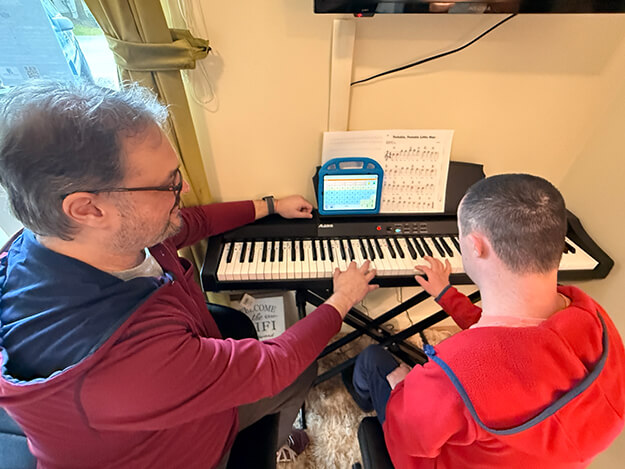 My interest in this population really developed during my practicum and internship at the Alyssa Burnett Center in Bothell, which serves adults with autism and other IDDs.
What stood out to me right away was how ABC is one of the few places addressing both the level of need and the lack of services available, particularly for adults. At the same time, I found the work genuinely enjoyable. Many of the individuals I worked with brought a strong sense of creativity, spontaneity and presence into sessions. That combination makes for meaningful and engaging work.
I also saw firsthand how traditional communication methods do not always fit. Verbal communication can be inconsistent or frustrating for some individuals. Music provides a different pathway, one that relies on rhythm, repetition and structure, which can feel more accessible.
A Simple Example From Practice
During my internship at the Alyssa Burnett Center, one area I focused on consistently was helping students expand how they identify and express emotions.
It is common for people, especially those who are neurodivergent, to default to broad categories like “happy” or “sad” when asked how they are feeling. In sessions, I would introduce music-based ways to explore more nuance. For example, I might play two different chord progressions and ask which one sounded more like how they were feeling, or invite them to share a song that matched their mood.
Over time, I started to see a shift. Instead of giving a quick, surface-level answer, students were taking more time to compare, reflect and choose. They were engaging more deeply with their internal experiences, even if they were not putting it into words.
That is a small change, but it matters. Being able to identify and communicate how you feel is a foundational skill that impacts everything from relationships to emotional regulation.
What Progress Looks Like
In music therapy, progress is usually gradual and practical. A client might first learn a coping strategy in a session, such as using rhythm or breathing paired with music to regulate. Then they start recognizing when they are becoming overwhelmed. Eventually, they begin to use that strategy independently in real situations.
Those steps take time, but they translate into meaningful changes in daily life.
Why I Started My Own Practice
 After completing my training, I decided to start my own practice, Around the Sound Music Therapy, to create a space that is inviting, flexible enough to work on a variety of goals and easily accessible. Many music therapy services are geared toward small children or older adults. My goal has been to offer something that also fits adolescents and adults in a way that feels appropriate to them, without being overly rigid or overly simplified.
In addition to music therapy, I also offer adaptive music lessons. These are designed for individuals who want to learn or engage with music in a more traditional sense, but may need a flexible, individualized approach. The focus still includes skill-building, creativity and self-expression, but without the clinical framework of therapy.
A large part of my work continues to focus on autistic individuals and people with IDDs, providing individualized sessions that are engaging, respectful and goal-oriented.
Ways to Use Music at Home
You do not need to be a musician to use music in a helpful way at home. A few simple approaches can make a difference:
- Pair routines with specific songs. Using the same song for activities like getting dressed or brushing teeth can create predictability and make transitions easier.
- Use rhythm to express feelings. For example, handing someone a shaker and asking them to “show how you feel” through sound can be more accessible than asking directly.
- Talk about music preferences. Asking why someone likes a particular song can open up conversations about emotions, identity and interests.
These are simple entry points, but they reflect the same principles used in music therapy sessions. In a clinical setting, those ideas are expanded, individualized and tied directly to specific goals.
Music therapy is not about musical ability. It is about using music as a structured and flexible way to support connection, expression,and growth.
For many of the individuals I work with, music is one of the most effective ways they have to engage with the world around them. Building on that, rather than working against it, is what makes this work meaningful.