
Nursing Annual Report
Read the 2025 Nursing Annual Report to discover how our incredible nurses increased access to services, supported their colleagues and provided life-changing hope, care and cures.
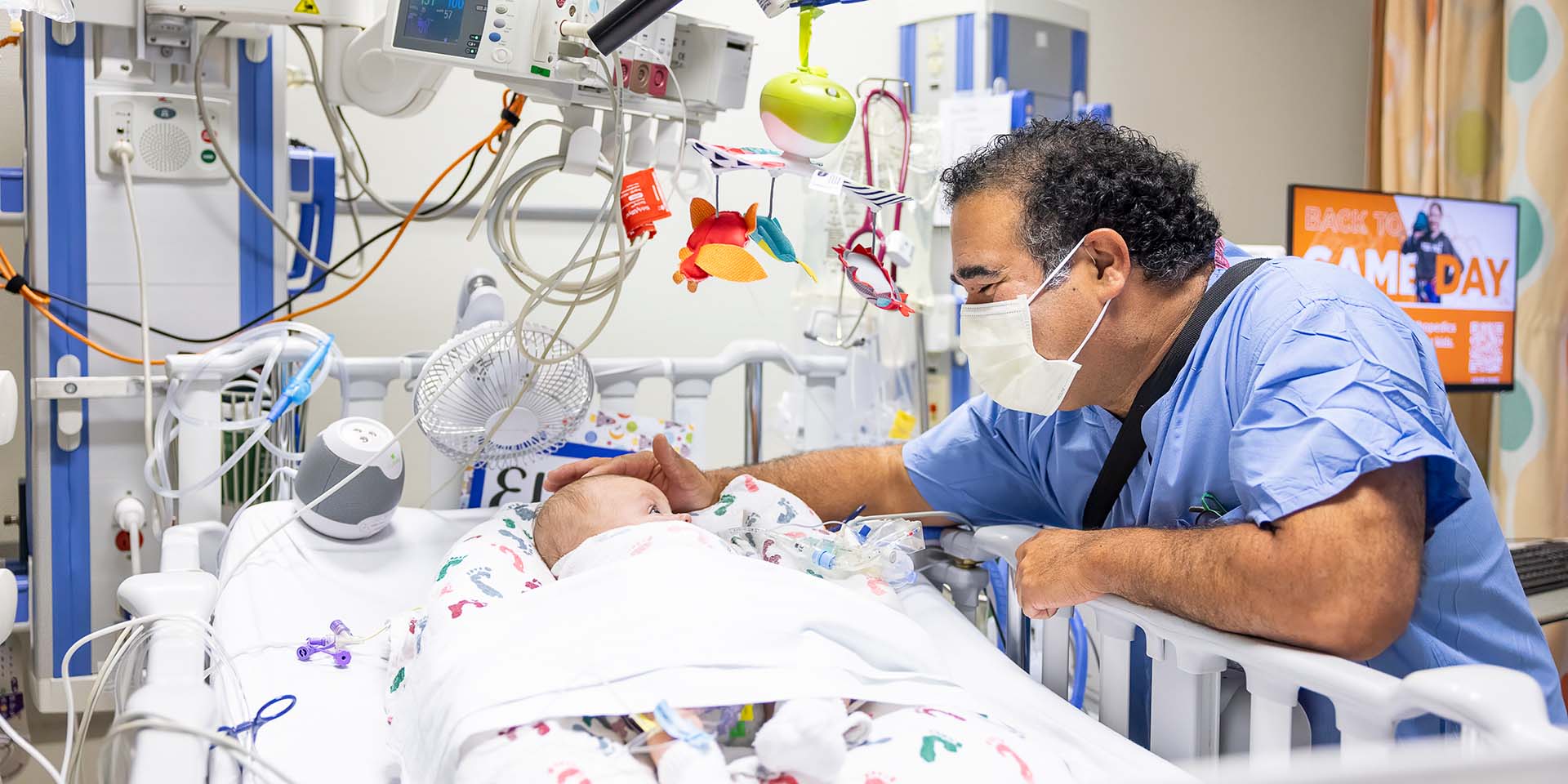
Care Model Innovation
Support patients, families and nurses by developing innovative models of care and staffing strategies. Care Model Innovation supports the Seamless Operations trek of Seattle Children’s strategic plan.
- Virtual nursing technologies are increasingly used across healthcare to optimize staffing, enhance patient experiences, and improve clinical workflows.
- Seattle Children’s launched its Virtual Nursing (vRN) pilot in March 2025 to reduce the burden on bedside nurses by shifting admission and discharge responsibilities to a Seattle Children’s nurse working remotely in a virtual capacity. Transitioning these tasks to a vRN allows bedside nurses to devote more time to direct patient care and supports more timely care progression for families.
- The vRN pilot brought together teams from Human
- Centered Design, Epic, Digital Patient Access, Care and Engagement, and clinical bedside nurses to codesign and implement the model.
- Virtual nursing services are available five days a week from 7 a.m. to 7 p.m. Since launch, vRNs have completed nearly 2,000 admission and discharge tasks.
- In Surgical RC5/FB8, the median discharge time for patients supported by vRNs in 2025 is 12:38 p.m., an hour earlier than the median discharge time without vRN support.
- Seattle Children’s implemented proactive central line safety rounds to reduce central line–associated bloodstream infections (CLABSI) across inpatient units. These rounds strengthen system reliability by partnering with frontline teams to learn from standard work and reinforce best practices.
- During each round, multidisciplinary teams review high-risk patients using a validated assessment tool. This tool guides discussion of evidence-based practices and standard bundle elements for patients with central lines. Teams then make real-time recommendations or plan follow up practice changes as needed.
- Units with the highest CLABSI rates—or those at greatest risk—conduct rounds at least weekly.
- Fiscal year 2025 marked Seattle Children’s lowest CLABSI rate on record: 0.83 infections per 1,000 central line days.
Professional Development
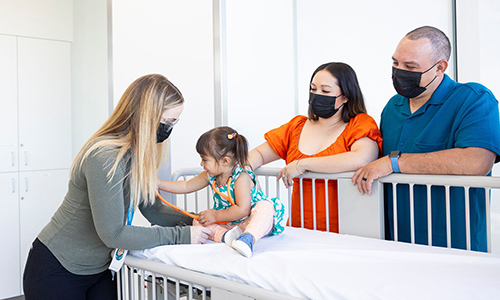
Create opportunities for nurses to learn, grow and advance their careers in the best way for them. Professional Development supports the People and Culture enabler of Seattle Children’s strategic plan.
- The Preceptor Skills Workshop provides new and experienced preceptors with a structured opportunity to strengthen their teaching and coaching skills. Participants learn and practice strategies grounded in trauma-informed principles, including effective feedback techniques, SMART goal development, skill building approaches, and navigation of key organizational resources.
- Designed for team members across all experience levels, the workshop incorporates a variety of engaging learning methods — including gamification — to support active participation and long-term retention.
- The workshop is open to CNAs (certified nursing assistants), MAs (medical assistants), nurse technicians, and nurses. Nurses are eligible to receive two continuing education contact hours, and MAs may earn two American Association of Medical Assistants contact hours.
- In 2025, teams piloted the use of MicroSim (Microlearning Utilizing in situ Simulation). MicroSim was designed to be interactive education of 15 minutes or less that can be completed with team members who are actively working in patient care. It was initially developed to address gaps in patient escalations, recognition, immediate nursing actions, appropriate timing and level of escalation, and incorporate electronically communicated practice changes.
- MicroSim scenarios were selected based on gaps in practice that were identified with unit leadership by virtue of audits, escalations, eFeedbacks, Rescue and Code Blue reviews.
- To measure the effectiveness of this pilot program offering, participants were asked to complete a short pre- and post-survey to rate their confidence scores. Initial data shows an increase in confidence in all areas measured.
- MicroSim was initially piloted on Seattle Children’s Cancer and Blood Disorder Center’s (CBDC) inpatient unit before expanding to include CBDC outpatient, Medical 4, Rehabilitation, Surgical 5 and Surgical 8 units.
- In 2026, MicroSim use will broaden to incorporate small interactive education to teach to other goals where a hands-on component is beneficial.
- Expansions will include collaborative teamwork with other frontline roles, in addition to registered nurses, and expanding to other areas of the hospital.
- To support patient safety, monthly emergency response simulation was implemented for Medical Unit 3 nurses.
- The simulation, called “The First Three Minutes”, focuses on rapid assessment and rescue of a patient in cardiac arrest in the acute care setting.
- Leaders from Seattle Children’s Medical Unit Professional Governance group made this simulation possible for nurses to participate while on shift in a meaningful way.
- Simulations are offered monthly for day and night shifts. Professional Governance runs the simulation with one RN facilitator and three RNs who relieve frontline staff from their patient assignments to attend simulation.
- Since April 2025, about 90 Medical Unit 3 RNs have participated — 80% of the unit’s total RNs. Following participation in the simulation, 77% of RNs agreed or strongly agreed with the statement, “I am confident in my emergency response skills” (increased from 56% pre-simulation). Ninety nine percent of RNs agreed or strongly agreed with the statement, “This simulation was beneficial to my professional practice.”
- Professional Governance RNs supporting this project: Grace Fischer, RN, Kayden Metoyer, RN, Hannah Womer, RN, Ann-Marie Fountain, RN, Brian Reyna, RN, Jaylene Maes, RN, Rachel Gilbert, RN, Alexa Baptista, RN, Brian Ha, RN, Sarah McClean, RN, Alex Collins, RN. Other supporting members: Lizzy Slebodnick, RN, Erika Jackalone, NPD.
- Skillsfest offers a strategic approach to optimizing micro-learning opportunities into a condensed model supported by Nursing Professional Development. Skillsfest aims to improve engagement, collaboration and skill development among staff and leaders. It is a four-hour, hands-on skills fair where nurses can demonstrate their required unit competencies, gain hands-on practice with skills, participate in simulations and learn from experts.
- Skillsfest is a four-hour, hands-on skills fair where nurses can demonstrate their required unit competencies, gain hands-on practice with skills, participate in simulations and learn from experts.
- This collaborative event was developed to meet the various and dynamic needs of nurses across the organization. In 2025, 339 nurses from over 20 care
- areas attended Skillsfest.
- About 100 Seattle Children’s team members contributed to its development and implementation. Contributors included a variety of subject matter experts from Nursing Professional Development, Nursing Informatics, Epic, nurse consultants, clinical nurse specialists and frontline nurses.
Community Impact
Provide opportunities for nurses to have a meaningful presence and impact in schools and communities. Community Impact supported the former Enhanced Partnerships trek of Seattle Children’s strategic plan. (Enhanced Partnerships was part of the strategic plan’s Horizon 1; it has evolved and is now part of the other four treks.)
- Seattle Children’s Community Health, Injury Prevention programs strive to increase access to education and safety devices that are shown to reduce preventable injuries by supporting safer home and community environments for children and adolescents.
- Seattle Children’s Community Health team trains workforce members interested in volunteering at community health events across the region. In 2025, four nurses completed opioid overdose prevention training.
- These nurses then volunteered at three opioid overdose prevention events – skillfully engaging with community members to offer overdose prevention recognition and response education, hands-on training with mannequins and naloxone distribution.
- Seattle Children’s Vascular Access Service Team (VAS) had the opportunity to train and educate Harborview Medical Center nurses on how to place peripheral intravenous lines (PIV) on pediatric patients. Harborview nurses need to be able to place PIVs in younger patients admitted for burn or trauma treatment, but the volume of patients they typically see isn’t high enough to hone their skills.
- To increase their skills and confidence, Seattle Children’s VAS leadership and clinical nursing team provided opportunities for Harborview nurses to receive training on pediatric PIV placement at Seattle Children’s.
- Seattle Children’s nurses from VAS and outpatient Radiology trained eight Harborview nurses across day and night shifts, each receiving 24 hours of PIV experience and classes. Training included introducing pediatric-specific tools to improve success, such as the transilluminator, techniques specific to accommodate smaller patients, and evidence-based best practice skills.
- Survey responses indicate this collaboration enhanced the confidence and skillset of Harborview nurses in pediatric PIV placement, which can directly improve patient care outcomes by increasing IV success rates and minimizing complications.
- Seattle Children’s Outreach Education team’s mission is to provide high-quality continuing education and training programs to healthcare professionals.
- In fiscal year 2025, the Nursing Professional Development team and instructors successfully trained about 4,000 people via videos, conferences and courses.
Healthy Work Environment
Build a “best-in-class” culture and healthy work environment where nurses feel heard and seen. Healthy Work Environment supports the People and Culture enabler of Seattle Children’s strategic plan.
- Seattle Children’s Cardiac Intensive Care Unit (CICU) team implemented monthly HEART Rounds (previously named Moral Distress Rounds) to support workforce members with the moral, emotional and mental health challenges of navigating ethically complex patient care situations in a multi-disciplinary setting.
- The aim of these rounds is not to eliminate moral distress, but to lessen how often it occurs and how intensely it is experienced by workforce members. The rounds provide the CICU team with structured ethical frameworks, open dialogue and strengthens the team’s sense of moral agency. Ultimately, this work seeks to reduce the long-term impacts of the care the CICU team provides.
- Each session of rounds includes an introduction to key ethical terms, facilitated group discussion with options for anonymous input, use of the Moral Distress Thermometer to gauge distress levels and a summary with resources for team members seeking additional support.
- The rounds were recognized by the Neonatal Heart Society and received an award for Abstract of the Year. The rounds team received funding from a Seattle Children’s Nursing Research Grant, allowing them to pursue this project, with support from Seattle Children’s Heart Center and the Treuman Katz Center for Pediatric Bioethics and Palliative Care at Seattle Children’s Research Institute.
- In 2025, Seattle Children’s Nursing Bioethics Program hosted colleagues from the Cleveland Clinic’s Center for Bioethics for a two-day workshop focused on their Moral Distress Reflective Debrief Process.
- The objective of this workshop was to move Seattle Children’s program toward a more standard approach to address moral distress across interdisciplinary teams, as well as provide facilitation training for the liaisons.
- The Cleveland Clinic team also engaged with Seattle Children’s team members in a program assessment. The outcome of this assessment will be a first-time strategic plan for the Seattle Children’s Nursing Bioethics Program.
- Over the years, teams at Seattle Children’s have made a concerted effort to reduce incidents of workplace violence, improve workplace prevention and develop the Adaptive Social Response team to respond to real-time support needs. This work has been completed, in a large part, by Seattle Children’s Workplace Violence Committee.
- The Workplace Violence Committee is comprised of team members, including nurses, from across the organization who come together to improve prevention and response. There are four nurses on the committee from inpatient, perioperative and ambulatory service areas.
- In 2025, team members from Seattle Children’s also participated in a workplace violence prevention-focused collaborative with the Washington State Hospital Association. This brought together hospitals from across the state to share resources and make a meaningful improvement in workplace violence in the healthcare setting.
- Since April 2024, nurses from Seattle Children’s Surgical Unit, Cancer and Blood Disorders inpatient unit, and Pediatric Intensive Care Unit have been participating in the American Association of Critical-Care Nurses Healthy Work Environments (HWE) National Collaborative.
- Using a scientific approach, this groundbreaking collaborative program brings together HWE experts and healthcare teams of frontline nurses and nursing leaders from across the country who collaboratively implement HWE standards to help improve care delivery and work environments.
- The three units from Seattle Children’s assembled their own unit-based team comprised of frontline nurses and nursing leaders to address the unique needs of their areas.
- Through Seattle Children’s participation in the collaborative, nurses and other team members have had the opportunity to collaborate with hospitals across the country, both adult and pediatric, and learn from one another. Seattle Children’s nurses and applicable clinical team members are surveyed every six months to measure the impact of efforts to create a healthy work environment.
- The survey asks nurses to rate six categories of a healthy work environment on a scale of one (the lowest) to five (the highest). Survey scores thus far have shown:
- A total average score increase of 4.09 to 4.12.
- Increases in these categories:
- Effective decision making: 4.68 to 4.73.
- Appropriate staffing: 4.3 to 4.41.
- Authentic leadership: 4.02 to 4.09.
- To empower nurses with greater ownership and accountability over their practice, Seattle Children’s nursing governance model evolved from Shared Governance to Professional Governance. This initiative included a formal name change, updating the foundational bylaws and providing targeted leadership education for committee chairs.
- Key outcomes and measures included:
- Framework shift: Emphasizing greater nurse ownership, accountability and authority in practice decisions.
- Leadership alignment: Conducted a leadership education retreat for all Professional Governance Chairs to ensure a consistent understanding and effective execution of the updated bylaws. These changes included project intake process, project expectations/duration and membership accountability.
- Project management education and resource orientation: The retreat focused heavily on shared learnings from common issues across professional governance groups, orientation of resources and templates, and support on how to lead and facilitate meetings.
- A team of six RNs in Seattle Children’s Cardiac Intensive Care Unit (CICU) participated in the American Association of Critical-Care Nurses (AACN) Clinical Scene Investigator (CSI) Academy. Participating nurses included Christy Cain, RN, CCRN, Vivian Jones, RN, CCRN, Celeste Mirabal, RN, CCRN, Emily Rallo, RN, CPN, Sarah Zielinski, RN, CCRN, Jenifer Peterson, MSN, RN, CCRN.
- The team’s initiative, entitled No One Cares Alone, aimed to implement a novel, peer support and wellness rounding program grounded in evidence-informed practices. departing from traditional models that rely on self-initiated help-seeking behaviors, this program introduced consistent, unit-based outreach through weekly peer-led wellness rounds.
- The team is invited to give a podium and poster presentations at the AACN National Teaching Institute Conference in May 2026. This is the largest nursing conference in the country.
- Outcome measures of the program include:
- Improvement in CICU AACN Healthy Work Environment Scores in all categories.
- Improvement in Burnout Assessment Tool overall score by 17%.
- Reduction in CICU voluntary 12-month turnover rate from 21.75% to 16.46%.
- Multidisciplinary support and unit-wide engagement.
Green Planet
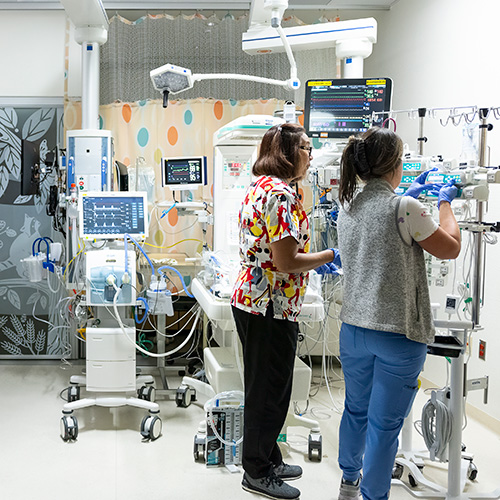
Develop healthier communities with nursing-led sustainable advancements and green initiatives. Green Planet supports the Seamless Operations trek of Seattle Children’s strategic plan.
- Team members with Seattle Children’s Cancer and Blood Disorders Center’s (CBDC) inpatient unit implemented a project to better reduce waste. In healthcare, unused supplies are routinely discarded when a patient is discharged.
- By collaborating with workforce members from Seattle Children’s Environmental Services and Infection Prevention departments, members of the CBDC inpatient team identified instances where unused supplies do not need to be wasted. Together, these groups developed a new process to minimize waste by only discarding supplies when a patient is discharged in certain isolation statuses.
- Unused supplies that do not need to be discarded will be donated. The team will work with Gateway Medical Alliance to donate applicable unused supplies. Gateway Medical Alliance is an organization that accepts medical supplies and equipment for redistribution to countries in need around the world.
- This project went live in December 2025. Metrics demonstrating the impact are forthcoming but will likely include amount of waste reduced, turnaround times for patient rooms and developing a new standard discharge process.
- To support patient safety, Seattle Children’s Infection Prevention team will be reviewing hospital acquired infection rates during this process change. The team hopes to replicate this reduce and recycle work in other units.
- Seattle Children’s Perioperative Services Department uses surgical packs which kit together various items needed for surgeries. These packs are built by frontline team members in conjunction with Medline and approved by perioperative leadership.
- In 2025, the group reviewed how to reduce the costs of the packs by eliminating items that were not frequently used. These were items Seattle Children’s paid for but were often either thrown away or removed from the surgical pack after it was opened and placed on Demand Flow instead.
- By not including infrequently used items in all packs, the overall cost per pack was reduced and less items were thrown away. Infrequently used items can be requested as needed using Demand Flow.
- Additionally, the team created a new oral surgery pack specific for cases at Seattle Children’s Bellevue Surgery Center. Surgical cases performed at Bellevue Surgery Center are less complex than those at Seattle Children’s hospital campus and often require less items. The new Bellevue Surgery Center packs have only the items needed, reducing cost and waste.
- These changes resulted in a $260,000 savings and over 5,600 pounds of items diverted from landfills.
Equitable Nursing Care
Amplify our commitment to equitable and safe nursing care. Equitable Nursing Care supports the Health Outcomes enabler of Seattle Children’s strategic plan.
- Seattle Children’s Surgical Unit’s Professional Governance committees received project proposals to improve patient and families’ access to food menus in languages other than English and for patients with specialty diets. This suggestion was brought forward by Ben Evans, RN, Surgical Unit – R5/Forest B8, and Taylor Knocke, RN, Surgical Unit – R6.
- In collaboration with Seattle Children’s Patient Family Education and Communications team, a simple design merged the need for reduced paper usage and waste. The new design uses a QR code to provide patients and visitors with direct access to all available food menus in the eight most common languages. After a family scans the QR code, they’re able to access the menu in the language of their choosing.
- During the first month of trialing the QR code on one of the inpatient surgical units, the code was scanned a record of 402 times.
- In addition to improving access and convenience for families, using QR codes are also more resource efficient. Prior to the QR code method, units had to pre-order, wait for and distribute paper menus for patients and families.
- There is a growing need for quick, accessible and culturally appropriate pre-translated tools that can be used during some short, non-clinical interactions between families and workforce members.
- In 2025, teams at Seattle Children’s increased the availability of visual tools with the Communication Picture Tool project.
- The project was a multidisciplinary effort that involved nursing staff through the HEAL Committee, nursing leaders, Interpreter Services, Center for Health Outcomes, Patient and Family Education, Brand and Creative Services, the Resuscitation workgroup and incorporated family feedback through the Patient Family Advisory Council.
- The Communication Picture Tool, available in both hard copy and digital formats, offers a reliable way to bridge language gaps while waiting for an interpreter, or for routine, day-to-day communication needs.
- For example, the tool can be used to help a family member who needs to ask workforce members where the bathroom is located, or to express a need for food and/or drink. Patients and families can also request a team member — nurse, social worker, interpreter — or share their basic symptoms and emotional experiences with workforce members.
- This tool does not replace the role of an interpreter. Instead, it is intended to help families communicate with their care team if an interpreter is not present. The tool can also help prompt workforce members to follow-up about an interpreter when the family requests one and/or when there is need for further conversation.
- The Communication Picture Tool is currently available in English, Amharic, Marshallese, Simplified Chinese, Somali, Spanish and Vietnamese. Some unit-specific versions are also available in applicable areas.
- Seattle Children’s Nursing Professional Governance HEAL Committee, Nursing Professional Development, and the Workforce Community and Connection teams worked together to offer over 10 showings at Seattle Children’s of the nursing documentary, “Everybody’s Work: Healing What Hurts Us All.”
- Produced by SHIFT Nursing, a nonprofit initiative, the documentary features courageous stories from nurses and patients. The film emphasizes that racism is not just a personal experience but a systemic issue that impacts everyone in the healthcare environment.
- Showings at Seattle Children’s included discussion time about how these topics impact organizations and what can be done to improve outcomes for patients, families and workforce members. Showings were offered to nurses and other workforce members. Over 700 attendees participated in multiple showings.
- Continuing education (CE) credits were offered to nurses to help them meet Washington state’s requirements for health equity continuing education hours.
Nurse-Led Research
Advance exceptional nursing care by growing nurse-led research. Nurse-Led Research supports the Life-Changing Research trek of Seattle Children’s strategic plan.
- The Center for Pediatric Nursing Research (CPNR) partnered with Seattle Children’s Research Institute (SCRI), teams at the hospital campus and external experts to develop a strategic plan. This plan was aligned with nursing’s broader strategic plan to advance nurse-led research. As part of this work, a new vision statement was created and the mission statement was edited as follows:
- Vision: To advance research to improve equitable clinical care and health outcomes for children and families locally and nationally.
- Mission: The Center for Pediatric Nursing Research advances equitable clinical care and health outcomes through innovative research. We leverage interdisciplinary collaborations and partnerships to advance our science and our impact by fostering a strong culture of clinical inquiry in our health care system. We provide resources and mentoring to support nurses at all career levels to lead research and disseminate findings.
- Learn more about the Center for Pediatric Nursing Research and view steering committee members.
View the entire 2025 Nursing Annual Report to learn more about nurse-led research.

Nursing By the Numbers
by nurses
or APPs
hired
hired
nurses hired
a graduate program*
in a professional organization*
both domestically and internationally*
*Data obtained from the 2025 Nursing Professional Profile.
Explore Our Past Reports
Working at Seattle Children’s
To reach our goals, we are committed to recruiting and retaining the best nurses. We invite you to search our current job openings.
Seattle Children’s provides opportunities for our nurses to learn and grow in an innovative environment while being in full partnership with other providers on multidisciplinary teams. We support and engage our nursing staff with training and educational opportunities, state-of-the-art-facilities and equipment, shared governance and comprehensive benefits.
When hiring, we look for nurses who share our passion for family-centered care and who practice at the top of their profession. Whether you are a new nursing graduate eager to participate in our healing environment, or a seasoned professional committed to advancing the practice of nursing, we welcome your application.