
Program Faculty
Program Sponsor and Co-Director
Lori Rutman, MD, MPH
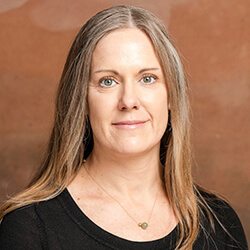
As vice president, chief quality and safety officer and associate chief medical officer at Seattle Children's, Dr. Lori Rutman leads the organization's strategy to advance quality, safety, clinical effectiveness, and outcomes across the health system. Her work focuses on building systems that translate data, evidence, and frontline experience into meaningful and sustainable improvements for children and families.
Dr. Rutman brings more than 15 years of experience in pediatric emergency medicine, quality improvement, patient safety, and health systems leadership. She is also a professor of pediatrics and emergency medicine at the University of Washington School of Medicine, where her academic work focuses on improvement science, quality improvement scholarship, and developing the next generation of healthcare improvement leaders.
Throughout her career, she has been passionate about creating learning health systems in which improvement is embedded in everyday care. She works closely with clinical, operational, nursing, analytics, research, and patient and family partners to strengthen organizational performance, develop reliable systems of care, and ensure that improvement efforts are measurable, equitable, and connected to the outcomes that matter most.
At Seattle Children's, she also supports the Center for Quality and Patient Safety's work in improvement science, education, scholarship, measurement, and system-wide quality transformation. Her goal is to create the conditions for teams to learn, innovate, and continuously improve; ultimately delivering safer, more effective, and more equitable care for every child and family we serve.
Interim Director
Karyn Yonekawa, MD
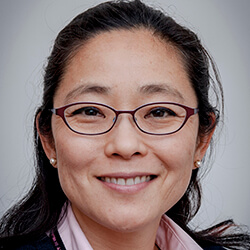
Dr. Karyn Yonekawa is a clinical professor emeritus of pediatric nephrology at the University of Washington. She completed the UW Certificate Program in Patient Safety and Quality in 2014 and is an alumni of the 2015 QI Scholars Program. Her past QI work includes initiatives involving nephrotoxin-related acute kidney injury, glomerular disease and ambulatory safety. She has participated in several national collaboratives including the Nephrotoxic Injury Negated by Just-in-Time Action (NINJA) and Pediatric Glomerular Learning Network (GLEAN). She is a past member of the Solutions for Patient Safety (SPS) committee for Ambulatory Safety Foundations and was a co-leader in the SPS safety initiative, Nephrotoxin-related Acute Kidney Injury (N-AKI). She has been a mentor in the QISP since 2021.
Mentors
Seattle Children’s
Colin Crook, DNP-PCNS, ARNP-CS, ACCNS-P

Dr. Colin Crook is a clinical nurse specialist and clinical quality consultant with the Center for Quality and Patient Safety at Seattle Children’s Hospital. He received his DNP from the University of Washington in 2021 and has served in various clinical quality roles supporting teams from the Emergency Department to the ICUs since 2017. He is also a board member of the Thai-Burma Border Health Initiative, a 501(c)(3) healthcare non-profit working with stateless ethnic refugees in the contested Thai-Burma border region of Southeast Asia. When not pursuing professional passions, he can be found out enjoying the great PNW outdoors with his friends and family.
Arti Desai, MD
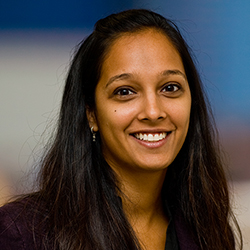
Dr. Arti Desai is an associate professor of pediatrics in the Department of Pediatrics at the University of Washington and a hospitalist at Seattle Children’s Hospital. Dr. Desai uses improvement science to advance research in two main areas: (1) integrated service delivery models for children with medical and social complexity; and (2) patient-reported outcome measures to assess quality of care and health-related quality of life outcomes for pediatric populations. In her work, Dr. Desai leverages human-centered design principles to bring an equity and inclusion lens to care delivery and improvement science.
Ron Kaplan, MD
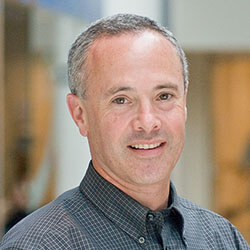 Dr. Ron Kaplan is a professor in the Department of Pediatrics and associate division chief for quality and community integration in the Division of Emergency Medicine. He graduated from the University of North Carolina School of Medicine, completed residency and chief residency at the University of North Carolina Hospitals, and fellowship in pediatric emergency medicine at Children’s Hospital Boston. He is a Fellow of the American Academy of Pediatrics and a former member of the AAP Section of Emergency Medicine Executive Committee. He is involved with the Pediatric Emergency Medicine Collaborative Research Committee (PEMCRC) of the AAP and the Pediatric Emergency Care Applied Research Network (PECARN). He completed the Advanced Improvements Methods course at Cincinnati Children’s Hospital and joined the QI Scholars program as a mentor in 2017.
Lauren McDaniel, MD
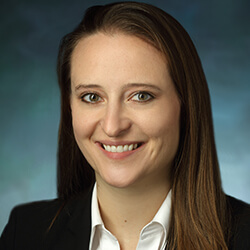
Dr. Lauren McDaniel is an assistant professor of clinical practice at the University of Washington and a pediatric hospitalist at Seattle Children’s Hospital. She joined the faculty in September 2022 after transitioning from Johns Hopkins Children’s Center in Baltimore. At Johns Hopkins, she completed a longitudinal leadership academy in quality and safety as well as the Lean Six Sigma Green Belt certification course through the Johns Hopkins Armstrong Institute for Safety and Quality. She additionally completed the Seattle Children’s QI Scholars Program in 2023. She has experience serving in leadership roles in both local and national quality improvement initiatives and is particularly interested in leveraging QI methodology to improve access to and efficiency of care delivery.
Thida Ong, MD
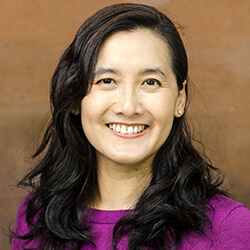
Dr. Thida Ong is a professor of pediatrics at the University of Washington and a pulmonologist at Seattle Children's Hospital. She serves as the medical director for quality improvement and innovation in the Division of Pulmonary and Sleep Medicine and the medical director for quality and safety foundations for Seattle Children's Ambulatory Services. She is the physician chair of the Cystic Fibrosis Learning Network, a national, 40-center collaborative learning health system focused on health and care improvement in people with cystic fibrosis. Dr. Ong is an alum of the inaugural 2015 SCH QI Scholars program and has served as a program mentor since 2023. Dr. Ong has a particular interest in the design and function of learning health systems. Her scholarly pursuits aim to integrate community engagement, computable phenotypes, health services implementation, and care equity through learning health system models that ultimately advance health outcomes and quality care for people with chronic respiratory conditions such cystic fibrosis, tracheostomy and ventilator dependence, and asthma.
UW Medicine
Lauge Sokol-Hessner, MD, CPPS
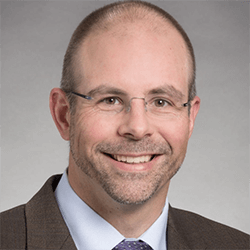
Dr. Lauge Sokol-Hessner is a hospitalist, associate professor of medicine at the University of Washington, QI mentor at the UW Medicine Center for Scholarship in Patient Care Quality and Safety, deputy director of implementation and innovation at the Center for Harm Response, speaker and consultant for the Institute for Healthcare Improvement and a guest speaker for the Harvard Medical School Master's in Healthcare Quality and Safety (HMS MHQS). Dr. Sokol-Hessner’s experience includes: operational quality and safety work as a former medical director of patient safety at Beth Israel Deaconess Medical Center in Boston; helping develop leaders in quality and safety as a former program director of the Harvard-wide Fellowship in Quality and Safety and HMS MHQS course director; teaching communication skills to a wide range of healthcare professionals; and coaching healthcare organizations to implement highly-reliable CRP programs. He completed medical school and residency at the University of Pennsylvania.
Statisticians
Seattle Children's
Kristy Carlin, MPH
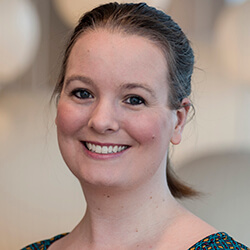
Kristy Carlin is a senior biostatistician with the Biostatistics, Epidemiology and Analytics in Research team at Seattle Children’s Research Institute, with over 12 years of experience as a consulting and collaborating biostatistician across a variety of clinical specialties. Much of her work has involved supporting nursing research, quality improvement, and interdisciplinary research teams. Her areas of expertise include study design, statistical analysis planning, longitudinal and survival analysis, statistical process control, and the analysis of clinical and observational data. She enjoys working collaboratively with investigators throughout the research process, from study development and design through analysis, interpretation, and dissemination, and has contributed to many peer-reviewed publications. She received her MPH in Epidemiology from Boston University and her BA from Franklin and Marshall College.
Erin Sullivan, MPH
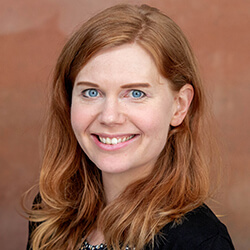
Erin Sullivan is a biostatistician with the BEAR Core at Seattle Children’s Research Institute, first joining the organization in 2015. She received her MPH from Emory University in Atlanta, where she interned with the CDC as a statistical assistant, and her BA from the University of Pennsylvania. Her experience includes many applied statistical methods such as time to event analyses, multiple imputation methods, ARIMA (autoregressive integrated moving average) models, interrupted time series, and statistical process control charts. She enjoys collaborating with diverse teams to achieve positive impacts on patient care.
Data Analytics
Seattle Children's
Bryan Strub, MS
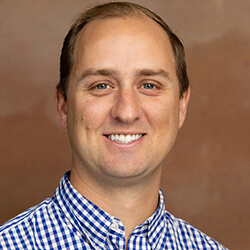
Bryan Strub leads a team of data analysts and scientists within the Biostatistics, Epidemiology, and Analytics for Research group at Seattle Children’s Research Institute. He has extensive experience connecting doctors, nurses, and other researchers with the data they need for evidence-based clinical research. His focus is on the QI Scholars Program, Center for Pediatric Nursing Research, National Vaccine Surveillance Network, and Cystic Fibrosis Research Program, among others. Before arriving at Seattle Children's, he worked at the Institute for Health Metrics and Evaluation at the University of Washington. He earned his BS in mathematics from Gonzaga University and an MS in data science from the University of Colorado.
Dwight Barry, PhD

Dwight Barry is a principal data scientist in the Clinical Analytics department of Seattle Children’s Hospital. He obtained a master’s degree from Yale University and a PhD from the University of North Texas, and has more than 25 years experience in healthcare analytics, emergency management, and environmental science. His work involves applied managerial and clinical analytics aimed at improved decision making with data, with particular interests in exploratory data analysis, statistical process control, time series changepoint/intervention analyses, and geospatial analysis. In previous positions, he served as co-PI on grants from NSF, NASA, and other governmental entities, has taught at a variety of colleges and universities, and has co-authored dozens of publications in a variety of fields. He enjoys mentoring early career researchers and clinicians to improve their statistical thinking skills and understand the importance of problem and question definitions.