
Expanding Access to Vaccines Through Research
Published
Featured Researchers

Summary
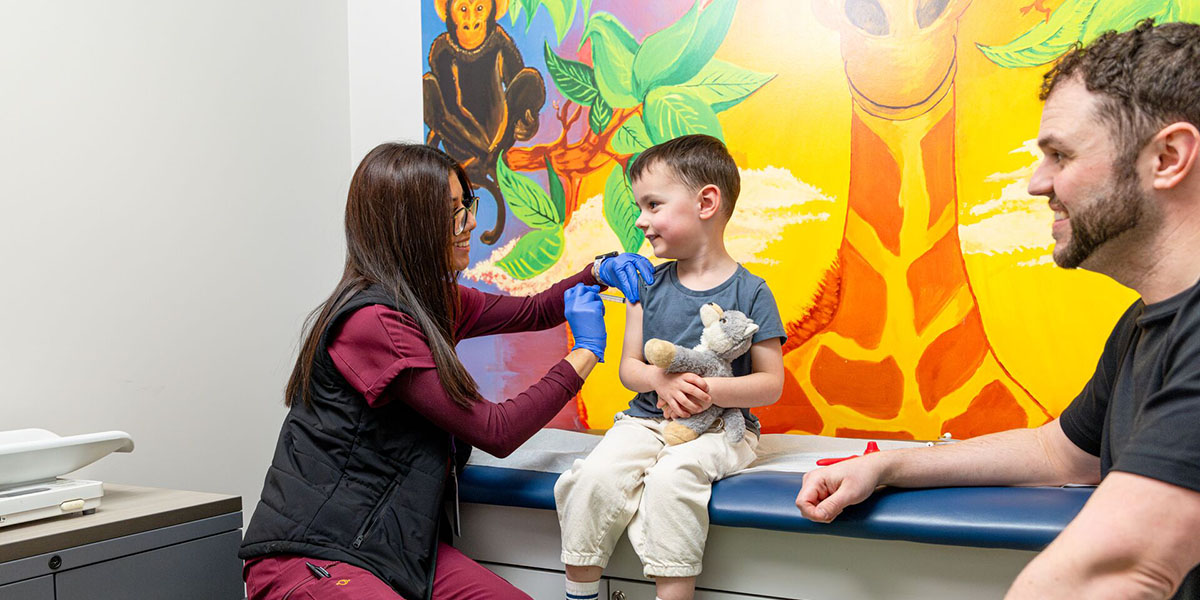
Drs. Mersine Bryan and Annika Hofstetter are on a mission to reduce barriers to vaccination and protect as many kids as possible from vaccine-preventable illnesses.
Vaccines are one of the best ways to prevent serious infections. In the last decade alone, we’ve seen major breakthroughs in preventive medicine — like RSV immunization in babies that reduces the RSV-associated hospitalization rate by around 80% and the rapid development of COVID-19 vaccines.
But there’s one problem: Many kids are not up-to-date on their vaccines.
Mersine Bryan, MD, MPH, and Annika Hofstetter, MD, PhD, MPH, are working to change that. Their research is identifying ways to increase access to vaccines and to provide evidence-based information about vaccines to families and clinicians.
“We’re essentially figuring out how we can get vaccines to those who need them at every opportunity possible,” Dr. Bryan said. “Especially for kids at high-risk for complications of vaccine-preventable illnesses."
Identifying barriers to getting vaccines
Many children get vaccines at well-child visits with their pediatrician. But not all families are able to see a pediatrician regularly. So Drs. Hofstetter and Bryan started looking for additional opportunities.
Dr. Bryan, who often cares for children hospitalized with vaccine-preventable infections, started to wonder: How many hospitalized kids are up to date on their vaccinations?
To find answers, the research team worked with the Seattle Children’s Research Institute’s Biostatistics Epidemiology and Analytics in Research (BEAR) Core to build the Seattle Children’s Vaccine Data Repository – backed by an internal research grant from the Center for Clinical and Translational Research. It pulled together electronic health records data from Seattle Children's and the Washington State Immunization Information System.
“We found that about 50% of children who are admitted are missing one or more doses of recommended childhood vaccines,” Dr. Bryan said. “And yet only about 4% of those kids receive vaccines during their hospital stay.”
Building an inpatient vaccination program
The opportunity was clear: Get kids vaccinated while they’re in the hospital. But determining exactly how to do that was murkier.
Drs. Bryan and Hofstetter launched a series of studies to examine barriers to vaccinating kids during a hospital stay, and learned that:
- Parents often didn’t know if their child was behind on vaccines or which vaccines they needed.
- Healthcare providers often did not offer vaccines during a hospital stay (and many families said they would have said yes if offered).
- Many doctors and nurses who work in the hospital didn’t feel prepared to have conversations about vaccines with parents.

“Primary care providers have conversations about vaccines and preventive health all the time,” Dr. Hofstetter said. “But we learned that inpatient providers often didn’t feel as comfortable or equipped to have in-depth conversations about vaccination.”
Getting kids up to date on vaccines
Now, Drs. Bryan and Hofstetter are working on several efforts to remove barriers and protect more kids with vaccines, including:
- Partnering with Seattle Children’s data analysts and informaticists to identify patients in the hospital who are due or overdue for vaccines using electronic health records.
- Building an immunization toolkit for staff, which includes resources to share with families to help them understand what shots their child needs and why they are important.
- Developing a vaccine communication training program for inpatient providers.
So far, their efforts have increased vaccine administrations by 10% this year alone.
“We're excited about the change we've seen and want to help others have the same success,” Dr. Hofstetter said. “Moving forward, we plan to create an implementation guide that can act as a blueprint for building a routine vaccination program for inpatients at other hospitals.”
A critical time in vaccine research
Protecting kids from vaccine-preventable illnesses — and helping families understand why vaccines matter — is more important than ever. Washington state is experiencing its largest measles outbreak since 1991, alongside rising cases of rotavirus and other preventable infections. At the same time, funding for vaccine research and delivery programs is becoming increasingly scarce.
“One of my NIH grants was recently cut,” Dr. Bryan said. “Without that funding, we can’t answer critical questions like: Is this program working? And how can we make it better?”
This work can continue moving forward through donations of any size to the Research Discovery Fund or by contacting elected leaders and telling them why continued investment in vaccine research and access matters.
Perhaps most importantly, talk with your community. If a friend shares concerns about vaccines, explain why you choose to vaccinate your own children.
“It’s a small number of families who decline all vaccines, but that minority is vocal,” Dr. Hofstetter said. “We need to amplify our voices and speak up about why vaccination matters — and how vaccines keeps kids healthy.”
Further Reading
- Immunizations: Why Are They Needed and How Do I Prepare My Child?
- Recommended Immunizations for Children Birth Through 6 Years Old (PDF)
- Recommended Immunizations for Adolescents 7 Through 18 Years Old (PDF)
- Flu Basics, Prevention and Treatment
- What Parents and Caregivers Should Know About RSV
- How to Protect Your Family Against Measles
- New Vaccine Candidate Holds Promise to Conquer Malaria
Related Categories
Featured Researchers
Related Centers & Programs
Related Articles
Early T1D Program Offers New Therapy to Delay Onset of Type 1 Diabetes
Published
Seattle Children’s is home to one of the first programs to support kids and young adults on track to develop type 1 diabetes — and to offer a therapy that can delay the onset of the disease.

Understanding Why Type 2 Diabetes Can Be Worse in Young People
Published
Type 2 diabetes (T2D) is on the rise in children and teens — and young people may experience more severe complications than adults. Dr. Petter Bjornstad is working to learn why and what we can do about it.
Changing the odds for infections during cancer treatment
Published
A common cold can sometimes lead to serious complications in kids and adults going through cancer treatments. Dr. Alpana Waghmare is working to change that through prediction, prevention and early intervention.