
Host-Based Drug Discovery for Infectious Diseases
Using machine learning and AI methods to find drugs for bacterial, viral and parasitic diseases and sepsis
Technology Overview
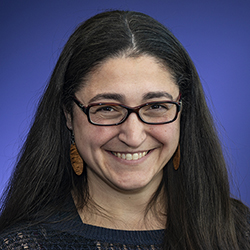 Dr. Alexis Kaushansky
Infectious disease expert Alexis Kaushansky, PhD, employs advanced computational methods to study host-pathogen interactions. Her research identifies novel therapeutic targets for drugs against bacterial, viral and parasitic infections. In these studies, Dr. Kaushansky focuses on targets in the host. This strategy reduces the likelihood that the drugs she develops will lose effectiveness due to resistance, which usually arises from mutations and adaptations in the pathogen.
An example innovation from Dr. Kaushansky’s work comes from her research on the cerebral form of malaria. In this dangerous form of the disease, the blood-brain barrier becomes compromised, leading to brain swelling and eventual death in 15% to 20% of infected children. A breakdown of endothelial barriers occurs in other serious conditions as well, including sepsis. Thus, drugs that Dr. Kaushansky is developing to protect the blood-brain barrier against cerebral malaria have applications in multiple diseases.
To identify host targets for new therapies, the Kaushansky team applies machine learning and artificial intelligence (AI) methods to data sources such as databases with information on the sensitivity of human kinases and human cell lines to small-molecule kinase inhibitors. The output of these computational methods includes predictions about which kinases control crucial processes in parasitic infection or blood-brain barrier regulation. The Kaushansky Lab uses in vitro assays and in vivo tests with animal models to confirm kinase involvement in targeted pathways and sensitivity to inhibitor compounds.
Dr. Kaushansky has expertise in proteomics for drug discovery, including the use of protein microarrays that require only picoliter samples to measure protein levels and detect post-translational modifications. Using this method, her team showed that malaria-infected cells can resemble tumor cells in their altered expression of oncogenes and tumor suppressors. This observation led to the finding that multiple drug classes — including the Bcl-2 inhibitor molecules that include FDA-approved cancer drugs — have strong antimalarial effects.
Dr. Kaushansky is interested in industry partnerships to further develop and apply her machine learning- and AI-based methods to identify drug targets with applications in multiple diseases. She welcomes industry collaborations to advance her discoveries about host kinases and kinase inhibitors into clinical use against infectious diseases and sepsis.
Stage of Development
- Preclinical in vitro
- Preclinical in vivo
- Computational modeling
Partnering Opportunities
- Sponsored research agreement
- Tissue sample access
- Target identification
- Drug screening
- Insectaries and animal models
Publications
Ortolan LS, Bansal P, Primavera VI … Kaushansky A, et al. Nilotinib attenuates vascular pathology in experimental cerebral malaria. Blood Adv. 2025;9(10):2473-2488.
Wei L, Barrie U, Aloisio GM … Kaushansky A, et al. Using machine learning to dissect host kinases required for Leishmania internalization and development. Mol Biochem Parasitol. 2024;260:111651.
Wei L, Aitchison JD, Kaushansky A, et al. Systems-level reconstruction of kinase phosphosignaling networks regulating endothelial barrier integrity using temporal data. NPJ Syst Biol Appl. 2024;10(1):134.
Wei L, Dankwa S, Vijayan K … Kaushansky A. Interrogating endothelial barrier regulation by temporally resolved kinase network generation. Life Sci Alliance. 2024;11;7(5):e202302522.
Bourgeois NM, Wei L, Ho NNT … Kaushansky A. Multiple receptor tyrosine kinases regulate dengue infection of hepatocytes. Front Cell Infect Microbiol. 2024;14:1264525.
Tran TM, Guha R, Portugal S … Kaushansky A, et al. A molecular signature in blood reveals a role for p53 in regulating malaria-induced inflammation. Immunity. 2019;51(4):750-765.e10.
Learn More