
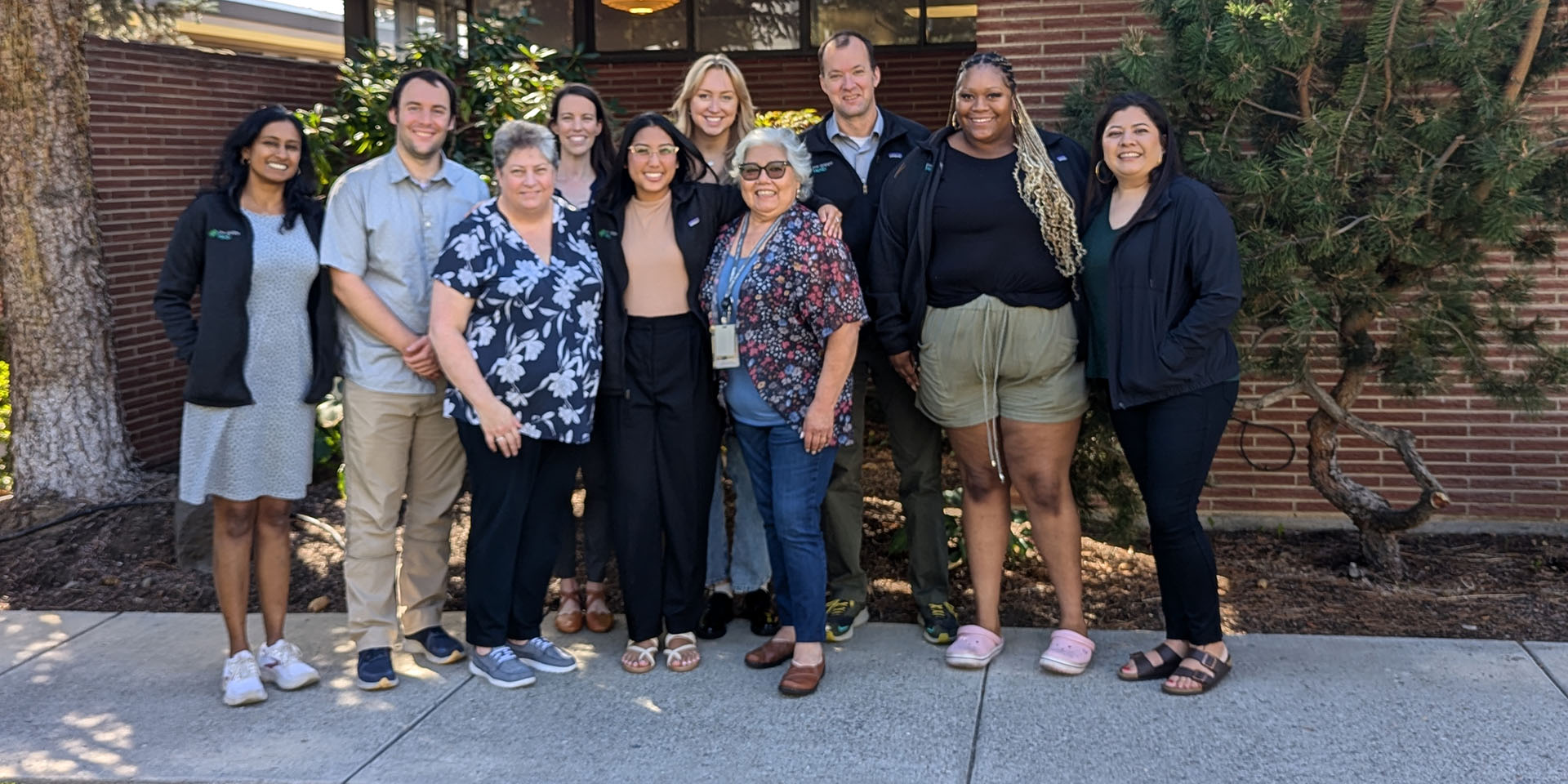
Sathyanarayana Lab
Studying How Chemicals Affect Children
The Sathyanarayana Lab investigates how chemicals in our environment impact children, and develops ways to reduce chemical exposures and help families lead healthier lives.
The lab’s current research looks at how endocrine-disrupting chemicals such as phthalates, that are in our general environment and everyday products, affect how children develop, starting with babies in the womb. Endocrine-disrupting chemicals are found in many everyday products, including some cosmetics, food and beverage packaging, toys, building materials, and pesticides. These chemicals can affect hormones in the body that are important for growth and development.
We are part of a multicenter research team that found that phthalates can adversely affect how male genitals develop, increasing the risk of future reproductive problems. We are now working on several studies to investigate how endocrine-disrupting chemicals affect children’s respiratory health and neurodevelopment, as well as to understand the biological pathways through which these chemicals affect health. In addition, we are interested in understanding prenatal and early childhood factors that may protect against the effects of chemical exposures.
Watch Dr. Sathyanarayana discuss the dangers of environmental chemicals.
Explore Our Research
Helping families avoid chemicals
Our research is an extension of Dr. Sheela Sathyanarayana’s clinical and policy work. As a pediatrician at Seattle Children’s Hospital and the University of Washington, Sathyanarayana counsels families on how to reduce chemicals in their lives. She also co-directs the University of Washington’s Pediatric Environmental Health Specialty Unit, where she educates physicians and residents about how environmental exposures affect health – and on ways to incorporate this evidence into clinical practice.
Promoting policies that reduce chemical exposures
On the policy front, Sathyanarayana constantly seeks new ways to translate research into policies that improve children’s lives. She co-chaired the Environmental Protection Agency’s Children’s Health Protection Advisory Committee for four years and served on a National Academies of Science Committee that examines the health impacts of endocrine-disrupting chemical exposures. These positions enable her to work with policy makers to improve regulations and protect children from chemicals’ harmful effects.
Dr. Sathyanarayana’s policy-related positions have included:
- Past Committee member, National Academies of Science Committee to examine the effects of low dose endocrine disruptor chemical toxicity
- Past co-chair, Academic Pediatrics Association, Environmental Health Special Interest Group
- Past elected member, appointed co-chair and appointed chair, U.S. Environmental Protection Agency, Children’s Health Protection Advisory Committee
- Past appointed liaison, U.S. Environmental Protection Agency, Science Advisory Board
To learn more about these studies and our overall research, please email Marnie Hazlehurst.
ECHO-MEND
Environmental influences on Child Health Outcomes (ECHO) | Mediators and Modifiers of Prenatal Environmental Exposures and Child Neurodevelopment (MEND)
 The MEND study builds upon the PATHWAYS GAPPS study as part of the NIH ECHO program to study how a range of environmental factors in early development influence the health of children and adolescents.
Read more about ECHO-MEND.
TIDES
The Infant Development and Environment Study
 The TIDES study is a multi-center pregnancy cohort was originally funded to investigate associations between phthalate exposures in pregnancy and reproductive outcomes in children.
Read more about TIDES.
In 2018 we received additional funding to build on the work of the PATHWAYS GAPPS project and learn more about the impact of chemical exposures. Specifically, the funding will support additional analysis of urine collected from children at the GAPPS study visits to measure levels of melamine and cyanuric acid, which have been linked to kidney injury in children. This relationship and impact on child health had only been examined in studies outside of the United States at the time of funding.
Melamine is used to make industrial and household products including tableware, laminates, and adhesives, and cyanuric acid is used in bleach, chlorination systems, or as a nitrogen source in animal feed. Given the numerous potential sources of exposure, melamine and cyanuric acid exposures may be ubiquitous in the general population. Exposures likely occur from ingestion through the use of melamine tableware/plastics and/or from food and beverage contamination, but sources of exposure for children in the general population have not been investigated in epidemiologic studies. The knowledge gained from this study could inform policy and public health prevention efforts to reduce exposures in children, reducing the risk for kidney injury and future kidney disease.
Dr. Cindy Trevino is the Principal Investigator of an NIH ECHO-funded supplement in which we are developing a remote measure to assess cognitive stimulation in a child’s home environment using ecological momentary assessment (EMA) and smartphone video recordings of parent-child interactions. Cognitive stimulation in early childhood refers to the quality and quantity of enriching learning experiences and activities available to a child in the home environment, and is positively associated with cognition, academic outcomes, and executive function. Cognitive stimulation has also been found to moderate the impact of environmental exposures on cognitive and behavior. This points to a promising pathway for intervention and targeted caregiver-focused interventions to promote cognitive stimulation in early childhood to buffer or offset the effects of prenatal exposure to environmental chemicals.
We have a manuscript under review describing the feasibility of developing a reliable 10-item cognitive stimulation scale derived from secondary data analysis using Home Observation Measurement of the Environment Infant/Toddler (HOME-IT) data from three NIH ECHO cohorts (Trevino et al., under review). Dr. Trevino has also received internal funding from the Seattle Children’s Research Institute to enhance our validation sample and expand this 10-item cognitive stimulation scale for Spanish-speaking families.
Dr. Drew Day is the Principal Investigator of an NIH ECHO-funded supplement in which we are validating and then applying clustering methods to examine how pediatric outcomes collected across respiratory, obesity-related, and neurodevelopmental domains co-occur, with the aim of identifying subpopulations of children with high levels of multiple adverse outcomes and then examining predictors of membership in those subpopulations.
Prenatal Environmental Reproductive Hormone Concentrations (PERCH)
The TIDES study found that phthalate exposure can cause babies to be born with an unusually long – or short – distance between their genitals and anus. This may indicate that phthalate exposure affects how reproductive organs develop.
PERCH takes a closer look at this phenomenon, with hopes of pinpointing how phthalates alter reproductive development. The study uses data and specimens from TIDES participants to investigate the role of prenatal sex steroid hormones as a link between first trimester phthalate exposure and newborn anogenital distance (AGD).
Preventing Environmental Exposures in Pregnancy (PEEPS)
 The PEEPS study’s purpose was to determine how to reduce exposures to phthalates and bisphenol A (BPA), which are environmental chemicals commonly found in food. We developed two strategies, and compared how they affected the environmental chemical concentrations in the bodies of study participants.
The first intervention provided families with educational materials on how to decrease exposures, and with food storage containers made of stainless steel and glass, instead of plastic. The families were asked to follow these educational guidelines and use these alternative containers to the best of their abilities for a five-day period.
The second intervention provided families with a fresh food diet and alternative food storage containers for a five-day period.
We expected to see no significant change in environmental chemical concentrations in the first group, and a decrease in environmental chemical concentrations in the second group.
While we saw no significant change in concentrations in the first group, we saw a significant increase in BPA and phthalate concentrations for the group that was given fresh food and alternative storage containers.
This was unexpected, so we tested the foods that participants were given and found high concentrations of the chemicals in spices and high-fat dairy. Our results show that, without regulations to reduce phthalate and BPA concentrations in food production, it may be difficult to develop effective interventions.
Our results were published in a paper in the Journal of Exposure Science and Environmental Epidemiology.
Lab News
- March 4, 2025 Publication Q&A: Associations of maternal blood biomarkers of prenatal APAP exposure with placental gene expression and child attention deficit hyperactivity disorder
- October 1, 2024 I ditched plastic for a week. Here's what I learned. (NPR)
- July 1, 2024 How can you reduce health effects of endocrine-disrupting chemicals? (Environmental Factor)
See all the latest news and publications.
Partnership Opportunities

Sheela Sathyanarayana, MD, MPH
Dr. Sheela Sathyanarayana, associate director of the Center for Child Health, Behavior and Development, serves as the PI for The Infant Development and Environment Study (TIDES), a multi-center cohort study of phthalate exposures in pregnancy and health outcomes in children. She is also MPI of the ECHO-MEND, which, as part of the national NIH ECHO program will examine endocrine-disrupting chemicals in relation to child neurobehavior. She has served as the chair for the US Environmental Protection Agency’s Children’s Health Protection Advisory Committee and served on the National Academies of Sciences Committee on Endocrine Disrupting Chemicals and Low Dose Toxicity. She was also a member of the Environmental Protection Agency’s Science Advisory Committee on Chemicals that advises EPA on risk assessments related to the Toxic Substances Control Act. She is the Medical Director of the Newborn Nursery and performs consults through the UW Pediatric Environmental Health Specialty Unit.
-

Postdoctoral Scholar
-

Evan Firsick, MA
Research Technician III
Evan is a Research Technician III in the Paquette Lab where he studies how phthalates and other chemicals alter placental function using different placental cell lines. He received his BS in Biochemistry and Biophysics from Oregon State University and holds a MA in Bioethics and Health Policy from Loyola University Chicago.
-

Lindsey Fischer, MA
Clinical Research Coordinator
-

Epidemiologist
-

Daisy Hernandez, BA
Clinical Research Coordinator
Daisy coordinates and recruits for the GAPPS Age 8 study visit at our Yakima site.
-

Maria Hernandez
Clinical Research Coordinator
Maria coordinates and recruits for the GAPPS Age 5 study visit at our Yakima site.
-

Alina Nguyen, BS, MA-R, MA-P
Clinical Research Coordinator
-

Associate Professor
-

Shayeleen Quinata, BA
Clinical Research Coordinator
Shaye coordinates for the GAPPS Age 5 and Age 8 study visit at our Seattle site.
-

Assistant Professor
-
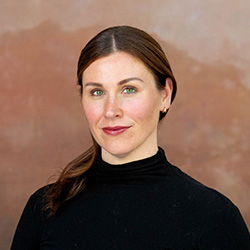
Molly Whittaker, RN, BSN
Research Nurse