Skip to navigation menu Skip to content
  • MyChart
  • Telemedicine
  • Healthcare Professionals
  • Careers
  • Alerts
  • Donate Now
  • I want to …
      • Go to MyChart
      • Find a Doctor
      • Make an Appointment
      • Find a Location
      • Visit ED or Urgent Care
      • Get Driving Directions
      • Refill a Prescription
      • Contact Children's
      • Pay My Bill
      • Estimate My Cost
      • Apply for Financial Assistance
      • Request My Medical Records
      • Find Patient Education
      • Volunteer
      • Donate
      • Refer and Manage a Patient
Search
Search
  • Your Visit
  • Conditions
  • Clinics
  • Research
  • Health & Safety
  • Giving
  • Press Room
  • I want to …
      • Go to MyChart
      • Find a Doctor
      • Make an Appointment
      • Find a Location
      • Visit ED or Urgent Care
      • Get Driving Directions
      • Refill a Prescription
      • Contact Children's
      • Pay My Bill
      • Estimate My Cost
      • Apply for Financial Assistance
      • Request My Medical Records
      • Find Patient Education
      • Volunteer
      • Donate
      • Refer and Manage a Patient
Donate Now
  • Main Menu
  • On This Page

    Jump to a section on this page:

Epidural Catheter for Pain Relief

  • Español PDF
  • Tiếng Việt PDF

We partner with you and your child to prevent and relieve pain as completely as possible.

What is an epidural catheter?

An epidural catheter is a way of giving pain medicine through the spine. After your child is asleep, a thin plastic tube (catheter) is placed through the skin into their lower back. The tube is threaded into the epidural space (a space within the spinal canal just outside of the spinal cord). This space has nerves that provide feeling (sensation) to other parts of the body. The tube may be put in near the bottom of your child’s back, or the lower or mid-back.

How is it used?

Most epidural catheters have pain medicines going into them continuously. Older children may also have a button to push that will deliver a pre-set amount of medicine when they feel uncomfortable and need more pain medicine. Usually, the catheter is connected to tubing and a bag of medicine, and then attached to a pump. Epidural catheters may be used to relieve pain after some surgeries of the chest, stomach or legs. It may be also used to treat some cancer pain.

What pain medicine will my child receive?

Local numbing medicines called anesthetics are given through the epidural catheter. This is considered “local” anesthesia, in that it goes to a smaller localized area of the body. Other pain medicines, either an opioid (hydromorphone) or clonidine may also be added. Typically, there are fewer side effects when these medicines are given through an epidural instead of through a vein. The amount of medicine given is based on factors such as height, weight and location of the surgery. This may be changed, or a different medicine may be used, if your child is uncomfortable.

How does it work?

The medicine is given through the epidural catheter to reduce the pain messages being carried to the brain along the nerves.

How long will it work?

The epidural catheter often stays in place for 1 to 5 days. After it is removed, the pain medicine will keep working for 4 to 12 hours, depending on the type of medicine used.

Are there side effects?

Side effects are always possible when any medicine is given. The side effects include:

  • Itching
  • Nausea and vomiting
  • Unable to pee
  • Feeling sleepy (drowsy)
  • Slowed breathing
  • Numbness or tingly feeling while the medicine is being given.

If your child has a hard time moving parts of their body, please let your nurse know. The type and amount of medicine can be changed if this occurs.

The nurses will be checking your child often for any side effects. The nurses will also check your child’s breathing, blood pressure and heart rate. Medicines will be given to help with side effects if they occur.

What is my role?

We know pain, you know your child. We encourage you to take an active role in your child’s recovery. Let the nurses and doctors know if:

  • Your child is hurting or seems too sleepy.
  • Your child itches or feels like vomiting.
  • The epidural catheter comes out or is accidentally disconnected.
  • You or your child have questions or concerns.

Can my child get out of bed?

As long as the surgeon says it is OK, your child may get out of bed if certain precautions are followed. The catheter is well taped and should not fall out. A nurse can help your child in getting out of bed or teach you how to hold your child. It is important that we check your child for any leg weakness and that they do not get out of bed alone.

Questions?

All members of the team are here to partner with you to treat your child’s pain. When your child has an epidural catheter, a member of the Pain Medicine Service visits daily to manage their pain and any side effects of the medicine. If you have questions or would like to speak with a Pain Medicine Service team member at any time, ask your child’s nurse.

To Learn More

  • Pain Medicine Service on call
    206-987-2000
  • Ask your child’s healthcare provider
  • seattlechildrens.org/patient-education

Free Interpreter Services

  • In the hospital, ask your nurse.
  • From outside the hospital, call the toll-free Family Interpreting Line, 1-866-583-1527. Tell the interpreter the name or extension you need.
Seattle Children's Hospital

Seattle Children’s offers free interpreter services for patients, family members and legal representatives who are deaf or hard of hearing or speak a language other than English. Seattle Children’s will make this information available in alternate formats upon request. Call the Family Resource Center at 206-987-2201. This handout has been reviewed by clinical staff at Seattle Children’s. However, your needs are unique. Before you act or rely upon this information, please talk with your healthcare provider.

© 2026 Seattle Children’s, Seattle, Washington. All rights reserved.

11/01/2024
PE337
Patient and Family Education | Pain Medicine

Download Instructions

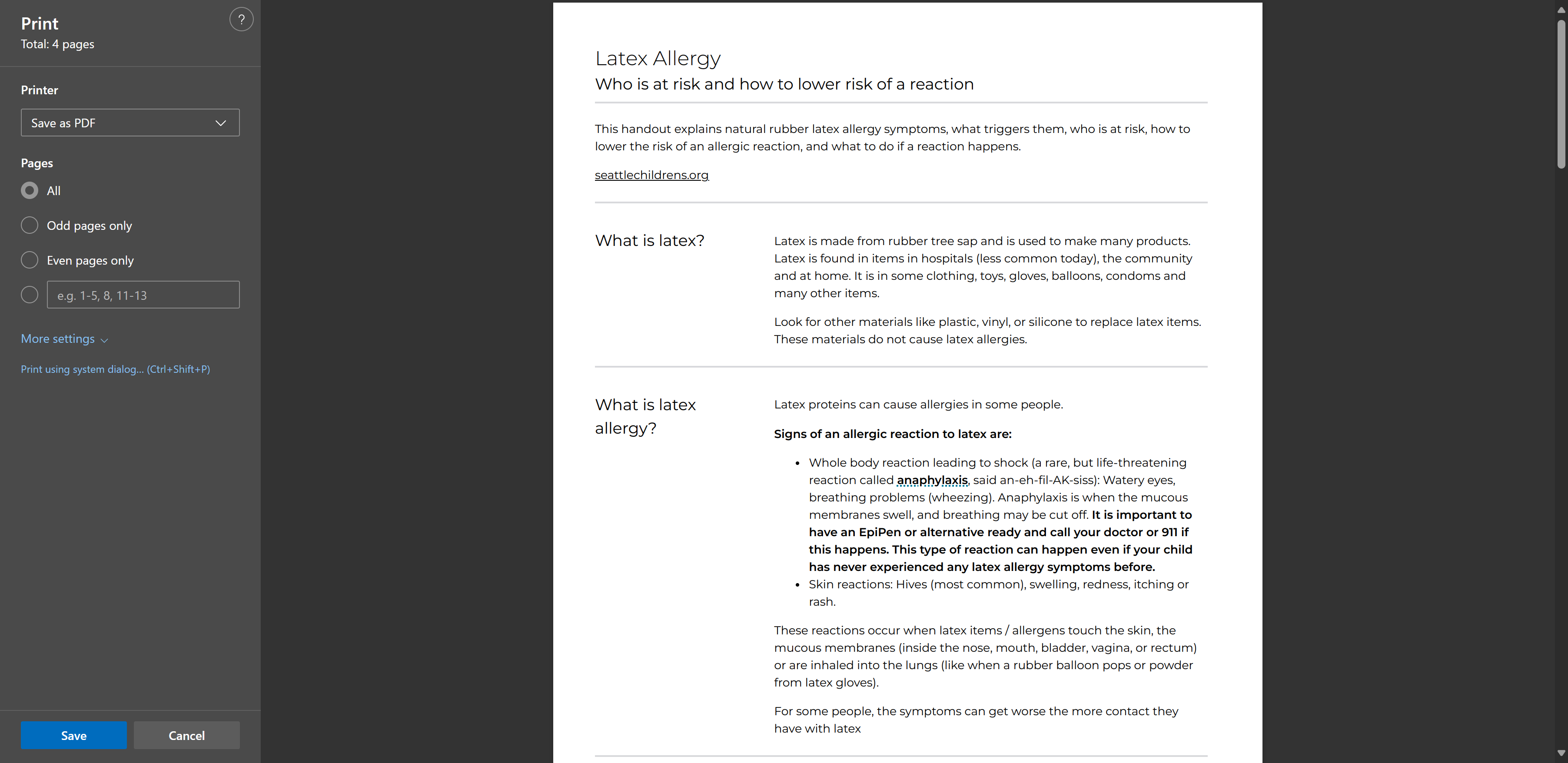
To download as a PDF, choose "Save as a PDF" in the print dialog, then click "Save".

screenshot of print dialog

About Us
  • About Seattle Children’s
  • Contact Us
  • Locations
  • Visiting Seattle Children’s
  • Press Releases
  • Growing for Future Grown-Ups
  • Price Transparency
Community
  • Healthcare Professionals
  • Events
  • Classes
  • Volunteering
Experience and Outcomes
  • Advancing Healthcare Experience and Outcomes
  • Values
  • Nondiscrimination and Interpreters Notice
  • Accessibility and Special Needs
About This Site
  • About This Website
  • Feedback
  • Terms of Use
  • Privacy
  • My Health My Data
  • Notice of Privacy Practices
  • Employees
  • Working From Home and Remote Access Help
  • Vendors

©2026 Seattle Children’s Hospital

4800 Sand Point Way NE, Seattle, WA 98105

206-987-2000 866-987-2000 (toll-free) 206-987-0391 (TTY)

U.S. News & World Report Best Children's Hospitals Honor Roll Badge Forbes America's Best Large Employers Magnet Recognized Nursing Program Children's Miracle Network Hospitals

Seattle Children’s complies with applicable federal and other civil rights laws and does not discriminate, exclude people or treat them differently based on race, color, religion (creed), sex, gender identity or expression, sexual orientation, national origin (ancestry), age, disability, or any other status protected by applicable federal, state or local law. Financial assistance for medically necessary services is based on family income and hospital resources and is provided to children under age 21 whose primary residence is in Washington, Alaska, Montana or Idaho.