Starting Solid Foods

for babies with cleft palate

Follow these guidelines for feeding your baby with cleft palate. 

When do I start giving my baby solid foods?

Your baby is ready to start eating solid foods at the same time as other babies. Look for signs of readiness - around 4 to 6 months old. If your baby was born early, check with your healthcare team about the right time to begin solid foods.

Look for these signs that your baby is ready:

  • Holds head up
  • Sits with little support
  • Grasps objects and brings objects to mouth
  • Acts interested in what you are eating

How do I start feeding my baby?

Start by offering solid foods 1 to 2 times per day.

The first few times you feed your baby, do not wait until they are fussy and hungry.

  1. Sit your baby upright, safely belted in a highchair or booster chair with a tray.
  2. Face your baby and make eye contact during feeding. Smile and talk to your baby.
  3. Begin with a small amount of food, 1/2 teaspoon or less, and talk to your baby through the process. Introduce solid food from a small, baby-sized spoon, never in a bottle.
  4. As your baby begins to enjoy solid foods, they may tell you they are full by turning their head or pushing the spoon away.

At first, if your baby cries or turns away from the spoon, wait a few days and try again. Both you and your baby should enjoy each feeding.

If your baby refuses a new food, this does not mean they will never like it. Your baby may need to try a new food 10 to 20 times before they like it!

What kinds of foods are best to start with?

Choose an iron-rich food.

  • Iron- and zinc-fortified infant cereal, pureed meats and pureed legumes are all good choices and sources of iron.
  • Start with a thin mixture of infant cereal or pureed meat mixed with breastmilk/chestmilk or formula. As your baby gets used to the texture (they do not spit the food out and can easily move the food in their mouth and swallow) you can serve them thicker food.
  • Once your baby is successful with their first food, you can slowly offer a variety of other pureed foods, such as pureed fruits and vegetables, other infant cereals and other pureed meats.

Give single-ingredient foods first.

  • Wait 3 to 5 days to try another new food. This gives you the time to make sure your baby is not allergic to a food. Allergic reactions include diarrhea, rash and vomiting. If you are worried that your baby is having a hard time breathing, call 911 or go to the emergency room. You can talk to your doctor and make a plan of how to safely introduce allergens to your baby.
  • It may take several tries before your baby likes a new food. Do not give up. Offer the food another time.

Remember that breastmilk/chestmilk and formula should continue to be your baby’s primary source of nutrition until 1 year of age.

When can my baby have finger foods?

Once your baby has mastered pureed foods, give your baby foods that are soft, easy to swallow, and cut into small pieces. Usually, by 8 to 9 months of age, your baby will enjoy picking up food and helping to feed themself. Check with your healthcare team about the right time to begin foods eaten with hands or “finger foods”.

Soft, easy-to-swallow foods include small pieces of banana, well-cooked vegetables, soft or canned fruit cut into small pieces, scrambled eggs, well-cooked pasta, soft crackers, strips of toast, and finely chopped meats and poultry.

Do not give foods that can cause your baby to choke.

These foods include:

  • popcorn
  • nuts
  • raisins and whole grapes
  • uncut or stringy meats
  • hotdog pieces
  • hard or raw fruits or vegetables
  • chips

What do I need to know about feeding my baby with a cleft?

Food coming out the nose (nasal regurgitation) is normal. This is not harmful for your baby. Your baby may sneeze to clear out their nose. Your baby will slowly learn to get the food down their throat most of the time without any coming out the nose.

Some foods may get stuck in the cleft palate. This is not harmful. Use a soft cloth and water to clean the mouth and cleft.

When do I start offering a cup for drinking?

Your baby is ready to start using a cup at the same time as other babies, beginning around 6 months of age, when they start to eat foods from a spoon. Because babies with cleft palates are not able to form oral suction, certain cups work better than others.

  • Avoid spill-proof cups or remove the valves in these cups – these cups require oral suction to remove the fluid.
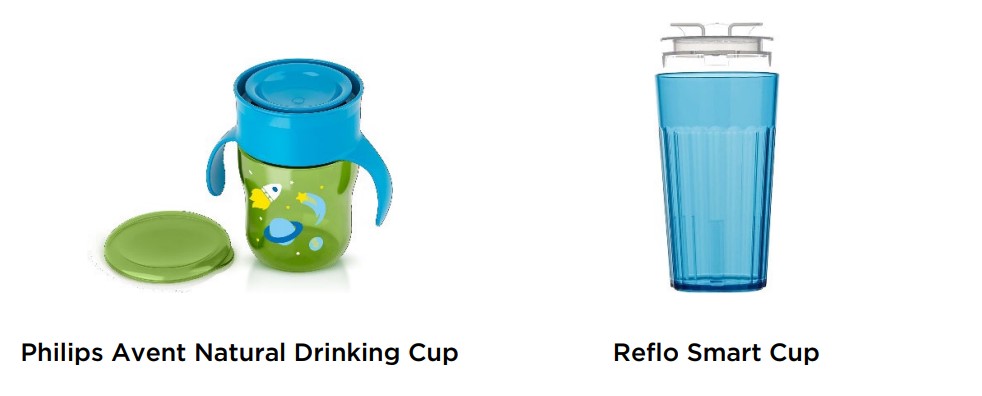
  • Try the Philips Avent Natural Drinking Cup or the Reflo Smart Cup.
    Drinking cup examples
  • Start by putting only a little water, breastmilk/chestmilk or formula in the cup and offer at the same time as solid foods. Your baby does not need juice (unless constipated, and then no more than 4 ounces a day).
  • Learning to drink from a cup will be messy at first and is not a main source of nutrition. By the time your baby is around 1 year of age, they will master cup drinking and be ready to wean off the bottle. For babies with cleft palates, the final wean from a bottle may take place after their palate is repaired.

What do I need to know about caring for my baby’s teeth?

  • Do not put your baby down for a nap or for the night with a bottle.
  • As soon as the first tooth appears, start cleaning the tooth and gums with a soft, clean cloth or soft bristle toothbrush and water. Do this in the morning and at night before bed.
  • Ask your doctor if your baby needs fluoride.
  • Take your baby for a first visit with a dentist within 6 months after their first tooth comes in or no later than 1 year of age.