How do I put my baby to sleep safely at home?The American Academy of Pediatrics (AAP) recommends that infants, under 1 year of age, be placed to sleep on their backs every time you lay them down to sleep. This lowers the risk of sudden infant death syndrome (SIDS). When your infant is able to roll from their back to their stomach or side, they can sleep in the position they prefer. For more information, watch “Safe Sleep for Babies” at kidshealth.org/en/parents/safesleep-video.html
|
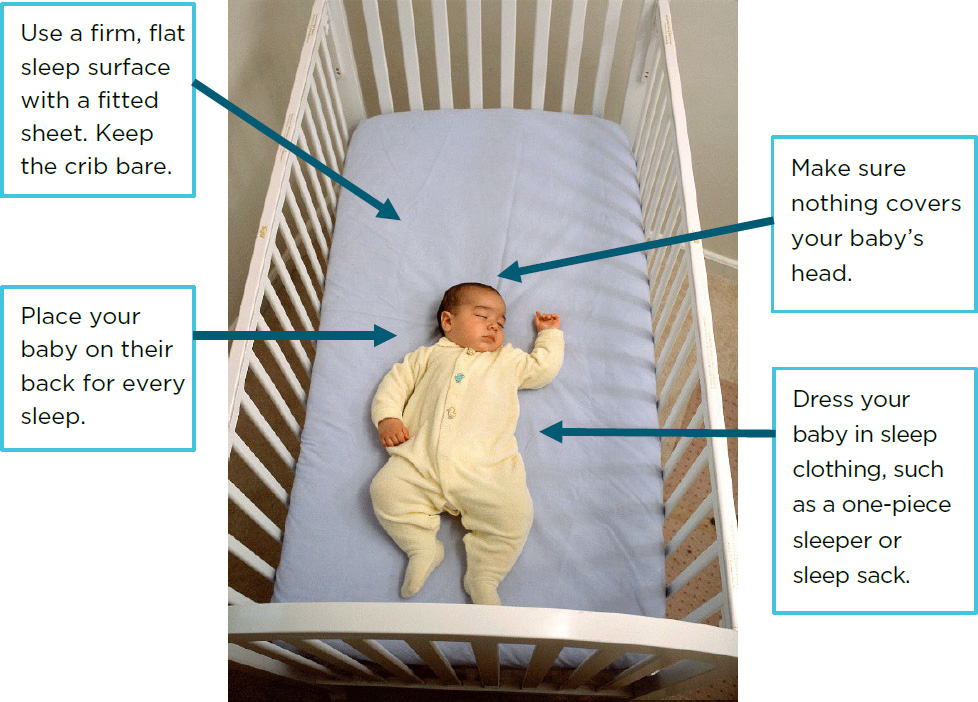
What else can I do to keep my baby safe?At home, follow the safe sleep practices below and use the photo on page 2 as a guide for placing your baby to sleep.
|
Safe Sleep Practices at Home
Photo from safetosleep.nichd.nih.gov |
Why are the sleep practices different in the NICU?Dependent on your baby’s diagnosis or age, the safe sleep practices shown above may not always be followed while your baby is in the NICU. If your child was born prematurely or has certain medical diagnoses, you may see positioning aids used for your baby. These may include positioning aids such as bumpers, wedges and moldable sleep surfaces. We may also use therapeutic positioning. This means your baby may be positioned on their stomach (prone) or side lying due to diagnosis, development, or to prevent skin injury. As your baby grows and their medical status changes, we will slowly begin using the safe sleep practices you will use at home. By the time your baby is ready to leave the NICU they will be sleeping in a bed that promotes safe sleep. |
How will I know which sleep practices to follow in the NICU?We will partner with you on providing safe sleep for your baby. Your baby will have a “crib card” with either NICU therapeutic positioning or Safe to Sleep indicated. When your baby is medically ready, we will transition to Safe to Sleep and will note this change with the crib card. Please let your care team know if you have any questions about your baby’s sleep in the NICU or at home. |
|
To Learn More
Free Interpreter Services

|