Skip to navigation menu Skip to content
  • MyChart
  • Telemedicine
  • Healthcare Professionals
  • Careers
  • Alerts
  • Donate Now
  • I want to …
      • Go to MyChart
      • Find a Doctor
      • Make an Appointment
      • Find a Location
      • Visit ED or Urgent Care
      • Get Driving Directions
      • Refill a Prescription
      • Contact Children's
      • Pay My Bill
      • Estimate My Cost
      • Apply for Financial Assistance
      • Request My Medical Records
      • Find Patient Education
      • Volunteer
      • Donate
      • Refer and Manage a Patient
Search
Search
  • Your Visit
  • Conditions
  • Clinics
  • Research
  • Health & Safety
  • Giving
  • Press Room
  • I want to …
      • Go to MyChart
      • Find a Doctor
      • Make an Appointment
      • Find a Location
      • Visit ED or Urgent Care
      • Get Driving Directions
      • Refill a Prescription
      • Contact Children's
      • Pay My Bill
      • Estimate My Cost
      • Apply for Financial Assistance
      • Request My Medical Records
      • Find Patient Education
      • Volunteer
      • Donate
      • Refer and Manage a Patient
Donate Now
  • Main Menu
  • On This Page

    Jump to a section on this page:

Responsive Neurostimulation System (RNS)

A Treatment For Drug-Resistant Epilepsy

  • Af-Soomaali PDF
  • Español PDF
  • Tiếng Việt PDF

What is RNS?

  • The Responsive Neurostimulation System (RNS) is a small device that manages and treats seizures at their source. We implant the device in your child’s brain to reduce seizures and improve their quality of life.
  • It monitors brain waves and responds to activity that looks like a seizure. The response is a small burst of stimulation to stop the seizure.

Is RNS right for my child?

  • RNS is designed for people who continue to have seizures after trying 2 seizure medicines.
  • RNS may be right for your child if they cannot have epilepsy surgery or if epilepsy surgery does not control their seizures. We recommend RNS in addition to seizure medicines (called adjunctive treatment).
  • We can remove the RNS device in the future if needed.

What happens before surgery?

  • Your child’s provider will order a series of tests referred to as Phase 1 evaluation. These tests help us learn about your child’s brain and seizures.
  • After completion of Phase 1 testing, your child’s provider will let you know if RNS is a good treatment option.

How is this device implanted?

  • We implant the device in an operating room. We will give your child medicine, so they are fully asleep during the surgery (anesthesia).
  • The neurosurgeon will make a small cut (incision) in your child’s scalp and then secure the device inside their skull. Once placed, it cannot move. We place thin wires connected to the RNS in the areas of your child’s brain where seizures begin.
  • The device records brain wave patterns along with activity that may look like seizures.

What happens after surgery?

Programming Phase:

  • A doctor who specializes in epilepsy (epileptologist) will program the device during a follow-up clinic visit.
  • After we program the device, your child will not feel the stimulation when it’s active. It does not cause pain or any unusual feelings.

How do I save the EEG data on the RNS?

  • EEG stands for electroencephalogram, which is a measurement of electrical activity in the brain. You will need to have Wi-Fi access to the internet, so you can download data and send it to us.
  • We will give you a small wand and computer/tablet for the RNS device. You will use the wand to download information from the device to the tablet once a day.
  • Once a week, upload the data to the online database. This database provides your child’s epileptologist important information about how often your child has seizures (frequency) and the brain wave activity.

What are possible side effects?

  • Your child may feel a muscle twitch or flash of light. Usually, side effects are mild, and children don’t mind them.

Are there safety issues?

  • This implanted device affects the ability to safely have an MRI (magnetic resonance image).
  • If your child needs an MRI, your child’s neurologist will need to turn it off beforehand.

What is the RNS magnet?

  • The RNS magnet is used to trigger the RNS device to record the brain activity at the time of a seizure.
  • Use the RNS magnet anytime a seizure occurs by swiping it over the RNS device and counting to 3.
  • The magnet swipe will not deliver any therapy or treatment.

Where can I get more information?

  • Responsive Neurostimulation for Seizures (RNS) - Epilepsy Foundation
    epilepsy.com/learn/treating-seizures-and-epilepsy/devices/responsive-neurostimulation-rns
  • NeuroPace: How the RNS System Works (Video, 2:02)
    youtube.com/watch?v=2QLvuVqfNsA

To Learn More

  • Neurosciences Center
    206-987-2078
  • Ask your child’s healthcare provider
  • seattlechildrens.org/patient-education

Free Interpreter Services

  • In the hospital, ask your nurse.
  • From outside the hospital, call the toll-free Family Interpreting Line, 1-866-583-1527. Tell the interpreter the name or extension you need.
Seattle Children's Hospital

Seattle Children’s offers free interpreter services for patients, family members and legal representatives who are deaf or hard of hearing or speak a language other than English. Seattle Children’s will make this information available in alternate formats upon request. Call the Family Resource Center at 206-987-2201. This handout has been reviewed by clinical staff at Seattle Children’s. However, your needs are unique. Before you act or rely upon this information, please talk with your healthcare provider.

© 2026 Seattle Children’s, Seattle, Washington. All rights reserved.

07/01/2025
PE3701
Patient and Family Education | Neurosciences Center

Download Instructions

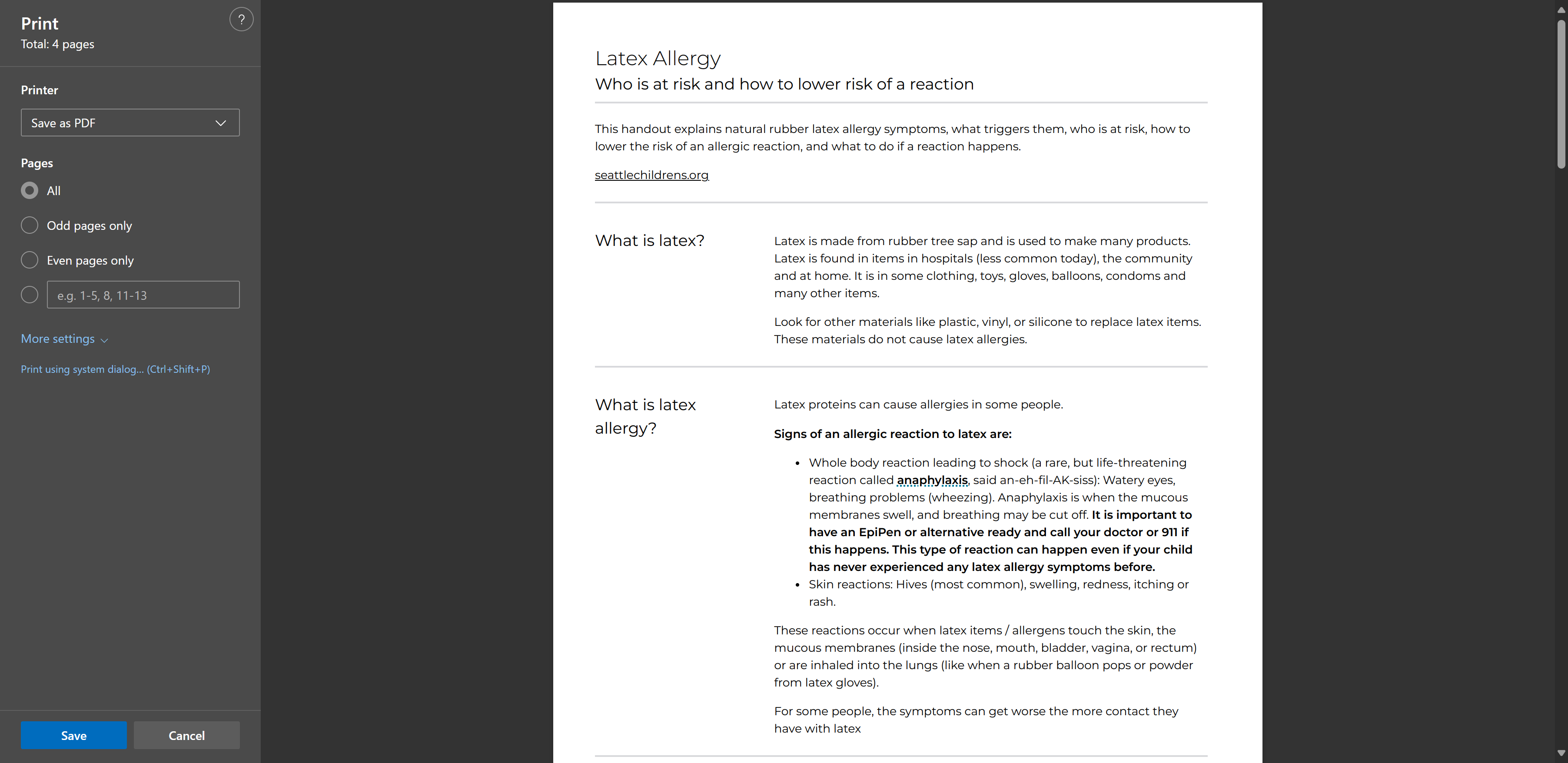
To download as a PDF, choose "Save as a PDF" in the print dialog, then click "Save".

screenshot of print dialog

About Us
  • About Seattle Children’s
  • Contact Us
  • Locations
  • Visiting Seattle Children’s
  • Press Releases
  • Growing for Future Grown-Ups
  • Price Transparency
Community
  • Healthcare Professionals
  • Events
  • Classes
  • Volunteering
Experience and Outcomes
  • Advancing Healthcare Experience and Outcomes
  • Values
  • Nondiscrimination and Interpreters Notice
  • Accessibility and Special Needs
About This Site
  • About This Website
  • Feedback
  • Terms of Use
  • Privacy
  • My Health My Data
  • Notice of Privacy Practices
  • Employees
  • Working From Home and Remote Access Help
  • Vendors

©2026 Seattle Children’s Hospital

4800 Sand Point Way NE, Seattle, WA 98105

206-987-2000 866-987-2000 (toll-free) 206-987-0391 (TTY)

U.S. News & World Report Best Children's Hospitals Honor Roll Badge Forbes America's Best Large Employers Magnet Recognized Nursing Program Children's Miracle Network Hospitals

Seattle Children’s complies with applicable federal and other civil rights laws and does not discriminate, exclude people or treat them differently based on race, color, religion (creed), sex, gender identity or expression, sexual orientation, national origin (ancestry), age, disability, or any other status protected by applicable federal, state or local law. Financial assistance for medically necessary services is based on family income and hospital resources and is provided to children under age 21 whose primary residence is in Washington, Alaska, Montana or Idaho.