Skip to navigation menu Skip to content
  • MyChart
  • Telemedicine
  • Healthcare Professionals
  • Careers
  • Alerts
  • Donate Now
  • I want to …
      • Go to MyChart
      • Find a Doctor
      • Make an Appointment
      • Find a Location
      • Visit ED or Urgent Care
      • Get Driving Directions
      • Refill a Prescription
      • Contact Children's
      • Pay My Bill
      • Estimate My Cost
      • Apply for Financial Assistance
      • Request My Medical Records
      • Find Patient Education
      • Volunteer
      • Donate
      • Refer and Manage a Patient
Search
Search
  • Your Visit
  • Conditions
  • Clinics
  • Research
  • Health & Safety
  • Giving
  • Press Room
  • I want to …
      • Go to MyChart
      • Find a Doctor
      • Make an Appointment
      • Find a Location
      • Visit ED or Urgent Care
      • Get Driving Directions
      • Refill a Prescription
      • Contact Children's
      • Pay My Bill
      • Estimate My Cost
      • Apply for Financial Assistance
      • Request My Medical Records
      • Find Patient Education
      • Volunteer
      • Donate
      • Refer and Manage a Patient
Donate Now
  • Main Menu
  • On This Page

    Jump to a section on this page:

Neurofibromatosis Type 1 (NF1)

  • አማርኛ PDF
  • 中文(简体) PDF
  • Español PDF

What is NF1?

NF1 stands for neurofibromatosis (nur-oh-fye-broh-muh-TOE-sis) type 1. It is a disorder of the nervous system that affects the growth and development of nerve cells.

NF1 can cause tumors that are not cancerous (benign) to grow on nerves. These growths can also cause problems.

NF1 affects about 1 in 3,000 people. NF1 used to be called von Recklinghausen’s disease. There is a different condition called NF2-related schwannomatosis (shwahn-noh-muh-TOE-sis).

Where can I watch a video about NF1?

QR CodeScan this QR code or click on the link to watch our video Neurofibromatosis Type 1 (NF1).
youtube.com/watch?v=L7Y_Yp82m9g

What are the causes?

NF1 is caused by a genetic difference.

About half of children with NF1 have an abnormal NF1 gene from a parent (inherited). The rest of the time, the cause is a new genetic difference not passed down from a mother or father (not inherited).

What are the symptoms?

The symptoms caused by NF1 vary widely from person to person. NF1 can affect many parts of the body.

Skin

Skin changes can include:

  • Spots on the skin that are darker than your child’s normal skin color (café-au-lait spots)
  • Small, skin-colored bumps on the skin (cutaneous neurofibromas)
  • Underarm or groin area freckling

These changes in the skin help doctors diagnose NF1. It is common for these skin differences to increase as children get older. They do not usually cause health problems.

Neurofibromas

Neurofibromas are not cancerous (benign) tumors. They can happen in different places in or on the body:

  • The skin (cutaneous, subcutaneous, or dermal): These neurofibromas can happen on or under the skin. They are not usually painful but are sometimes itchy.
  • Deep within the body involving multiple nerves or along the nerves that extend from the spinal cord to the body (plexiform): These neurofibromas are less common but may grow bigger which could cause pressure on nerves or organs.

Children with NF1 should have a full physical exam at least once a year.

Brain

Some people with NF1 have difficulty with attention span, focus, learning and their ability to share their thoughts, ideas and feelings. This includes:

  • Learning disabilities
  • Attention deficit hyperactivity disorder (ADHD)
  • Headaches

Children with NF1 may need extra help in school and may need special academic services, accommodation plans such as a Section 504 plan or an Individualized Education Program (IEP). Some children may need speech and language therapy, occupational therapy or physical therapy.

Some people with NF1 have tumors that grow on the nerves in the brain, including the nerves that lead to the eyes (optic pathway gliomas). These are the most common brain tumors in people with NF1.

Make sure your child with NF1 has a neurological exam and sees an NF specialist at least once a year.

Eyes

People with NF1 often have tiny tan bumps in the colored part of the eyes (irises). These bumps are called Lisch nodules. They help us diagnose NF1, but they do not cause health problems.

Some children with NF1 have growths on their optic nerves (optic pathway gliomas), which usually do not cause any symptoms, do not require treatment and are non-cancerous (benign).

Have your child see an eye doctor (ophthalmologist) once a year to check for any signs of eye problems.

Bones and growth

Some people with NF1 develop a curvature of the spine (scoliosis), outward curve (bowing) of the leg bones or a difference in the length of their legs.

Some children with NF1 are below average height, but it does not cause any health problems.

Puberty

Most people with NF1 go through puberty in a typical way. Some children with NF1 have puberty start early or late (premature or delayed puberty).

Kidneys

Children with NF1 may have high blood pressure (hypertension). Your child should have their blood pressure checked with every doctor’s visit.

Ears

Hearing loss and ringing in the ears (tinnitus) sometimes happens in people with NF1. Have your child’s hearing checked once a year.

Digestion

It is common for children with NF1 to have trouble pooping (constipation) and belly (abdominal) pain.

How is NF1 treated?

Treatment depends on your child’s symptoms and needs. It may include watching for early signs of problems and addressing issues quickly with medicine, surgery or other interventions.

What tests will my child need?

Your child may need the following tests at different times as they get older:

  • Genetic testing (blood or saliva test) for your child and possibly other family members
  • Other blood tests
  • MRI (magnetic resonance imaging)
  • ECHO (echocardiogram)
  • EKG (electrocardiogram)
  • X-ray
  • Neuropsychological testing

What is my job in my child’s NF1 care?

A diagnosis of NF1 can be overwhelming for some families. The best ways to make sure your child gets the help they need are to:

  • Tell your child’s NF specialist right away of lumps or bumps that are growing quickly or becoming painful
  • Schedule a visit with your NF specialist at least once a year
  • Have your child’s eyes checked by an eye doctor (ophthalmologist) at least once a year
  • Have your child’s hearing checked at least once a year
  • Make sure your child has their blood pressure monitored every time they see the doctor
  • Have your child’s back checked for curving at least once a year

Where can I learn more?

  • Seattle Children’s Hospital Neurofibromatosis condition page
    seattlechildrens.org/conditions/neurofibromatosis
  • Children’s Tumor Foundation
    ctf.org/understanding-nf/nf1
  • Neurofibromatosis Type 1 – KidsHealth
    kidshealth.org/en/parents/nf.html

To Learn More

  • Neurosciences Center
    206-987-2078
  • Ask your child’s healthcare provider
  • seattlechildrens.org/patient-education

Free Interpreter Services

  • In the hospital, ask your nurse.
  • From outside the hospital, call the toll-free Family Interpreting Line, 1-866-583-1527. Tell the interpreter the name or extension you need.
Seattle Children's Hospital

Seattle Children’s offers free interpreter services for patients, family members and legal representatives who are deaf or hard of hearing or speak a language other than English. Seattle Children’s will make this information available in alternate formats upon request. Call the Family Resource Center at 206-987-2201. This handout has been reviewed by clinical staff at Seattle Children’s. However, your needs are unique. Before you act or rely upon this information, please talk with your healthcare provider.

© 2026 Seattle Children’s, Seattle, Washington. All rights reserved.

05/01/2025
PE3304
Patient and Family Education | Neurosciences Center

Download Instructions

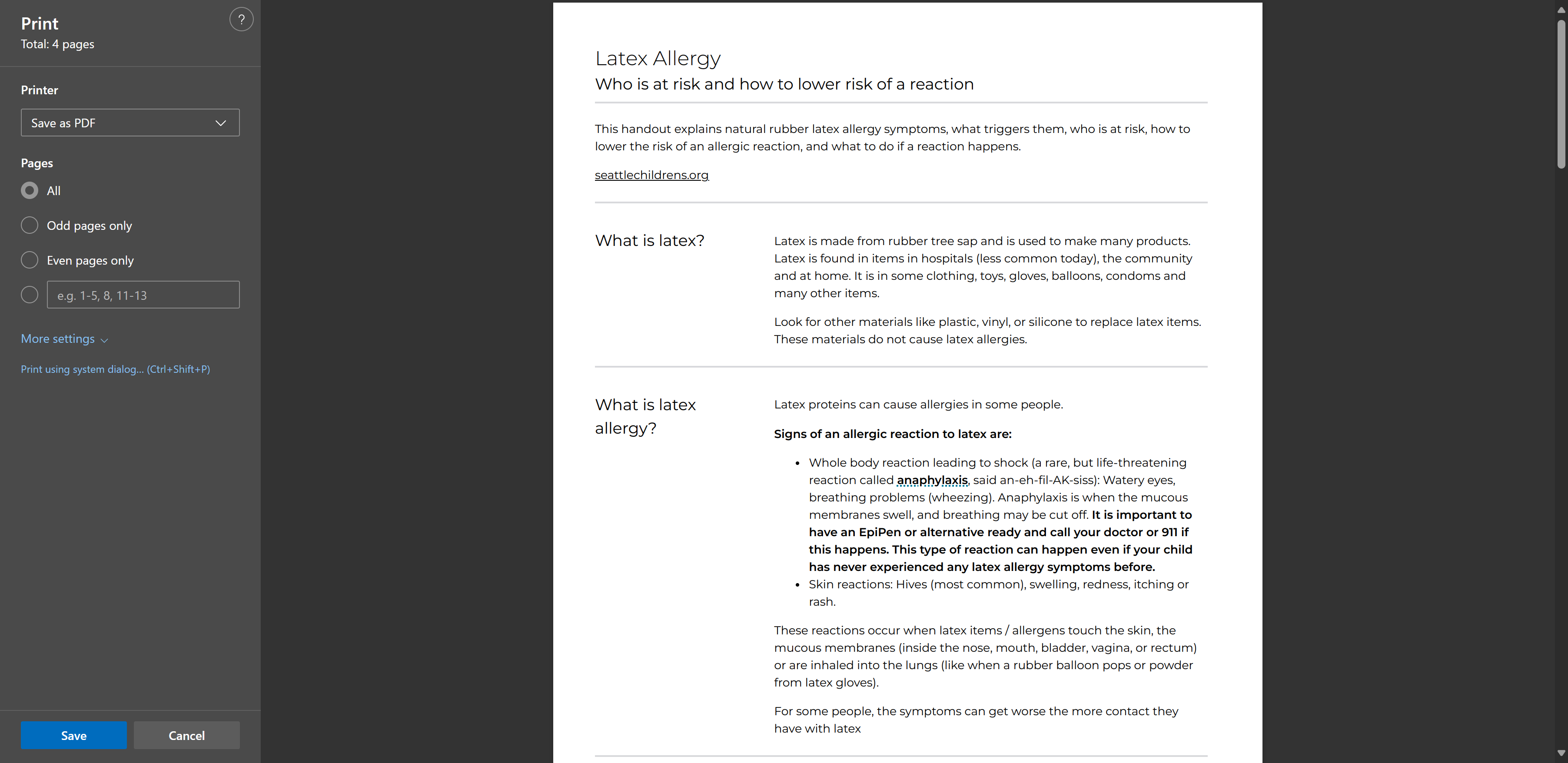
To download as a PDF, choose "Save as a PDF" in the print dialog, then click "Save".

screenshot of print dialog

About Us
  • About Seattle Children’s
  • Contact Us
  • Locations
  • Visiting Seattle Children’s
  • Press Releases
  • Growing for Future Grown-Ups
  • Price Transparency
Community
  • Healthcare Professionals
  • Events
  • Classes
  • Volunteering
Experience and Outcomes
  • Advancing Healthcare Experience and Outcomes
  • Values
  • Nondiscrimination and Interpreters Notice
  • Accessibility and Special Needs
About This Site
  • About This Website
  • Feedback
  • Terms of Use
  • Privacy
  • My Health My Data
  • Notice of Privacy Practices
  • Employees
  • Working From Home and Remote Access Help
  • Vendors

©2026 Seattle Children’s Hospital

4800 Sand Point Way NE, Seattle, WA 98105

206-987-2000 866-987-2000 (toll-free) 206-987-0391 (TTY)

U.S. News & World Report Best Children's Hospitals Honor Roll Badge Forbes America's Best Large Employers Magnet Recognized Nursing Program Children's Miracle Network Hospitals

Seattle Children’s complies with applicable federal and other civil rights laws and does not discriminate, exclude people or treat them differently based on race, color, religion (creed), sex, gender identity or expression, sexual orientation, national origin (ancestry), age, disability, or any other status protected by applicable federal, state or local law. Financial assistance for medically necessary services is based on family income and hospital resources and is provided to children under age 21 whose primary residence is in Washington, Alaska, Montana or Idaho.