Skip to navigation menu Skip to content
  • MyChart
  • Telemedicine
  • Healthcare Professionals
  • Careers
  • Alerts
  • Donate Now
  • I want to …
      • Go to MyChart
      • Find a Doctor
      • Make an Appointment
      • Find a Location
      • Visit ED or Urgent Care
      • Get Driving Directions
      • Refill a Prescription
      • Contact Children's
      • Pay My Bill
      • Estimate My Cost
      • Apply for Financial Assistance
      • Request My Medical Records
      • Find Patient Education
      • Volunteer
      • Donate
      • Refer and Manage a Patient
Search
Search
  • Your Visit
  • Conditions
  • Clinics
  • Research
  • Health & Safety
  • Giving
  • Press Room
  • I want to …
      • Go to MyChart
      • Find a Doctor
      • Make an Appointment
      • Find a Location
      • Visit ED or Urgent Care
      • Get Driving Directions
      • Refill a Prescription
      • Contact Children's
      • Pay My Bill
      • Estimate My Cost
      • Apply for Financial Assistance
      • Request My Medical Records
      • Find Patient Education
      • Volunteer
      • Donate
      • Refer and Manage a Patient
Donate Now
  • Main Menu
  • On This Page

    Jump to a section on this page:

Storing and Feeding Your Child Pumped Milk at Seattle Children’s

  • Español PDF

Every bottle of milk has a barcode

The hospital’s milk management system keeps your breastmilk/chestmilk, and your child, safe. We ask you to place labels on each bottle of milk you pump.

The label includes your child’s name as well as a unique barcode. Scanning the barcode tells us that the milk your child gets is always yours, and ensures the milk matches your child’s recommended feeding plan.

Breastmilk/chestmilk that needs to be frozen or fortified during your stay will be kept in the Milk Lab. Staff who specialize in storing and preparing your milk in the cleanest possible environment manage the Milk Lab.

Steps for pumping, labeling, storing and feeding your milk:

1. Get your barcode labels

Your child’s nurse will print collection labels for you that have your child’s name and barcode on them. The nurse will double-check them with you to make sure they are your child’s labels. Store the labels with your pumping equipment.

2. Pump your milk

  • How many times a day you pump and for how long depends on your specific situation and your goals.
  • Please pump into and store your milk in 80ml (milliliters) Medela containers. Fill up to 70ml to allow room for expansion if freezing milk.
  • You can combine milk into one bottle from both sides, but do not combine milk from different pumping sessions.

3. Label the bottle

On the barcode label write the time (with AM or PM), and date you pumped the milk and the estimated amount in milliliters (ml).

4. Store the milk

  • Place the milk in your child’s hospital room refrigerator or give to your child’s nurse who will place it in the unit refrigerator.
  • Freshly pumped milk is safe at room temperature for 4 to 6 hours. After 6 hours, it must be refrigerated. If it will not be used within 4 days, it should be frozen. Milk Lab staff will collect and freeze milk in the Milk Lab until you need it. Frozen milk can be stored in the hospital’s freezers for 12 months.

5. Feed your milk

Remember: Always ask your nurse to scan the barcode before feeding your child.

  • If you are pumping and feeding milk within the hour, label the milk, and then feed. The milk does not need to be scanned before feeding. Please tell the nurse how much you fed so the amount can be recorded.
  • If you are pumping and storing your milk in the refrigerator, label the milk. Before feeding, tell your nurse, so the milk can be scanned, and volume recorded.
  • As long as you stay at your child’s bedside, nurses can scan the milk for feeding up to 1 hour before a feeding.

When you go home

  • Your child’s nurse or your lactation consultant can tell you how much milk you have stored in the Milk Lab.
  • All your milk will be brought to you in bags for you to take home. Your child’s nurse will scan the bags to make sure you go home with all your milk. If you are traveling more than 2 hours, or in hot weather, you may want to bring a cooler to transport the milk.
  • If you would like to donate your milk for other babies (requires a minimum of 150 ounces), please call Northwest Mother’s Milk Bank to start the screening process (1-503-469-0955) and tell your child’s nurse or your lactation consultant. Donation to NWMMB requires paperwork and a blood draw.
  • If you leave your milk behind without meaning to, we will try to contact you 3 times. If we do not reach you, we will dispose of your milk.

To Learn More

  • Lactation Services
    206-987-1420
  • Ask your child’s healthcare provider
  • seattlechildrens.org/patient-education

Free Interpreter Services

  • In the hospital, ask your nurse.
  • From outside the hospital, call the toll-free Family Interpreting Line, 1-866-583-1527. Tell the interpreter the name or extension you need.
Seattle Children's Hospital

Seattle Children’s offers free interpreter services for patients, family members and legal representatives who are deaf or hard of hearing or speak a language other than English. Seattle Children’s will make this information available in alternate formats upon request. Call the Family Resource Center at 206-987-2201. This handout has been reviewed by clinical staff at Seattle Children’s. However, your needs are unique. Before you act or rely upon this information, please talk with your healthcare provider.

© 2026 Seattle Children’s, Seattle, Washington. All rights reserved.

04/01/2024
PE3042
Patient and Family Education | Lactation Services

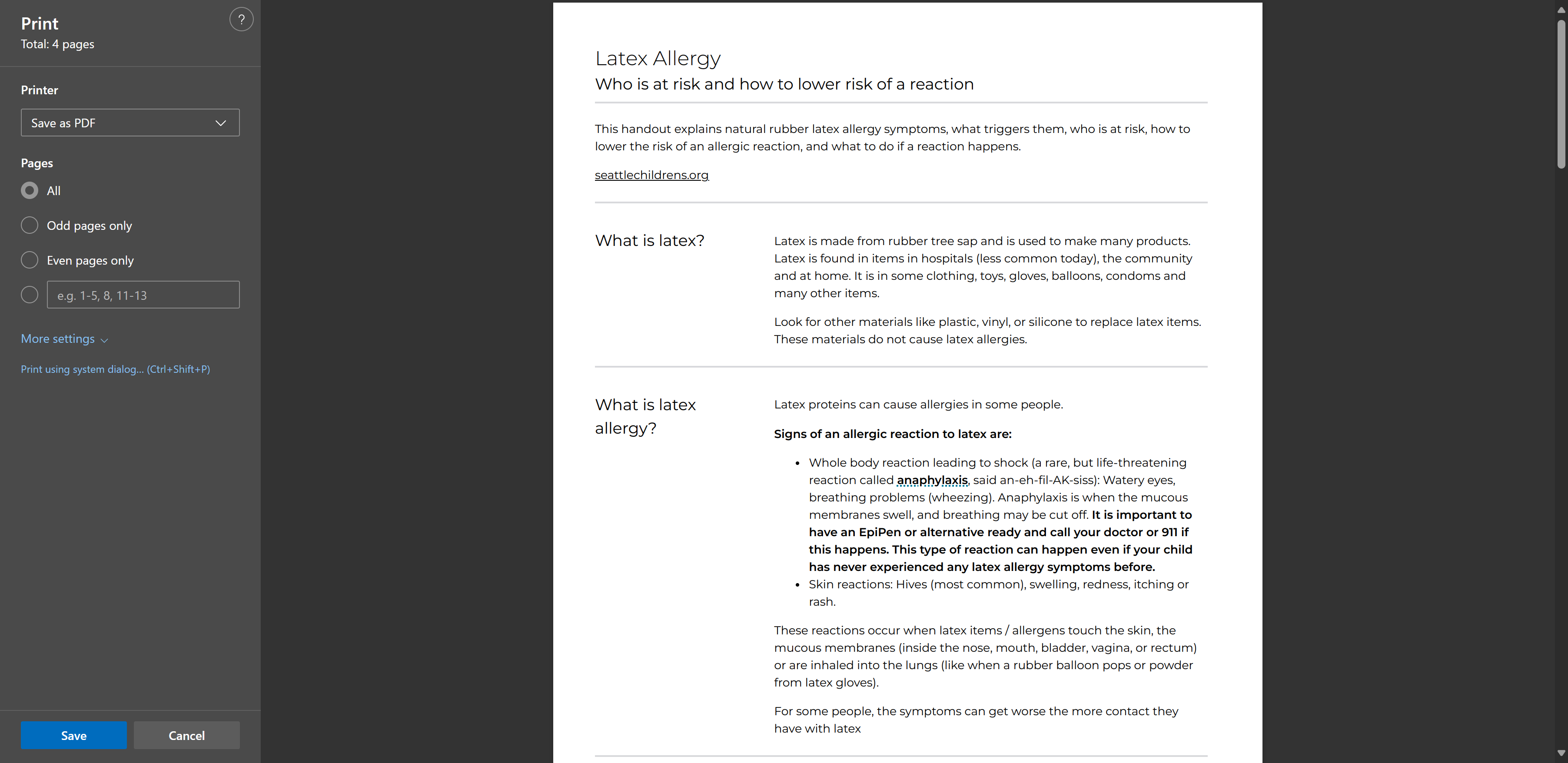
Download Instructions

To download as a PDF, choose "Save as a PDF" in the print dialog, then click "Save".

screenshot of print dialog

About Us
  • About Seattle Children’s
  • Contact Us
  • Locations
  • Visiting Seattle Children’s
  • Press Releases
  • Growing for Future Grown-Ups
  • Price Transparency
Community
  • Healthcare Professionals
  • Events
  • Classes
  • Volunteering
Experience and Outcomes
  • Advancing Healthcare Experience and Outcomes
  • Values
  • Nondiscrimination and Interpreters Notice
  • Accessibility and Special Needs
About This Site
  • About This Website
  • Feedback
  • Terms of Use
  • Privacy
  • My Health My Data
  • Notice of Privacy Practices
  • Employees
  • Working From Home and Remote Access Help
  • Vendors

©2026 Seattle Children’s Hospital

4800 Sand Point Way NE, Seattle, WA 98105

206-987-2000 866-987-2000 (toll-free) 206-987-0391 (TTY)

U.S. News & World Report Best Children's Hospitals Honor Roll Badge Forbes America's Best Large Employers Magnet Recognized Nursing Program Children's Miracle Network Hospitals

Seattle Children’s complies with applicable federal and other civil rights laws and does not discriminate, exclude people or treat them differently based on race, color, religion (creed), sex, gender identity or expression, sexual orientation, national origin (ancestry), age, disability, or any other status protected by applicable federal, state or local law. Financial assistance for medically necessary services is based on family income and hospital resources and is provided to children under age 21 whose primary residence is in Washington, Alaska, Montana or Idaho.