Skip to navigation menu Skip to content
  • MyChart
  • Telemedicine
  • Healthcare Professionals
  • Careers
  • Alerts
  • Donate Now
  • I want to …
      • Go to MyChart
      • Find a Doctor
      • Make an Appointment
      • Find a Location
      • Visit ED or Urgent Care
      • Get Driving Directions
      • Refill a Prescription
      • Contact Children's
      • Pay My Bill
      • Estimate My Cost
      • Apply for Financial Assistance
      • Request My Medical Records
      • Find Patient Education
      • Volunteer
      • Donate
      • Refer and Manage a Patient
Search
Search
  • Your Visit
  • Conditions
  • Clinics
  • Research
  • Health & Safety
  • Giving
  • Press Room
  • I want to …
      • Go to MyChart
      • Find a Doctor
      • Make an Appointment
      • Find a Location
      • Visit ED or Urgent Care
      • Get Driving Directions
      • Refill a Prescription
      • Contact Children's
      • Pay My Bill
      • Estimate My Cost
      • Apply for Financial Assistance
      • Request My Medical Records
      • Find Patient Education
      • Volunteer
      • Donate
      • Refer and Manage a Patient
Donate Now
  • Main Menu
  • On This Page

    Jump to a section on this page:

Single Ventricle Home Monitoring Program

  • 中文(简体) PDF
  • Af-Soomaali PDF
  • Español PDF
  • Українська PDF
  • Tiếng Việt PDF

This program is designed to keep your baby with single ventricle heart disease at home safe and healthy as they grow and get ready for their next surgery. We’ll work together to make sure your baby is doing well and to support you.

What do I need to do each day?

Check Oxygen Levels

  • Use the pulse oximeter. Place it on your baby’s foot (under the pinky toe) to check their oxygen level.
  • Twice a day to start, then once a day when you feel comfortable.
  • If the oxygen level is below 75%, contact us right away. If the monitor is not showing steady reading, try again when your baby is calm.

Check Heart Rate

  • The pulse oximeter will also show your baby’s heart rate (beats per minute).
  • Wait until your baby is calm, then look for the heart rate on the monitor.

Weigh Your Baby

  • Use the scale we gave you to take home.
  • Weigh your baby at the same time each day.
  • Make sure the scale is on a hard, flat surface. Write down the weight in kilograms (kg).

Send a Video Update

  • Take a 30 second video of your baby. Show their breathing, skin color, and how they look.
  • Try to do this when your baby is calm and in just a diaper.
  • Please send the video every day through MyChart.

When should you call us right away?

If you notice any of these, contact us right away:

  • If the oxygen level stays below 70% for 10 to 15 minutes.
  • if your baby is breathing faster than usual or seems to be struggling to breathe or feed.
  • if your baby doesn’t gain weight or the scale isn’t working.
  • Irregular or fast heartbeat (arrythmia).
  • if your baby’s temperature is higher than 100.5°F (38.1°C).

Contact Information

Single Ventricle nurse phone line: 206-987-7814 (Monday to Friday, 8 a.m. to 5 p.m.)

After Hours (Evenings, Weekends, or Holidays): Call the hospital at 206-987-2000 and ask for the cardiologist on-call. If you don’t hear back within 20 minutes, call again.

If you cannot reach anyone, take your child to the nearest emergency room or call 911.

What extra precautions should my child take?

  • Your baby should get the vaccines recommended by their doctor. We recommend:
    • Flu Shots and Whooping Cough (Pertussis) for all family members at home.
    • RSV (Respiratory Syncytial Virus): Your baby is at higher risk of serious illness from RSV. We recommend a Beyfortus (Nirsevimab) shot to protect during the RSV season (usually October to March).
  • After surgery, it’s important to be gentle with your baby’s chest while it heals:
    • No lifting under the arms for 6 weeks. Instead, scoop your baby from under the bottom and around the shoulders.
    • Tummy time can begin 2 weeks after surgery if the incision is healing well. Increase tummy time to 15 to 20 minutes by 7 weeks.
  • Make sure to use the car seat as instructed.
  • We understand that some families may want to have their baby circumcised. But it is not safe to perform it during this home monitoring period. Once your baby has fully healed from the surgery, we can help arrange a referral to urology for this procedure.

To Learn More

  • Heart Center
    206-987-2515
  • Ask your child’s healthcare provider
  • seattlechildrens.org/patient-education

Free Interpreter Services

  • In the hospital, ask your nurse.
  • From outside the hospital, call the toll-free Family Interpreting Line, 1-866-583-1527. Tell the interpreter the name or extension you need.
Seattle Children's Hospital

Seattle Children’s offers free interpreter services for patients, family members and legal representatives who are deaf or hard of hearing or speak a language other than English. Seattle Children’s will make this information available in alternate formats upon request. Call the Family Resource Center at 206-987-2201. This handout has been reviewed by clinical staff at Seattle Children’s. However, your needs are unique. Before you act or rely upon this information, please talk with your healthcare provider.

© 2026 Seattle Children’s, Seattle, Washington. All rights reserved.

06/01/2026
PE4560
Patient and Family Education | Heart Center

Download Instructions

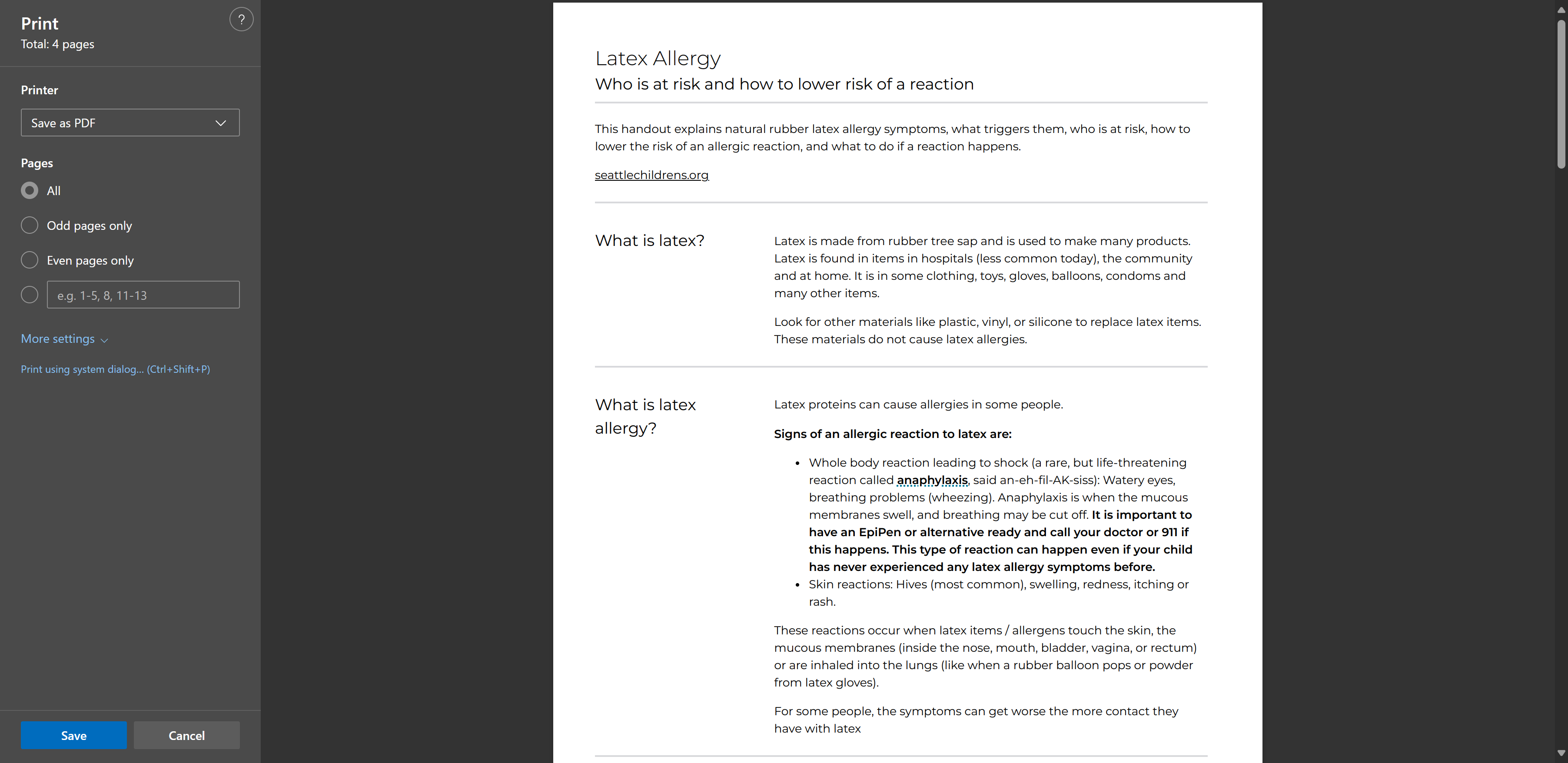
To download as a PDF, choose "Save as a PDF" in the print dialog, then click "Save".

screenshot of print dialog

About Us
  • About Seattle Children’s
  • Contact Us
  • Locations
  • Visiting Seattle Children’s
  • Press Releases
  • Growing for Future Grown-Ups
  • Price Transparency
Community
  • Healthcare Professionals
  • Events
  • Classes
  • Volunteering
Experience and Outcomes
  • Advancing Healthcare Experience and Outcomes
  • Values
  • Nondiscrimination and Interpreters Notice
  • Accessibility and Special Needs
About This Site
  • About This Website
  • Feedback
  • Terms of Use
  • Privacy
  • My Health My Data
  • Notice of Privacy Practices
  • Employees
  • Working From Home and Remote Access Help
  • Vendors

©2026 Seattle Children’s Hospital

4800 Sand Point Way NE, Seattle, WA 98105

206-987-2000 866-987-2000 (toll-free) 206-987-0391 (TTY)

U.S. News & World Report Best Children's Hospitals Honor Roll Badge Forbes America's Best Large Employers Magnet Recognized Nursing Program Children's Miracle Network Hospitals

Seattle Children’s complies with applicable federal and other civil rights laws and does not discriminate, exclude people or treat them differently based on race, color, religion (creed), sex, gender identity or expression, sexual orientation, national origin (ancestry), age, disability, or any other status protected by applicable federal, state or local law. Financial assistance for medically necessary services is based on family income and hospital resources and is provided to children under age 21 whose primary residence is in Washington, Alaska, Montana or Idaho.