Skip to navigation menu Skip to content
  • MyChart
  • Telemedicine
  • Healthcare Professionals
  • Careers
  • Alerts
  • Donate Now
  • I want to …
      • Go to MyChart
      • Find a Doctor
      • Make an Appointment
      • Find a Location
      • Visit ED or Urgent Care
      • Get Driving Directions
      • Refill a Prescription
      • Contact Children's
      • Pay My Bill
      • Estimate My Cost
      • Apply for Financial Assistance
      • Request My Medical Records
      • Find Patient Education
      • Volunteer
      • Donate
      • Refer and Manage a Patient
Search
Search
  • Your Visit
  • Conditions
  • Clinics
  • Research
  • Health & Safety
  • Giving
  • Press Room
  • I want to …
      • Go to MyChart
      • Find a Doctor
      • Make an Appointment
      • Find a Location
      • Visit ED or Urgent Care
      • Get Driving Directions
      • Refill a Prescription
      • Contact Children's
      • Pay My Bill
      • Estimate My Cost
      • Apply for Financial Assistance
      • Request My Medical Records
      • Find Patient Education
      • Volunteer
      • Donate
      • Refer and Manage a Patient
Donate Now
  • Main Menu
  • On This Page

    Jump to a section on this page:

ACE Inhibitors: Captopril, Enalapril, Lisinopril

  • Español PDF
  • Tiếng Việt PDF

Heart medicine for your child.

What is an ACE inhibitor?

ACE (angiotensin-converting enzyme) inhibitors reduce blood pressure by causing the blood vessels to relax. Lower blood pressure makes it easier for the heart to pump blood to areas of the body that need it.

What are the types of ACE inhibitors?

The three common types are Captopril (Capoten), Enalapril (Epaned or Vasotec) and Lisinopril (Zestril or Prinivil). The difference between them is how often they need to be taken.

How do I give an ACE inhibitor to my child?

  • Give it as prescribed by your doctor.
  • Give it at the same time every day. The time between doses is important because doses given too close together may lower your child’s blood pressure too much.
  • The medicine works best when a certain level is in your child’s blood at all times. This happens when the doses are spaced apart in equal amounts of time.

What if we miss or forget a dose?

If your child takes medicine 3 or 4 times a day:

  • Skip the dose you forgot and resume the regular schedule.
  • Do not try to catch up or give a double dose.

If your child takes medicine 2 times a day:

  • If you missed the morning dose:
    • If you remember the morning dose before noon, give the dose when you remember and stay on the regular schedule.
  • If you missed the evening dose:
    • If you remember the dose before midnight, give the dose when you remember and stay on the regular schedule.

Call your child’s healthcare provider or the Heart Center if your child misses more than 2 doses of any medicine.

What if my child throws up after taking this medicine?

  • If your child throws up immediately after taking the medicine, go ahead and repeat the dose for most medicines.
  • If your child throws up more than 5 minutes after taking the medicine, do not repeat the dose.

What if I run out of medicine?

Call your pharmacy when you are close to running out of medicine. Your pharmacy will contact us about refills. The clinic visit is the best time to make sure your child is getting the right dose and has enough medicine.

When do I call the doctor?

Call us if your child has any of these symptoms:

  • Rash not related to illness
  • Cough that does not go away — lasts for about 1 month
  • Dizziness, especially when changing positions
  • Severe headache, fatigue, drowsiness
  • Low energy level
  • Infants — eating poorly, sleeping more

Remember:

  • Bring a list of your child’s medicines to each clinic appointment.
  • Keep all medicines out of the reach of children

To Learn More

  • Heart Center
    206-987-2015
  • After hours and on weekends (hospital operator)
    206-987-2000
  • Pediatric Cardiology of Alaska
    907-339-1945
  • Ask your child’s healthcare provider
  • seattlechildrens.org/patient-education

Free Interpreter Services

  • In the hospital, ask your nurse.
  • From outside the hospital, call the toll-free Family Interpreting Line, 1-866-583-1527. Tell the interpreter the name or extension you need.
Seattle Children's Hospital

Seattle Children’s offers free interpreter services for patients, family members and legal representatives who are deaf or hard of hearing or speak a language other than English. Seattle Children’s will make this information available in alternate formats upon request. Call the Family Resource Center at 206-987-2201. This handout has been reviewed by clinical staff at Seattle Children’s. However, your needs are unique. Before you act or rely upon this information, please talk with your healthcare provider.

© 2026 Seattle Children’s, Seattle, Washington. All rights reserved.

05/01/2026
PE029
Patient and Family Education | Heart Center

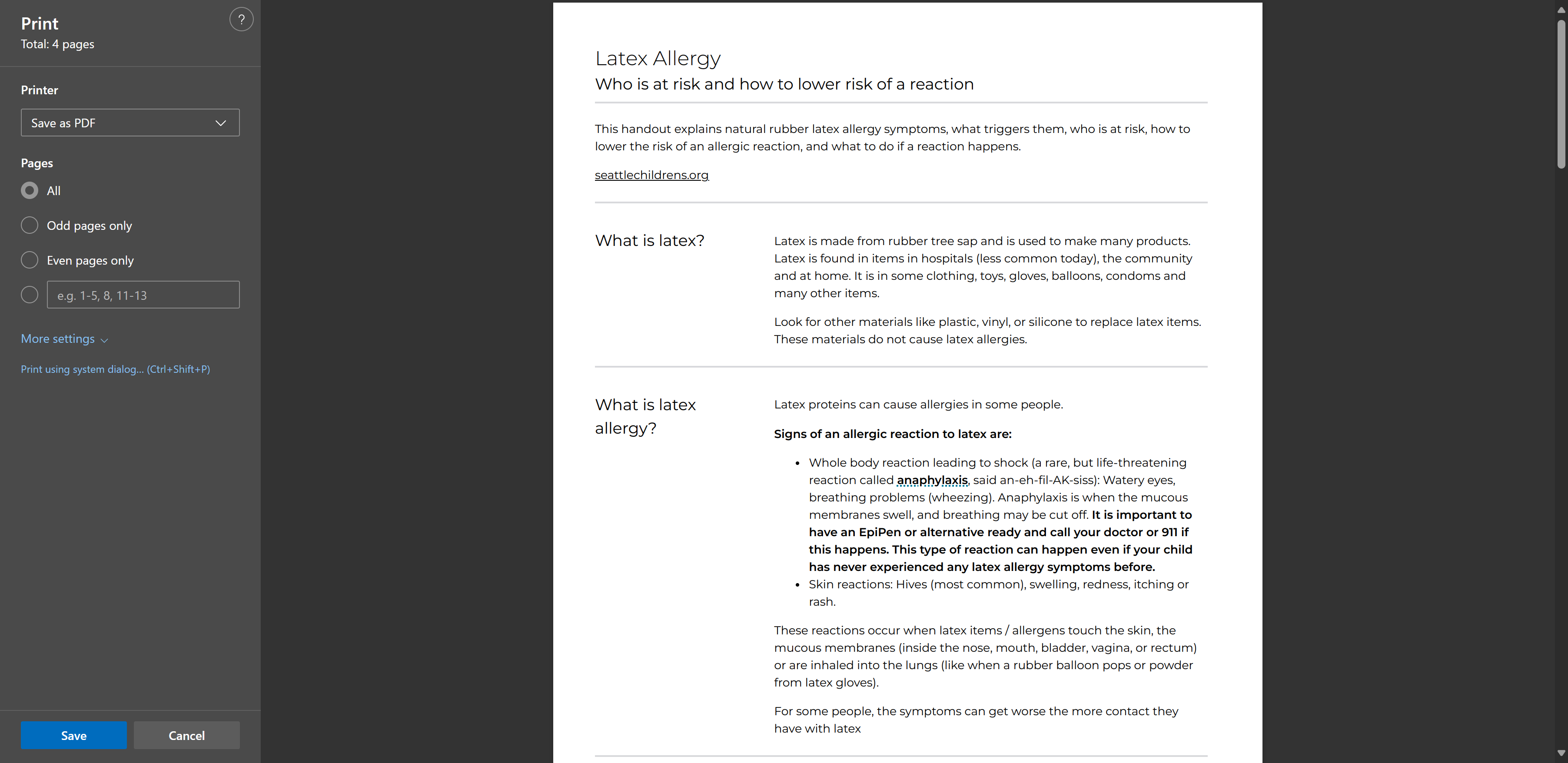
Download Instructions

To download as a PDF, choose "Save as a PDF" in the print dialog, then click "Save".

screenshot of print dialog

About Us
  • About Seattle Children’s
  • Contact Us
  • Locations
  • Visiting Seattle Children’s
  • Press Releases
  • Growing for Future Grown-Ups
  • Price Transparency
Community
  • Healthcare Professionals
  • Events
  • Classes
  • Volunteering
Experience and Outcomes
  • Advancing Healthcare Experience and Outcomes
  • Values
  • Nondiscrimination and Interpreters Notice
  • Accessibility and Special Needs
About This Site
  • About This Website
  • Feedback
  • Terms of Use
  • Privacy
  • My Health My Data
  • Notice of Privacy Practices
  • Employees
  • Working From Home and Remote Access Help
  • Vendors

©2026 Seattle Children’s Hospital

4800 Sand Point Way NE, Seattle, WA 98105

206-987-2000 866-987-2000 (toll-free) 206-987-0391 (TTY)

U.S. News & World Report Best Children's Hospitals Honor Roll Badge Forbes America's Best Large Employers Magnet Recognized Nursing Program Children's Miracle Network Hospitals

Seattle Children’s complies with applicable federal and other civil rights laws and does not discriminate, exclude people or treat them differently based on race, color, religion (creed), sex, gender identity or expression, sexual orientation, national origin (ancestry), age, disability, or any other status protected by applicable federal, state or local law. Financial assistance for medically necessary services is based on family income and hospital resources and is provided to children under age 21 whose primary residence is in Washington, Alaska, Montana or Idaho.