Ulcerative Colitis:Treating Your Child in the Hospital
|
|
Ulcerative colitis swelling and irritation (inflammation) can go from bad to worse. A hospital stay is sometimes needed to give strong medicines to control this inflammation. This handout covers what to expect during your stay. |
Why is a hospital stay needed?Most of the time, a child or teen can manage their colitis with medicine and diet at home. Sometimes it gets worse, and this can be very serious. Your child has been placed in the hospital so we can treat the condition with strong medicines as early as possible. Your Children’s medical unit healthcare team will meet with you and introduce themselves and their role in your child’s care. You know your child best and can help us by watching for any changes in their health during their stay. |
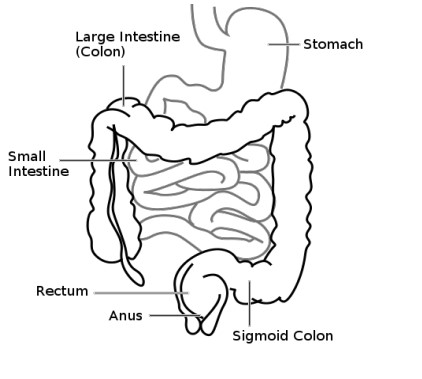
What is ulcerative colitis?Ulcerative colitis is an inflammatory bowel disease. The disease causes irritation and swelling (inflammation) in the large intestine (colon). It may cause severe stomach pain and diarrhea. The walls of the intestines may develop open sores (ulcers) which may result in bloody diarrhea. The name ulcerative colitis comes from the presence of these ulcers.
|
What are the complications of ulcerative colitis?Complications of ulcerative colitis happen when the inflammation of the intestine is severe, or when it moves beyond the inner lining (mucosa) deeper into the intestines. Complications are not frequent but can occur and are listed below. |
Perforation (rupture) of the bowelThis is when the sores or ulcers in the colon weaken the intestinal wall so much that they make a hole in the intestine. This can be life-threatening because the contents of the intestine contain a lot of bacteria which can leak out of the intestines into the surrounding area around the intestines. When bacteria gets into where it shouldn’t be, it can cause a serious infection called peritonitis (peri-ton-EYE-tis). |
Fulminant colitisHere, the entire thickness of the intestinal wall gets inflamed. This severe inflammation causes the colon to become very large and swollen causing a condition called ileus. An ileus is when the normal contractions of the intestine stop for a while. When gas can’t move through the colon, the abdomen grows large (distended). As the condition worsens, the colon loses muscle tone and begins to expand. X-rays of the abdomen show trapped gas inside the paralyzed sections of the intestine. This complication affects less than 10% of people with colitis. |
Toxic megacolonToxic megacolon is when the large intestine (colon) gets very inflamed. Toxic megacolon is very rare. The colon wall then weakens and balloons out. This can break open (rupture), or tear a hole in the colon. Your child will show a high white blood cell count, high fever, pain, and tenderness in the stomach area. Immediate medical help is needed. Your child will need treatment to “decompress” or remove the gas in the bowel in order to prevent rupture. To do this, a nasogastric tube (a tube placed down through the nose into the stomach) may be used to suction out excess air. Surgery may be needed if your child does not improve within 24 hours. If the intestine ruptures, it can be life-threatening. |
What can I expect during this hospitalization?While your child is in the hospital, they are assigned a lead medical provider to make decisions on what testing needs to be done and make a specific plan for treating the disease. The plan will include:
|
Will my child require a central line?A central line is a small tube that is placed in a main blood vessel leading to the heart that can stay in place throughout your child’s treatment. Some children who are very sick and cannot take food by mouth may need to receive specialized IV nutrition through a central line. The medicines used in the treatment of ulcerative colitis do not require a central line, but if your child already has one in place for their nutrition, we will likely put the medicine in through this line as well. |
What is the treatment plan?Medical treatment is aimed at controlling the ongoing inflammation of your child’s intestines with medicines. The first step is to relieve the symptoms by putting the current inflammation in remission, then to prevent future flare-ups. This is done with the use of first-line and second-line medicines. |
First line of therapy – medicines used firstThe first-line medicine therapy is a corticosteroid, methylprednisolone, to treat inflammation. If your child’s symptoms improve with this medicine, they can be discharged home. |
Second line of therapy – medicines used secondThe second-line medicine therapy is infliximab (or toficitinib if your child cannot take infliximab). If your child’s symptoms improve with this medicine, they can be discharged home. The length of your child’s hospital stay depends on their response to therapy. If medicines are not successful, a doctor may recommend surgery. |
What diagnosis tools and tests are used during my child’s stay? |
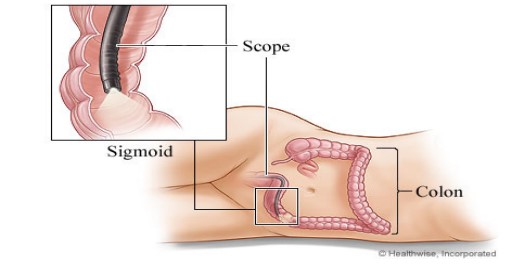
SigmoidoscopySigmoidoscopy uses a thin flexible tube called a scope to look inside the lining of the lower third of the large intestine (the rectum and sigmoid colon). We will give your child general anesthesia for this procedure, so they will be fully asleep to reduce discomfort. The scope is inserted through the anus. The scope has a lighted camera inside the tip, so your doctor can look directly at the lining of the colon. A flexible sigmoidoscopy exam can confirm a diagnosis of ulcerative colitis, Crohn’s disease of the lower part of the colon, the presence of inflammation, the source of bleeding, or infections that worsen symptoms (such as cytomegalovirus).
|
Tests for possible infectionsCytomegalovirus (CMV) is an uncommon virus that occurs in people whose immunity may be low due to medicines or illness. CMV is a virus that can cause painful ulceration of the bowel lining in immunosuppressed patients with ulcerative colitis. If the ulcerative colitis is getting worse or is not responding to treatment, CMV infection may be suspected. Treatment with ganciclovir (Cytovene) is effective in most people. |
When will my child be able to leave the hospital?Your child or teen will be ready to go home when they:
|
More about the medicines used in therapyMedicines are key to getting inflammation under control and are the first and second line of therapy used in the hospital. This section contains details about corticosteroids and infliximab used in our hospital to treat your child’s ulcerative colitis. |
First-line medicine therapy |
Corticosteroids |
How do corticosteroids work to help my child?Corticosteroids are often referred to simply as steroids but are not to be confused with body-building “steroids.” This medicine was first used as therapy for ulcerative colitis in the 1950s. Since that time, these powerful and fast-acting anti-inflammatory medications have been the foundation of treatment for active inflammation. Most people notice an improvement in symptoms within days of starting corticosteroids. In addition to their antiinflammatory power, corticosteroids also suppress the immune response (immunosuppressive). Experts believe the immune system of the child/teen with ulcerative colitis may be overactive. Corticosteroids decrease the activity of the immune system. The decreased activity of the immune system may make certain individuals more susceptible to catching infections. |
What are the best ways to take corticosteroids?Corticosteroids closely resemble cortisol, a hormone made naturally by the body’s adrenal glands. This type of medicine can be taken by mouth (orally), rectally, and intravenously or IV (by vein). When people take corticosteroids, their adrenal glands stop producing or slow down the production of normal cortisol. In general, corticosteroids are recommended only for short-term use in order to stop the symptoms of ulcerative colitis. As valuable as they are in treating short-term active inflammation, corticosteroids are not effective in preventing inflammation. Because of that, they are rarely used long-term. Corticosteroids are usually given in the lowest dose possible for the shortest amount of time. |
How will you give the corticosteroids to my child?In children with mild to moderate active disease, corticosteroids are usually given in pill or liquid form (e.g., prednisone). In children/teens with severe and extensive disease, corticosteroids are usually given through a vein intravenous (IV) (e.g., methylprednisone). |
What are the side effects of corticosteroids?Corticosteroids can have great anti-inflammatory, life-saving effects. The bad side effects of corticosteroids depend on both dose and length of treatment. For many, the bad side effects of steroids are not worth taking it. They may choose other immune suppressive medicines (such as azathioprine). Some of the most common side effects of corticosteroids include the following:
|
Special considerations when taking corticosteroidsBecause corticosteroids cause the adrenal glands to slow or stop the production of cortisol, they cannot be stopped or cut-off abruptly. It takes some time for the adrenal glands to begin producing cortisol again. Gradually tapering or slowly lowering the dose of corticosteroids over days or weeks allows the body to begin producing its own supply of cortisol again. |
Aminosalicylates (5-ASA)Aminosalicylates, also called 5-ASA, may be given to treat mild or moderate colitis. This medicine can be given by mouth or rectally and help control the inflammation of mild-to-moderate ulcerative colitis. The most common 5- ASA medicine used at Seattle Children’s is called mesalamine. Mesalamine is not used for severe colitis. |
Second-line medicine therapy |
Infliximab (Remicade)Infliximab (Remicade) is FDA-approved for treatment of adults and children with ulcerative colitis. It belongs to a class of drugs to treat ulcerative colitis called biologics. These medicines are genetically engineered to interfere with the body's inflammatory response. These drugs target specific proteins in the cells called cytokines that play a role in increasing or decreasing inflammation. |
What are the side effects of infliximab?Remicade is given by infusion – that means through an IV directly into your child’s vein. The most common side effects include allergic reactions to the infusion. Check with your doctor about other possible side effects. Drug interactions may occur so it is very important to tell your doctor about all the medications your child is taking – even over-the-counter medicines, herbs and vitamins – and any medical conditions your child may have. Infliximab may reduce the body's ability to fight other infections as well. |
Special considerations when taking infliximabThere have been some reports of serious infections including tuberculosis (TB) and sepsis, a life-threatening blood infection. Your child should always have a TB test before using infliximab, because therapy can increase the risk of active TB for those who have been exposed. On rare occasions, blood disorders have been noted with infliximab. Tell your doctor if your child develops possible signs such as persistent fever, bruising, bleeding, or paleness while taking infliximab. Nervous system disorders also have been reported. Some reports of lymphoma (a cancer of the lymphatic system) in patients taking infliximab are rare, but do occur more often than in the general population. |
Adalimumab (Humira)Adalimumab (Humira) was approved by the FDA for adults and children with ulcerative colitis. It works similarly to infliximab but is given as an injection. Because it works through the same pathway as infliximab, its overall efficacy and side effects are the same. Because it is an injection and not an infusion, it can take longer to feel the affects, so it is not often used as a primary therapy for ulcerative colitis in the hospital. |
Calcineurin inhibitorsThis class of medicines weakens the activity of the immune system. That, then, decreases the inflammatory response. Calcineurin inhibitors are most often used in organ transplantation to prevent rejection of the new organ, and in autoimmune diseases such as rheumatoid arthritis. Since the late 1960s, they have also been used to treat people with ulcerative colitis. Immunomodulators are appropriate for children/teens who:
|
TacrolimusThe recommended calcineurin inhibitor at our hospital is tacrolimus. Tacrolimus is used in children who cannot take infliximab. It has been more effective in treating people with severe ulcerative colitis, and is generally given until one of the slower-acting immunomodulators (like mercaptopurine or azathioprine) begins to work or until the person undergoes surgery. |
What are the side effects of tacrolimus?Reported side effects include decreased kidney function, hepatitis (inflammation of the liver) , increased risk of infections, diabetes, increased cholesterol levels, sleep problems, headache, mild tremor, high blood pressure, seizures, swollen gums, tingling of the fingers and feet, increased facial hair, and increased risk of lymphoma (a cancer of the lymphatic system). |
Special considerations when taking tacrolimusBlood tests should be done frequently with all calcineurin inhibitors to check for effects on the bone marrow, liver and kidneys. Blood pressure and kidney function need to be closely monitored. Women who are pregnant or wish to become pregnant should talk to their doctors before taking these medicines. |
Tofacitinib (Xeljanz)Tofacitinib is a pill used to treat autoimmune diseases like ulcerative colitis by reducing inflammation. It works by blocking certain signals in the body that cause immune cells to become active, which helps with symptoms like joint pain, swelling, and stomach problems. However, Tofacitinib can cause side effects, such as a higher risk of infections, increased cholesterol, and in some cases, blood clots, which can be serious. Before starting treatment, doctors check for infections like tuberculosis and monitor things like blood counts, liver functions, and cholesterol. People with a history of blood clots or heart problems should use Tofacitinib carefully, especially in higher doses, because it could increase the risk of serious heart problems. |
Preventing blood clotsActive inflammatory bowel disease may make your child more likely to have blood clots, especially when a central intravenous line is in place. Blood clots may cause problems if they form inside blood vessels such as arteries, veins, or the heart. Ask your doctor whether your child should receive medicine to prevent blood clots. |
Enoxaparin (Lovenox)Enoxaparin (Lovenox), or low molecular weight heparin (LMWH), is an anticoagulant. An anticoagulant is a medicine that prevents blood clots from forming inside blood vessels. It works by making the blood take longer to clot. This means that your child will bleed longer than usual after a cut or scrape. In studies of patients with inflammatory bowel disease, enoxaparin did not worsen rectal bleeding. Enoxaparin is given by a shot into the tissue just below the skin (subcutaneous injection). The injections can be given in the legs, arms, or stomach (abdomen). |
Other resourcesFor more information please go to the Crohn’s and Colitis Foundation of America Website crohnscolitisfoundation.org |
|
To Learn More
Free Interpreter Services

|