Pelvic Floor Dysfunction
|
|
Pelvic floor dysfunction is when the muscles that control peeing and pooping do not work well. Physical therapy can help strengthen these muscles and improve toileting. |
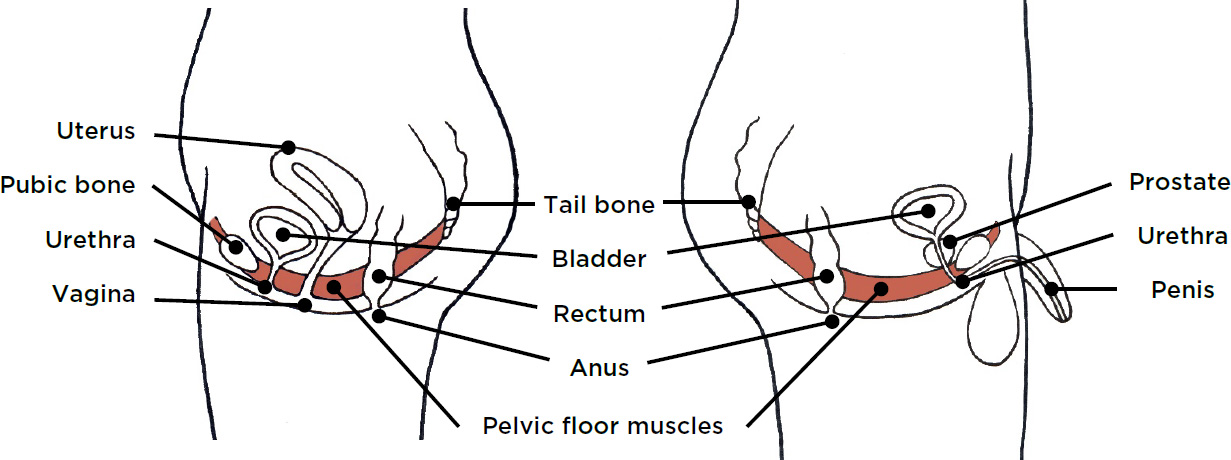
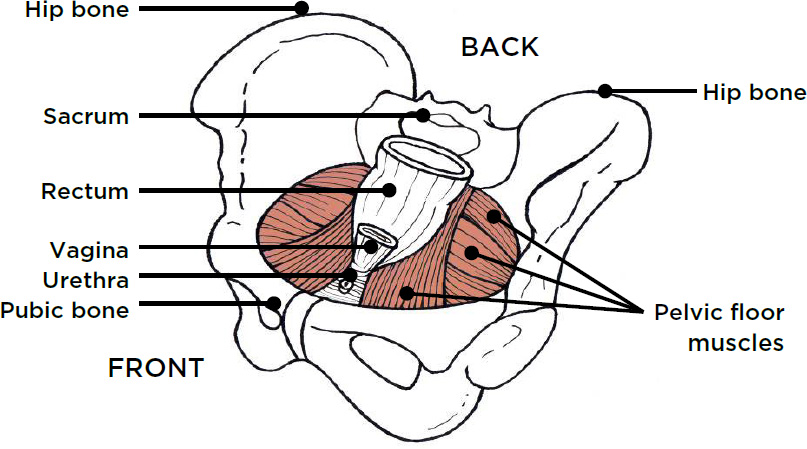
What is the pelvic floor?The pelvic floor is made up of muscles and other tissues between the legs from the front (pubic bone) to the back (tailbone). These muscles and other tissues hold up the organs of the stomach and pelvis including the intestines and bladder. They also help to control peeing (bladder) and pooping (bowel activity). |
Side view of pelvic floor muscles and the organs they support
|
View of pelvic muscles looking down inside the body on a child with a vagina
|
What is pelvic floor dysfunction?Pelvic floor dysfunction refers to a wide range of problems that happen when the pelvic floor muscles are weak, tighten suddenly on their own (spasm) or are too tight. Sometimes, tissue surrounding the pelvic floor organs can be irritated, very sensitive, or not very sensitive, causing bowel and bladder issues. Most children can use the toilet by age 4 with occasional accidents. If your child does not have control of their bowel and bladder function after age 4, medical, mental health and social problems can occur. These problems can impact the quality of life for your child and your family. |
What is pelvic floor therapy?During pelvic floor therapy, a physical therapist will help determine (diagnose) what is causing your child’s bowel and bladder dysfunction. Physical therapists then create a plan to treat and manage them with exercises that teach your child to exercise these muscles (Kegels) and others. Our goal is to improve toileting now and in the future. |
Can my child benefit from this therapy?Your child may benefit from therapy to treat some or all of their issues. Common bowel and bladder conditions that pelvic floor physical therapy can help treat include: |
Issues with peeing (urinating)
|
Issues with pooping (defecating)
|
Pelvic Floor Physical TherapistsFor a list of pelvic floor therapists who specialize in this type of therapy, please see our handout, “Pelvic Floor Physical Therapists” |
|
To Learn More
Free Interpreter Services

|