Skip to navigation menu Skip to content
  • MyChart
  • Telemedicine
  • Healthcare Professionals
  • Careers
  • Alerts
  • Donate Now
  • I want to …
      • Go to MyChart
      • Find a Doctor
      • Make an Appointment
      • Find a Location
      • Visit ED or Urgent Care
      • Get Driving Directions
      • Refill a Prescription
      • Contact Children's
      • Pay My Bill
      • Estimate My Cost
      • Apply for Financial Assistance
      • Request My Medical Records
      • Find Patient Education
      • Volunteer
      • Donate
      • Refer and Manage a Patient
Search
Search
  • Your Visit
  • Conditions
  • Clinics
  • Research
  • Health & Safety
  • Giving
  • Press Room
  • I want to …
      • Go to MyChart
      • Find a Doctor
      • Make an Appointment
      • Find a Location
      • Visit ED or Urgent Care
      • Get Driving Directions
      • Refill a Prescription
      • Contact Children's
      • Pay My Bill
      • Estimate My Cost
      • Apply for Financial Assistance
      • Request My Medical Records
      • Find Patient Education
      • Volunteer
      • Donate
      • Refer and Manage a Patient
Donate Now
  • Main Menu
  • On This Page

    Jump to a section on this page:

Specialized Neurodevelopmental Assessment and Consultation Service (SNACS)

  • Español PDF

The Specialized Neurodevelopmental Assessment and Consultation Service (SNACS) is a program for children and youth with developmental differences or behavior concerns who had exposure to alcohol or other substances before they were born. Here are some frequently asked questions about our service.

What is SNACS?

Through our program, we:

  • Evaluate children and teens who had exposure to alcohol or other substances before they were born (prenatal exposure).
  • Diagnose neurodevelopmental differences related to prenatal substance exposure. This may include trouble with attention, memory, behavior, social skills and other developmental differences.
  • Provide consultation, transition planning and treatment planning to help families know how to support children with prenatal substance exposure.

Who do you see through SNACS?

We see children and youth ages 3 through 17 with behavior concerns, suspected developmental differences and confirmed prenatal substance exposure.

We are located at Seattle Children’s Autism Center, but we see children and teens with all types of developmental differences and behavioral concerns, not just patients with autism.

Most children seen through our service have other conditions like ADHD (attention deficit hyperactivity disorder) or learning problems, or they experienced trauma.

Why was my child referred to SNACS?

Your child was referred to SNACS to evaluate their development and mental health needs. This will include understanding what diagnoses best describe your child’s differences and difficulties. Knowing about their prenatal exposure to substances helps us know what developmental differences to look for.

Children with prenatal exposure to substances often have trouble with:

  • Executive functions like planning, organizing, memory, impulsivity and attention
  • Social skills and/or social communication
  • Behavior
  • Managing their emotions
  • Learning and academic performance
  • Touch, sights, sounds or other sensations

Children may also have physical signs of alcohol exposure like delayed growth, poor coordination or changes in facial features like smaller eyes. Most children do not have these physical signs.

Learning and behavior problems can cause challenges in your child’s daily life. We will provide recommendations to help improve the quality of life for your child and your family.

What do you offer through SNACS?

We offer evaluations, parenting support, consultations and planning for the transition to adult healthcare.

Evaluations

We offer evaluations for youth ages 3 through 17 to determine if they have fetal alcohol spectrum disorders (FASD) or other conditions. We will schedule 3 to 5 visits over several weeks. Each visit is 90 minutes. The visits may be with you and your child, or just with you. Typically, this is what you can expect during visits to our service. Some visits are by telehealth (video visits) and some are in person:

  • Visit 1 (video visit): We will interview you about your child’s behavior and development. If your child is 13 and older, they will need to be available for the first 15 minutes of this visit.
  • Visit 2 (in person at Seattle Children’s Magnuson): Your child will need to be at this visit. We will do psychological testing with your child and have you fill out some questionnaires. If your child is currently staying overnight at Seattle Children’s for mental or behavioral health concerns, we will visit them at the hospital to complete testing.
  • Visit 3 (video visit): We will meet with you to discuss the results of testing, discuss your child’s development and behavior, and give you tools to describe your child to others.
  • Visit 4 (video visit): We will connect you to services and resources in the community since we do not provide long-term therapy. We may provide short-term customized consultation, depending on family needs.

Parenting group

We see caregivers of children ages 4 through 10 in our FAST-B Early Adversity parenting group.

  • The group is 6 weeks long. Each session is 90 minutes by video visit.
  • This group provides brief, evidence-based parenting support for families of children with prenatal substance exposure or adverse childhood experiences like trauma or placement within the foster care system.
  • Each group teaches 2 to 3 new skills you can use to support your child’s development and behavior. Each group also provides time to practice and adapt skills for your child and family.

Consulting and transition planning

We provide consultations with caregivers of youth ages 3 through 17 who have already had a fetal alcohol spectrum disorder evaluation. This often happens in 2 or 3 video visits.

  • For parents or caregivers of children ages 3 through 12: The visits focus on prioritizing treatments and finding appropriate resources based on previous evaluation results.
  • For parents or caregivers of teens ages 13 through 17: We will work with you to create an individualized plan to help your child transition to young adulthood. Your child will need to be available for the first 15 minutes of the first consultation.

What should I bring to the first evaluation appointment?

  • Your child’s previous evaluations if you have them. This may include Individualized Education Programs (IEPs) or past psychological testing. 
  • Medical or social services records, including those showing your child’s diagnosis, test results and details about your child’s exposure to alcohol or other substances before they were born.
  • Any completed forms we gave you to fill out.

How long is the wait to get into SNACS?

The wait to get into our service varies. Our scheduling team will call you to set up your visit once we receive your referral and appointment times become available. Please call Seattle Children’s Autism Center at 206-987-8080 if you have questions about your child’s referral to SNACS.

Where can I get more information about prenatal alcohol and other substance exposure?

Families Moving Forward Foundations
familiesmovingforwardprogram.org
A website with information about a longer-term, evidence-based behavioral intervention for parents or caregivers raising children with FASD or prenatal alcohol exposure called the Families Moving Forward (FMF) Foundations intervention.

Fetal Alcohol Spectrum Disorders
cdc.gov/ncbddd/fasd
A U.S. Centers for Disease Control and Prevention website with research-based information.

FASD United
fasdunited.org
A national parent support and advocacy website with educational and advocacy information.

Proof Alliance
proofalliance.org
An organization that offers information on how to prevent and diagnose FASD, and how to support someone who may be living with FASD.

To Learn More

  • Autism Center
    206-987-8080 or 877-987-2000
  • Ask your child’s healthcare provider
  • seattlechildrens.org/patient-education

Free Interpreter Services

  • In the hospital, ask your nurse.
  • From outside the hospital, call the toll-free Family Interpreting Line, 1-866-583-1527. Tell the interpreter the name or extension you need.
Seattle Children's Hospital

Seattle Children’s offers free interpreter services for patients, family members and legal representatives who are deaf or hard of hearing or speak a language other than English. Seattle Children’s will make this information available in alternate formats upon request. Call the Family Resource Center at 206-987-2201. This handout has been reviewed by clinical staff at Seattle Children’s. However, your needs are unique. Before you act or rely upon this information, please talk with your healthcare provider.

© 2026 Seattle Children’s, Seattle, Washington. All rights reserved.

03/01/2023
PE2300
Patient and Family Education | Autism Center

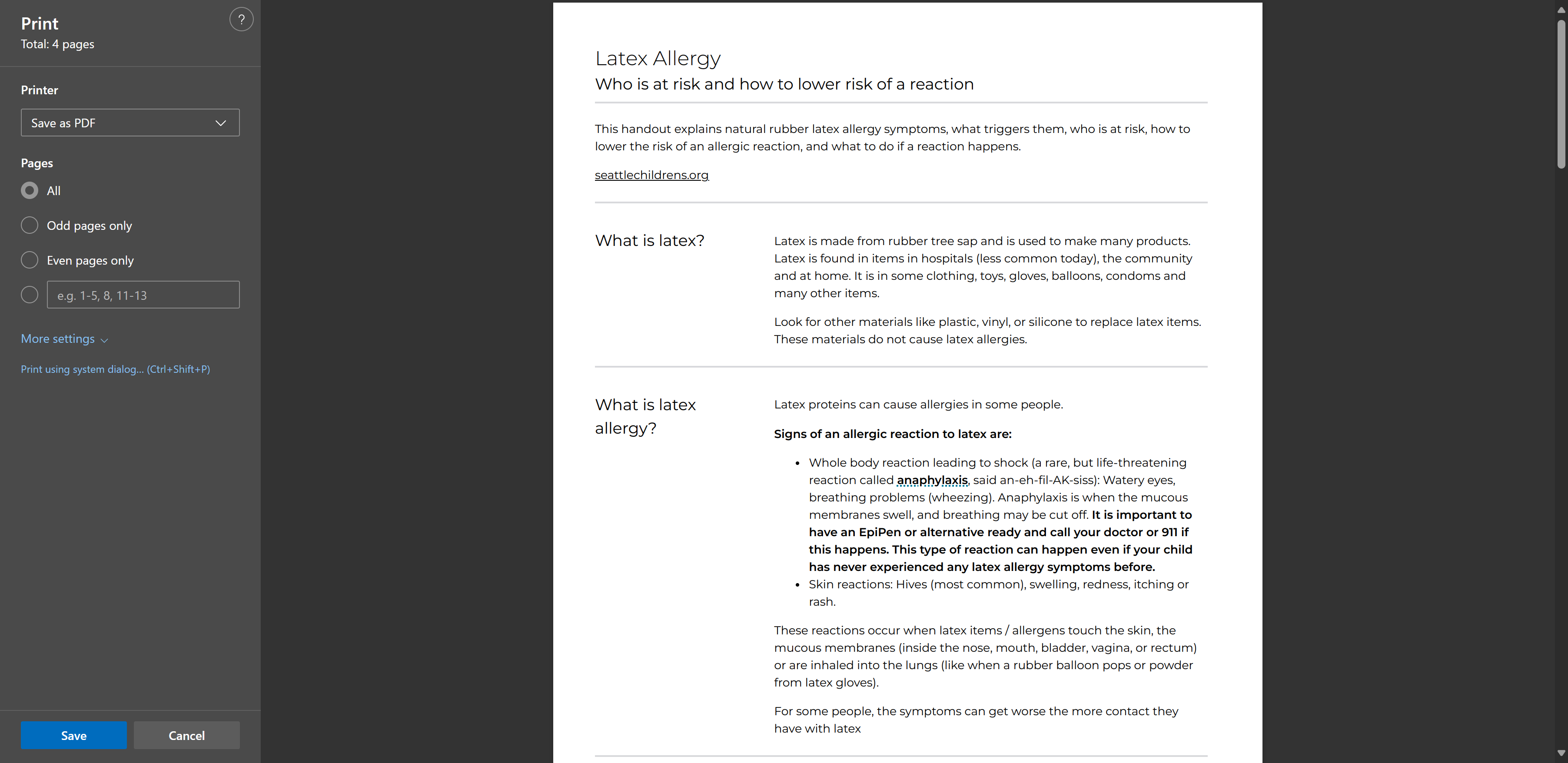
Download Instructions

To download as a PDF, choose "Save as a PDF" in the print dialog, then click "Save".

screenshot of print dialog

About Us
  • About Seattle Children’s
  • Contact Us
  • Locations
  • Visiting Seattle Children’s
  • Press Releases
  • Growing for Future Grown-Ups
  • Price Transparency
Community
  • Healthcare Professionals
  • Events
  • Classes
  • Volunteering
Experience and Outcomes
  • Advancing Healthcare Experience and Outcomes
  • Values
  • Nondiscrimination and Interpreters Notice
  • Accessibility and Special Needs
About This Site
  • About This Website
  • Feedback
  • Terms of Use
  • Privacy
  • My Health My Data
  • Notice of Privacy Practices
  • Employees
  • Working From Home and Remote Access Help
  • Vendors

©2026 Seattle Children’s Hospital

4800 Sand Point Way NE, Seattle, WA 98105

206-987-2000 866-987-2000 (toll-free) 206-987-0391 (TTY)

U.S. News & World Report Best Children's Hospitals Honor Roll Badge Forbes America's Best Large Employers Magnet Recognized Nursing Program Children's Miracle Network Hospitals

Seattle Children’s complies with applicable federal and other civil rights laws and does not discriminate, exclude people or treat them differently based on race, color, religion (creed), sex, gender identity or expression, sexual orientation, national origin (ancestry), age, disability, or any other status protected by applicable federal, state or local law. Financial assistance for medically necessary services is based on family income and hospital resources and is provided to children under age 21 whose primary residence is in Washington, Alaska, Montana or Idaho.