Skip to navigation menu Skip to content
  • MyChart
  • Telemedicine
  • Healthcare Professionals
  • Careers
  • Alerts
  • Donate Now
  • I want to …
      • Go to MyChart
      • Find a Doctor
      • Make an Appointment
      • Find a Location
      • Visit ED or Urgent Care
      • Get Driving Directions
      • Refill a Prescription
      • Contact Children's
      • Pay My Bill
      • Estimate My Cost
      • Apply for Financial Assistance
      • Request My Medical Records
      • Find Patient Education
      • Volunteer
      • Donate
      • Refer and Manage a Patient
Search
Search
  • Your Visit
  • Conditions
  • Clinics
  • Research
  • Health & Safety
  • Giving
  • Press Room
  • I want to …
      • Go to MyChart
      • Find a Doctor
      • Make an Appointment
      • Find a Location
      • Visit ED or Urgent Care
      • Get Driving Directions
      • Refill a Prescription
      • Contact Children's
      • Pay My Bill
      • Estimate My Cost
      • Apply for Financial Assistance
      • Request My Medical Records
      • Find Patient Education
      • Volunteer
      • Donate
      • Refer and Manage a Patient
Donate Now
  • Main Menu
  • On This Page

    Jump to a section on this page:

Autism Center Psychiatry and Medication Consultation Clinic

What to expect during your visit

  • Español PDF

Through the Autism Center Psychiatry and Medication Consultation Clinic, we will evaluate your child to see what treatments may help them. Here is what you can expect during a visit to our clinic. We only see patients through this service who have already received an autism diagnosis.

What happens during an evaluation?

You and your child will meet with one of our psychiatrists or psychiatric nurse practitioners to talk about treatment options to improve your child’s symptoms. We may take your child’s weight, height and blood pressure.

Part of the evaluation may include a discussion about medicines with you and your child’s primary care provider. Our goal is to help your child get started on the right treatment and return to their primary care provider or community mental health provider for ongoing management.

Will medicine be prescribed at the first visit?

We usually do not give prescription medicines at the first visit. Decisions about prescribing are based on these things:

  • Your child’s symptoms
  • Information from your child’s records and questionnaires
  • Other medical conditions your child has
  • The risks and benefits of prescribing medicine
  • Availability of other non-medicine treatment options for your child

How do I prepare for the visit?

  • Fill out all the questionnaires we gave to you and return them at least 1 week before your next visit. Please keep a copy for your own records.
  • Bring or send in any relevant evaluation records, prescription records or school reports.
  • Bring in the bottles or a list or send in a list of any current medicines that your child is taking for any reason. Include all over-the-counter medicines, herbal medicines and vitamins your child takes.
  • Bring or send in any relevant legal documents, such as guardianship, durable power of attorney or parenting plan. If you have a parenting plan, please call our office before the appointment to discuss what is needed for the visit.

Which providers can prescribe medicines?

All these providers are licensed to prescribe and manage psychiatric medicines:

  • Psychiatrists
  • General psychiatry residents, child and adolescent psychiatry fellows
  • Psychiatric nurse practitioners

What do I need to know if my child is prescribed medicine?

  • Your provider will review your child’s prescription medicines with you. We will discuss how your child should take the medicines and when to return to clinic.
  • It is important that your child has regularly scheduled appointments if your child is prescribed medicines.
  • Please call the nurse line at 206-987-7149 or send a message through MyChart if you have any questions about your child’s medicine or if your child needs a prescription refill before their next visit. Please allow at least 7 days for refill authorizations.

How long will my child work with their provider?

This will vary based on your child’s symptoms and the evaluation by our psychiatrist or psychiatric nurse practitioner.

  • Short-term consultation: We will transition your child’s care back to their primary care provider after just a few visits.
  • Short-term consultation with medicine management: In some cases, we may need to see your child for more visits to manage their medicines. We will then transition your child back to their primary care provider or mental health provider in the community.

We will provide written treatment options to you and the provider who referred you to us.

What to do if I am concerned for my child’s safety?

Call 988 (Suicide and Crisis Lifeline) or 911 if your child is experiencing a safety risk. This may include active suicidal thoughts or severe agitation/ aggressive behavior.

What is my responsibility as a parent or caregiver?

  • Keep your child’s care information updated.
  • Follow the treatment plan or tell us if you are unable to follow it.
  • Follow up as recommended and let us know as soon as possible if you cannot make an appointment.

To Learn More

  • Autism Center
    206-987-8080 or 877-987-2000
  • Ask your child’s healthcare provider
  • seattlechildrens.org/patient-education

Free Interpreter Services

  • In the hospital, ask your nurse.
  • From outside the hospital, call the toll-free Family Interpreting Line, 1-866-583-1527. Tell the interpreter the name or extension you need.
Seattle Children's Hospital

Seattle Children’s offers free interpreter services for patients, family members and legal representatives who are deaf or hard of hearing or speak a language other than English. Seattle Children’s will make this information available in alternate formats upon request. Call the Family Resource Center at 206-987-2201. This handout has been reviewed by clinical staff at Seattle Children’s. However, your needs are unique. Before you act or rely upon this information, please talk with your healthcare provider.

© 2026 Seattle Children’s, Seattle, Washington. All rights reserved.

01/01/2026
PE3226
Patient and Family Education | Autism Center

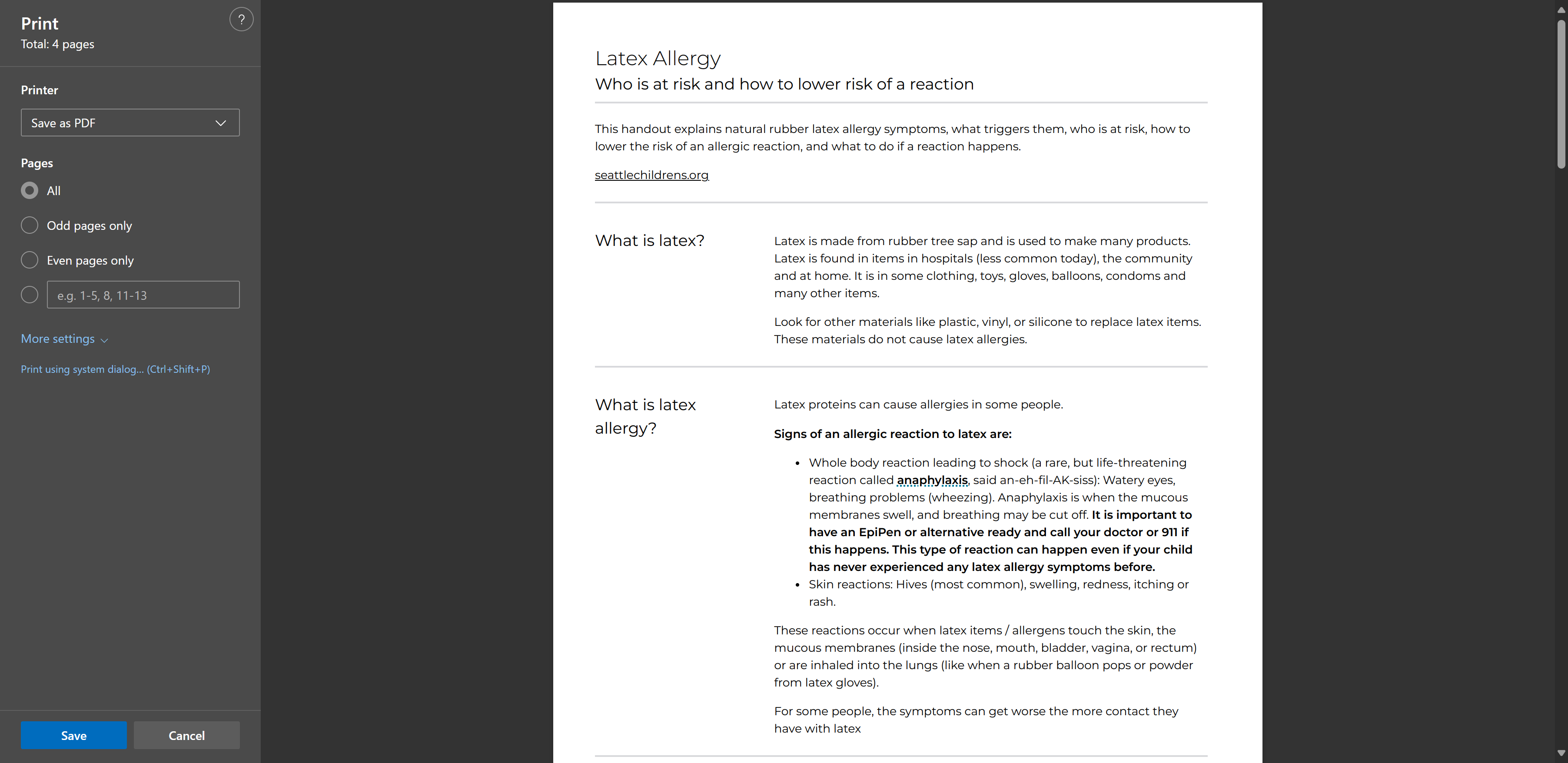
Download Instructions

To download as a PDF, choose "Save as a PDF" in the print dialog, then click "Save".

screenshot of print dialog

About Us
  • About Seattle Children’s
  • Contact Us
  • Locations
  • Visiting Seattle Children’s
  • Press Releases
  • Growing for Future Grown-Ups
  • Price Transparency
Community
  • Healthcare Professionals
  • Events
  • Classes
  • Volunteering
Experience and Outcomes
  • Advancing Healthcare Experience and Outcomes
  • Values
  • Nondiscrimination and Interpreters Notice
  • Accessibility and Special Needs
About This Site
  • About This Website
  • Feedback
  • Terms of Use
  • Privacy
  • My Health My Data
  • Notice of Privacy Practices
  • Employees
  • Working From Home and Remote Access Help
  • Vendors

©2026 Seattle Children’s Hospital

4800 Sand Point Way NE, Seattle, WA 98105

206-987-2000 866-987-2000 (toll-free) 206-987-0391 (TTY)

U.S. News & World Report Best Children's Hospitals Honor Roll Badge Forbes America's Best Large Employers Magnet Recognized Nursing Program Children's Miracle Network Hospitals

Seattle Children’s complies with applicable federal and other civil rights laws and does not discriminate, exclude people or treat them differently based on race, color, religion (creed), sex, gender identity or expression, sexual orientation, national origin (ancestry), age, disability, or any other status protected by applicable federal, state or local law. Financial assistance for medically necessary services is based on family income and hospital resources and is provided to children under age 21 whose primary residence is in Washington, Alaska, Montana or Idaho.