Skip to navigation menu Skip to content
  • MyChart
  • Telemedicine
  • Healthcare Professionals
  • Careers
  • Alerts
  • Donate Now
  • I want to …
      • Go to MyChart
      • Find a Doctor
      • Make an Appointment
      • Find a Location
      • Visit ED or Urgent Care
      • Get Driving Directions
      • Refill a Prescription
      • Contact Children's
      • Pay My Bill
      • Estimate My Cost
      • Apply for Financial Assistance
      • Request My Medical Records
      • Find Patient Education
      • Volunteer
      • Donate
      • Refer and Manage a Patient
Search
Search
  • Your Visit
  • Conditions
  • Clinics
  • Research
  • Health & Safety
  • Giving
  • Press Room
  • I want to …
      • Go to MyChart
      • Find a Doctor
      • Make an Appointment
      • Find a Location
      • Visit ED or Urgent Care
      • Get Driving Directions
      • Refill a Prescription
      • Contact Children's
      • Pay My Bill
      • Estimate My Cost
      • Apply for Financial Assistance
      • Request My Medical Records
      • Find Patient Education
      • Volunteer
      • Donate
      • Refer and Manage a Patient
Donate Now
  • Main Menu
  • On This Page

    Jump to a section on this page:

Conductive Hearing Loss

  • Español PDF

What is conductive hearing loss?

A conductive hearing loss is a type of hearing loss caused by a problem in the outer or middle ear blocking sound to the inner ear (where hearing takes place).

Conductive hearing losses can be permanent or temporary. Temporary conductive hearing loss can sometimes be treated with medical help (removing ear wax) or surgery (placing tubes in the ear drum to drain fluid).

A child with a conductive hearing loss may:

  • Find it hard to understand speech in a noisy area
  • Find it hard to understand speech when they are unable to see the speaker’s mouth move
  • Have trouble paying attention or following directions or discussions in a noisy area
  • Struggle with reading, writing and spelling schoolwork

What can I do to help my child?

These guidelines will help minimize potential problems for your child.

Hearing health care

  • Get your child’s hearing tested if you have concerns about a change in your child’s hearing.
  • See an ear doctor (otolaryngologist) for a medical check-up and treatment plan.
  • Always protect your child’s ears with earplugs or earmuffs during activities with high levels of noise, such as loud music, firearms, snowmobiling, fireworks and lawn mowing.
  • Teach your child how to cross busy streets, looking left, right and left again, and to use crosswalks. It may be hard for your child to hear environmental sounds like car motors.

Communication strategies

  • Always get your child’s attention before you start talking with them or give instructions.
  • Rephrase rather than repeat statements and instructions if your child misunderstands.
  • Ensure that your child can see your face and mouth well when speaking to them. Use of visual cues improves communication even for those with normal hearing.
  • Be aware of your environment and minimize background noise as much as possible.
  • Inform teachers and classroom aides about your child’s hearing loss. Let them know if there are any changes in hearing.
  • Have your child sit close to the teacher to increase access to instruction and improve access to visual cues.
  • Check in with the teacher and ask questions.
  • Stay aware of how your child is doing in school as prompt intervention may help reduce problems in school.


S-P-E-E-C-H may help you to remember steps for easier communication:
S - State the topic to be discussed before starting a conversation.
P - Pace your conversation at a moderate rate and normal loudness. Pause occasionally to help your child understand.
E - Enunciate and pronounce words clearly. Don’t exaggerate your lip movements.
E - Enthusiastically communicate, using natural body language and gestures.
CH - Check with your child to make sure they understand your message before changing topics.

Speech and language assessment

If you have any concerns, your child’s speech and language should be evaluated so that any problems with speech and language can be found early. Prompt intervention may help reduce problems in school.

When conductive hearing loss is more permanent

If your child’s hearing loss is found to be permanent, they may be eligible to use a hearing aid or assistive listening device. Talk with your child’s audiologist about amplification options as some devices require clearance from an ear doctor (otolaryngologist).

Examples of options include:

  • Use of an amplification system in the classroom
  • Use of a hearing device, e.g., behind-the-ear hearing aid or bone conduction sound processor (BCSP)

To Learn More

  • Audiology
    206-987-5173
  • Ask your child’s healthcare provider
  • seattlechildrens.org/patient-education

Free Interpreter Services

  • In the hospital, ask your nurse.
  • From outside the hospital, call the toll-free Family Interpreting Line, 1-866-583-1527. Tell the interpreter the name or extension you need.
Seattle Children's Hospital

Seattle Children’s offers free interpreter services for patients, family members and legal representatives who are deaf or hard of hearing or speak a language other than English. Seattle Children’s will make this information available in alternate formats upon request. Call the Family Resource Center at 206-987-2201. This handout has been reviewed by clinical staff at Seattle Children’s. However, your needs are unique. Before you act or rely upon this information, please talk with your healthcare provider.

© 2026 Seattle Children’s, Seattle, Washington. All rights reserved.

06/01/2023
PE3312
Patient and Family Education | Audiology

Download Instructions

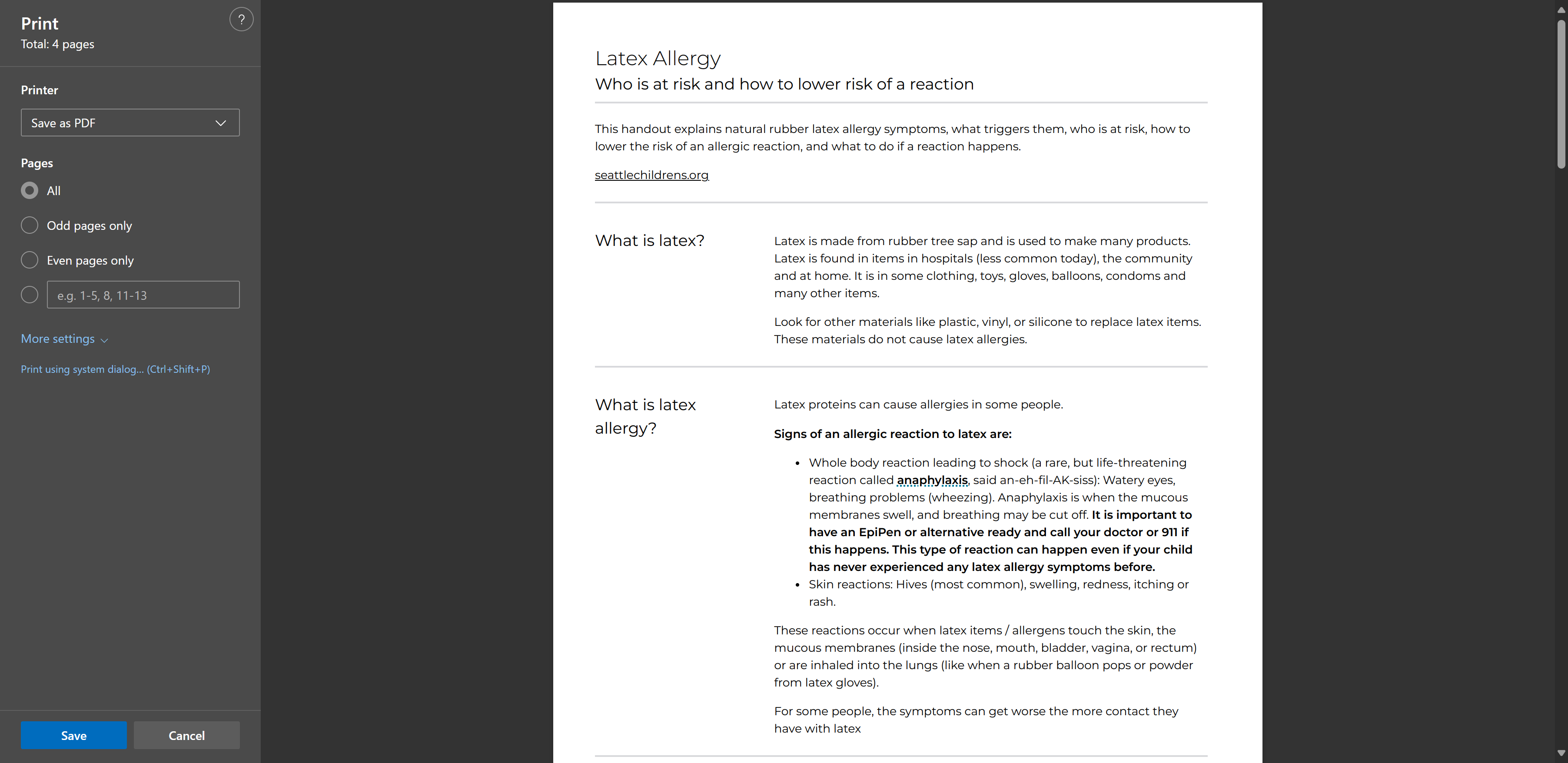
To download as a PDF, choose "Save as a PDF" in the print dialog, then click "Save".

screenshot of print dialog

About Us
  • About Seattle Children’s
  • Contact Us
  • Locations
  • Visiting Seattle Children’s
  • Press Releases
  • Growing for Future Grown-Ups
  • Price Transparency
Community
  • Healthcare Professionals
  • Events
  • Classes
  • Volunteering
Experience and Outcomes
  • Advancing Healthcare Experience and Outcomes
  • Values
  • Nondiscrimination and Interpreters Notice
  • Accessibility and Special Needs
About This Site
  • About This Website
  • Feedback
  • Terms of Use
  • Privacy
  • My Health My Data
  • Notice of Privacy Practices
  • Employees
  • Working From Home and Remote Access Help
  • Vendors

©2026 Seattle Children’s Hospital

4800 Sand Point Way NE, Seattle, WA 98105

206-987-2000 866-987-2000 (toll-free) 206-987-0391 (TTY)

U.S. News & World Report Best Children's Hospitals Honor Roll Badge Forbes America's Best Large Employers Magnet Recognized Nursing Program Children's Miracle Network Hospitals

Seattle Children’s complies with applicable federal and other civil rights laws and does not discriminate, exclude people or treat them differently based on race, color, religion (creed), sex, gender identity or expression, sexual orientation, national origin (ancestry), age, disability, or any other status protected by applicable federal, state or local law. Financial assistance for medically necessary services is based on family income and hospital resources and is provided to children under age 21 whose primary residence is in Washington, Alaska, Montana or Idaho.