
Epilepsy-Focused Medical Devices
Using advanced models to develop and test medical interventions for treatment-resistant epilepsy
Technology Overview
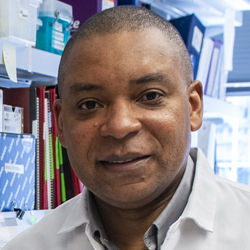 Dr. Franck Kalume
Dravet syndrome is a severe life-threatening form of epilepsy that starts in infancy and presents with an array of comorbidities besides seizures. These include sleep disorders, ataxia, cognitive dysfunction and, in some cases, sudden unexpected death in epilepsy (SUDEP). Leigh syndrome is a metabolic disorder resulting from mutations in nuclear or mitochondrial genes and its symptoms include seizures. Seizures related to these two syndromes are often resistant to current therapies.
Neuroscientist Franck Kalume, PhD, uses advanced in vitro and in vivo models to study the pathways of pediatric epilepsy to identify targets for new therapies. This work includes developing and testing implantable devices to predict, monitor and disrupt seizure activity.
Dravet syndrome is caused by mutations in the SCN1A gene, which codes for a sodium channel that enables electrical signaling in neurons. Patients with Dravet syndrome have insufficient levels of the channel protein. Dr. Kalume and collaborators at the University of Washington developed an animal model that closely mirrors the primary symptoms and comorbidities of human Dravet syndrome. The animals carry whole-body or conditional knockouts of SCN1A. The animal model is ideal for investigating Dravet syndrome because seizures can be reliably triggered by acute increases in body temperature. Using this model, Dr. Kalume’s team found that dysfunction of GABAergic interneurons is primarily responsible for the disease presentations. Furthermore, they identified physiological changes leading to SUDEP in Dravet syndrome. They used the preclinical animal model to map the brain regions responsible for specific symptoms and to develop a novel gene therapy that cures Dravet syndrome in these animals.
To study epilepsy related to Leigh syndrome, Dr. Kalume and his collaborator, neuroscientist Jan-Marino (Nino) Ramirez, PhD, use Ndufs4 knockout animal models that have been validated as a clinically relevant model for this syndrome. Dr. Kalume’s group developed a cell-specific animal model in which Ndufs4 is knocked out only in GABAergic interneurons. This model isolates the epilepsy from the other clinical manifestations of Leigh syndrome. The Kalume Lab is using the specialized Ndufs4 knockout animal model to study mechanisms, identify potential therapeutic targets, and develop new therapeutic approaches for epilepsy in Leigh syndrome.
Using these advanced models, Dr. Kalume is developing an implantable, multimodal medical device for pediatric epilepsy patients. The device monitors waking and sleeping status, cardiac and respiratory rhythm, and brain activity using electroencephalogram (EEG) technology. With these biometrics, the device will detect signs of seizures and SUDEP to provide early warnings for these events. The device could respond to early signs of seizure onset with electrical stimulation to disrupt the progression of an attack. Dr. Kalume and team are also exploring how sensory stimulation applied during seizures might help reduce the severity of these events and protect against SUDEP.
Dr. Kalume is interested in partnerships that use his specialized animal models and expertise in pediatric epilepsy to further the development of epilepsy-focused medical devices.
Stage of Development
- Preclinical in vitro
- Preclinical in vivo
Partnering Opportunities
- Collaborative research opportunity
- Sponsored research agreement
- Consultation agreement
Publications
Manning A, Han V, Stephens A, … Ramirez JM, Kalume F. Elevated susceptibility to exogenous seizure triggers and impaired interneuron excitability in a mouse model of Leigh syndrome epilepsy. Neurobiol Dis. 2023;187:106288.
Sihai N, Bard AM, Devinsky O, Kalume F. Disordered autonomic function during exposure to moderate heat or exercise in a mouse model of Dravet syndrome. Neurobiol Dis. 2021;147:105154.
Bolea I, Gella A, Sanz E, ... Kalume F, Quintana A. Defined neuronal populations drive fatal phenotype in a mouse model of Leigh syndrome. Elife. 2019;8:e47163.
Williams AD, Kalume F, Westenbroek RE, Catterall WA. A more efficient conditional mouse model of Dravet syndrome: Implications for epigenetic selection and sex-dependent behaviors. J Neurosci Methods. 2019;325:108315.
Kalume F, Oakley JC, Westenbroek RE, Gile J, de la Iglesia HO, Scheuer T, Catterall WA. Sleep impairment and reduced interneuron excitability in a mouse model of Dravet syndrome. Neurobiol Dis. 2015;77:141-154.
Kalume F, Westenbroek RE, Cheah CS, Yu FH, Oakley JC, Scheuer T, Catterall WA. Sudden unexpected death in a mouse model of Dravet syndrome. J Clin Invest. 2013;123(4):1798-1808.
Cheah CS, Westenbroek RE, Roden WH, Kalume F, … Catterall WA. Correlations in timing of sodium channel expression, epilepsy, and sudden death in Dravet syndrome. Channels. 2013;7(6):468-472.
Catterall W, Kalume F, Oakley J. NaV1.1 channels and epilepsy. J of Physiol. 2010;588:1849-1859.
Learn More