
Gene Therapies for Childhood Epilepsy
Genetic approaches to treating epilepsies and related neurological conditions
Technology Overview
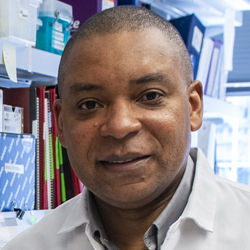 Dr. Franck Kalume
Epilepsies with childhood onset constitute a complex and varied collection of seizure disorders ranging from mild to devastating. Among them is a subgroup of rare but severe forms of epilepsy recognized as developmental epileptic encephalopathies (DEEs). DEEs are childhood onset epilepsies characterized by frequent and often drug-resistant seizures associated with intellectual disability and developmental delay or regression. With recent advances in gene sequencing techniques, more than 900 genes have been linked to these epilepsies.
Neuroscientist Franck Kalume, PhD, is working to understand the mechanisms that drive genetic epilepsies, with a focus on DEEs and the ultimate goal of developing gene therapies and other treatments for these conditions. Understanding how mutations in a specific gene lead to disease — and which regions and cells in the brain are particularly affected by the genetic change — is essential to developing curative therapies for these childhood disorders. Dr. Kalume has demonstrated a proof-of-principle of one such gene therapy for Dravet syndrome, a severe life-threatening form of epilepsy that starts in infancy and has an array of comorbidities.
Dravet syndrome is caused by mutations in SCN1A, a gene that codes for a sodium ion channel that enables electrical signaling in neurons. In Dravet syndrome, mutations in one out of two copies of the SCN1A gene result in insufficient levels of the sodium channel in the brain, ultimately leading to seizures and other neurological complications.
In collaboration with colleagues at the University of Washington, Dr. Kalume developed an SCN1A-knockout animal model of Dravet syndrome. Using the model, he and his team found that lowered excitability of inhibitory neurons is responsible for the seizures caused by Dravet syndrome.
In collaboration with neuroscientist Jan-Marino (Nino) Ramirez, PhD, and researchers at the Allen Institute, Dr. Kalume developed a first-of-its-kind gene therapy that cured Dravet syndrome in this preclinical animal model. The novel gene therapy uses an adeno-associated virus (AAV) carrier with a cell-type-specific enhancer that expresses its gene cargo solely in inhibitory neurons. Because the SCN1A gene is large, the researchers also used an innovative split-gene approach to deliver the gene in two separate vectors, using a molecular tool known as an intein that splices the two halves of the channel into one functional protein. Animals that received the gene therapy were protected against seizures and mortality. He and his team are currently testing the longevity of the therapy in their animal model, as well as if delivering the therapy after symptom onset also cures the syndrome in animals.
Dr. Kalume is also exploring other gene therapy approaches for Dravet syndrome and related conditions using different delivery methods, including lentivirus vectors in collaboration with HIV researcher Bruce Torbett, PhD, and nanoparticle delivery systems in collaboration with pediatric oncologist Joelle Straehla, MD.
In addition, Dr. Kalume studies other epilepsies including the one associated with Leigh syndrome, an often-fatal genetic metabolic disorder that is caused by mitochondrial dysfunction and leads to severe seizures, respiratory abnormalities and difficulty swallowing. The syndrome can be caused by mutations in several different genes that encode key proteins responsible for mitochondrial function, including the Ndufs4 gene that encodes for a key subunit of the complex I of the mitochondrial respiratory chain.
Using animal models with a cell-specific Ndufs4 knockout, Dr. Kalume demonstrated that GABAergic interneurons are the key driver of epilepsy in Leigh syndrome. Animal models carrying the Ndufs4 knockout specifically in GABAergic neurons recapitulated key features of epilepsy in Leigh syndrome. Dr. Kalume and Dr. Ramirez have also used these preclinical models to uncover dysfunction in the coordination between swallowing and breathing caused by the disorder. Further studies in the lab are leveraging this insight into the disease pathogenesis to develop a gene therapy for this epilepsy.
Dr. Kalume is interested in partnerships to further develop gene therapies and other novel therapies for genetic epilepsy and related disorders. He is also interested in using advanced models of pediatric epilepsy to identify additional therapeutic targets.
Stage of Development
- Preclinical in vitro
- Preclinical in vivo
Partnering Opportunities
- Collaborative research opportunity
- Sponsored research agreement
- Consultation agreement
- Clinical trials
- Investigational New Drug (IND) Application
Publications
Mich JK, Ryu J, Wei AD, … Ramirez JM, Ting JT, Lein ES, Levi BP, Kalume FK. Interneuron-specific dual-AAV SCN1A gene replacement corrects epileptic phenotypes in mouse models of Dravet syndrome. Sci Transl Med. 2025;17(790):eadn5603.
Huff A, Oliveira LM, Karlen-Amarante M, Ebiala F, Ramirez JM, Kalume F. Ndufs4 inactivation in glutamatergic neurons reveals swallow-breathing discoordination in a mouse model of Leigh syndrome. Exp Neurol. 2025;385:115123.
Manning A, Han V, Stephens A, … Ramirez JM, Kalume F. Elevated susceptibility to exogenous seizure triggers and impaired interneuron excitability in a mouse model of Leigh syndrome epilepsy. Neurobiol Dis. 2023;187:106288.
Bolea I, Gella A, Sanz E, ... Kalume F, Quintana A. Defined neuronal populations drive fatal phenotype in a mouse model of Leigh syndrome. Elife. 2019;8:e47163.
Williams AD, Kalume F, Westenbroek RE, Catterall WA. A more efficient conditional mouse model of Dravet syndrome: Implications for epigenetic selection and sex-dependent behaviors. J Neurosci Methods. 2019;325:108315.
Kalume F, Oakley JC, Westenbroek RE, et al. Sleep impairment and reduced interneuron excitability in a mouse model of Dravet syndrome. Neurobiol Dis. 2015;77:141-154.
Cheah CS, Westenbroek RE, Roden WH, Kalume F, Oakley JC, Jansen LA, Catterall WA. Correlations in timing of sodium channel expression, epilepsy, and sudden death in Dravet syndrome. Channels. 2013;7(6):468-472.
Learn More