
Patient Care
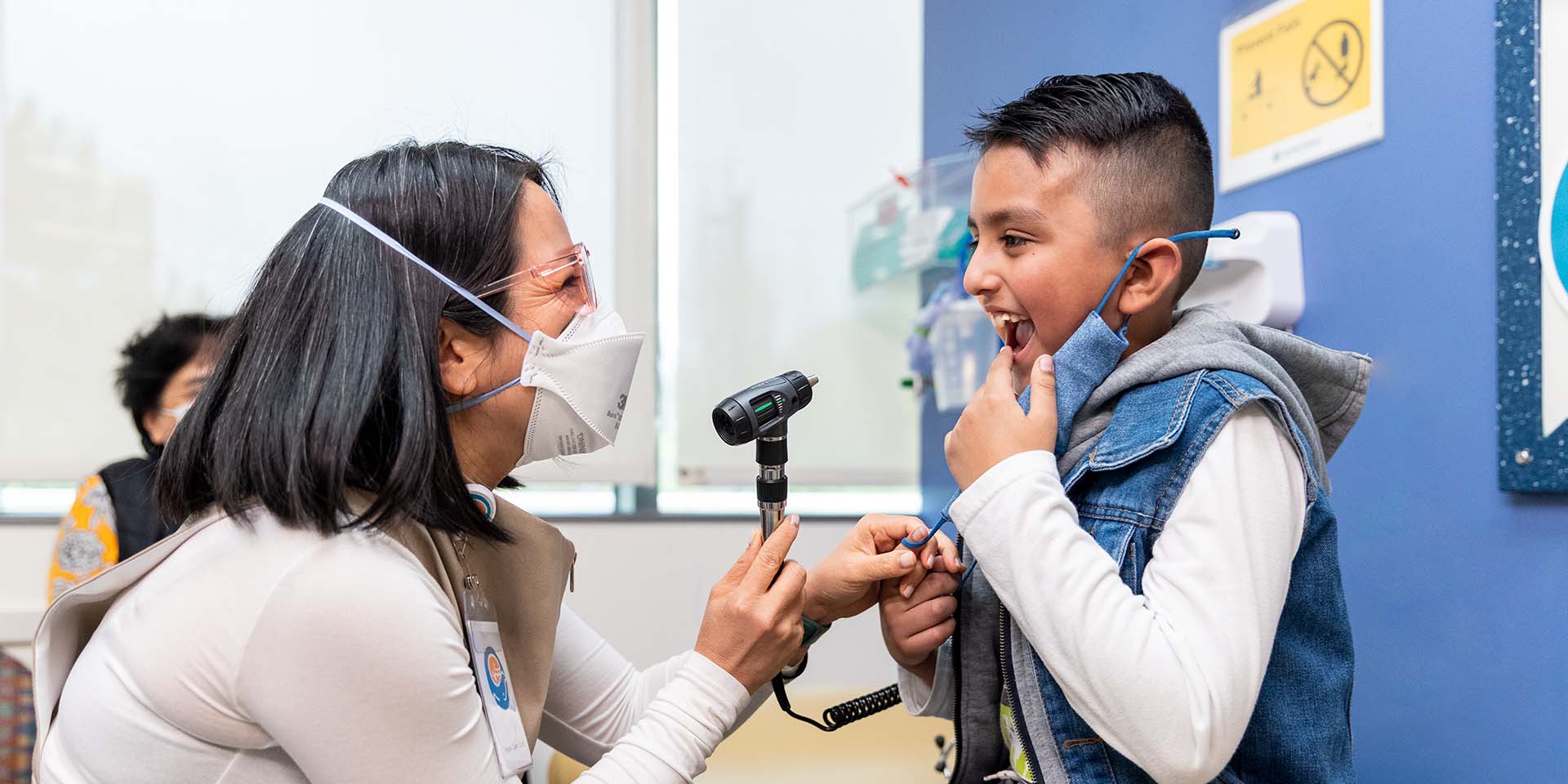
Providing safe, high quality care for all our patients is our highest priority. Whether it is a clinic visit, procedure or hospital stay, your child has a team at Seattle Children’s, and we will work with you to provide excellent family-centered care.
Who Will Care for My Child?
You
You are an important member of your child’s healthcare team. You know your child best. We will work with you to make decisions and treatment plans for your child.
Your child’s healthcare team
Seattle Children’s is a teaching hospital. Your child will receive care from a team that may include many doctors and staff members. These are some of the titles and roles of the main people who may care for your child and help your family.
Doctors
- Attending doctor – directs your child’s care and supervises the residents and fellows caring for your child.
- Fellow – licensed doctor who has finished residency training and now is training in a specialty field.
- Chief resident – licensed doctor in their final year of training. The chief resident is in charge of work rounds and oversees the residents.
- Resident – licensed doctor who is in training in a pediatric specialty. They will have the most contact with you and your child. They give daily orders for care and update the attending doctor about your child’s progress.
- Medical student – studying at the University of Washington to become a doctor. They may be at your child’s clinic visit or take part in rounds with residents or the attending doctor.
Advanced practice providers (APPs)
APPs work closely with doctors and can provide care independently. APPs include advanced registered nurse practitioners (ARNPs) and physician assistants (PAs). APPs diagnose and treat patients and can prescribe medicines. APPs see patients in clinics and in the hospital. Throughout your child’s treatment, APPs answer questions, share advice and teach family members about your child’s condition and care.
Nurses
- Nurse practitioner (NP) – registered nurse with advanced education and training. They practice independently and work closely with doctors. They diagnose, treat and teach patients and families about serious and chronic conditions. They also make referrals.
- Clinical nurse specialist (CNS) – registered nurse with advanced education and training. They oversee quality, safety and staff education. They are a clinical expert and consult on patients with complex care needs.
- Charge nurse (CN) – registered nurse who plans, coordinates and delivers care for each shift. They can answer your questions or concerns if your nurse cannot.
- Registered nurse (RN) – a licensed nurse who provides and coordinates most of your child’s daily care and education. They are your main contact with other members of the healthcare team.
- Nurse tech (NT) – student nurse who assists and supports the registered nurse.
- Nursing manager/director – registered nurse who runs the patient care unit. They can answer your questions or concerns if your nurse or charge nurse cannot.
- RN care coordinator – registered nurse responsible for coordinating complex inpatient care. They work with families, the healthcare team and community resources to arrange care at home.
Specialists
- Neonatologists – pediatricians with special training in newborn and premature infant intensive care.
- Pediatric surgeons – doctors who have been trained in pediatric surgery. If your child has had surgery, the pediatric surgical team and the intensive care doctors will care for your child.
- Psychologists – doctors who diagnose and treat mental health issues that affect a child’s thoughts, emotions or behavior. They have a doctoral degree (PhD or PsyD) in the study of the mind and behavior.
Therapists
- Occupational therapist (OT) – sees how well your child can do daily activities like dressing, bathing, eating, playing and school activities. Through play and exercise, they will help your child build upper body strength and coordination to complete daily tasks.
- Mental health therapists – health professionals with a master’s degree who diagnose and treat mental health issues that affect a child’s thoughts, emotions or behavior.
- Physical therapist (PT) – sees how well your child can sit, stand and move. They will help your child build strength, balance and coordination. If needed, they will also teach your child to use equipment like crutches or a wheelchair.
- Respiratory therapist (RT) – evaluates your child’s breathing. They may treat breathing problems with oxygen, medications, techniques to clear the airway, or a ventilator (breathing machine).
- Speech and language therapist (SLP) – checks how well your child can speak, understand, read, write and swallow. They will set therapy goals to help your child communicate or swallow better.
Other healthcare and support staff
- Care Coordinator – assists with follow-up appointments, discharge planning, and community resources.
- Chaplain – provides pastoral, spiritual and emotional support to patients and families from diverse faith traditions and cultures. They are available 24 hours a day and can help find group leaders from your faith community.
- Child Life specialists – focus on helping your child cope with the healthcare experience. They provide many different services to patients and their families, including preparation and education before procedures; strengthening coping skills; providing support during medical procedures; helping siblings cope; and encouraging play and self-expression.
- Dietitian – works with you and your child on a plan for nutritional health, growth and development while in the hospital and at home.
- Pharmacist – prepares medicine prescribed by doctors. They can also tell you about a medicine’s purpose, effectiveness and side effects.
- Social worker – skilled counselor who works with families to provide emotional support and get the resources they need.
- Medical assistant – trained staff who assist providers and nurses before, during and after the clinic visit. They prepare patients for exams and treatment; take measurements, vital signs and patient history; and coordinate communication between the patient and the care team.
- Unit coordinator (UC) – at the front desk on your unit. They make appointments, coordinate procedures, request tests, route phone calls and direct families to resources and staff.
Keeping Your Child Safe
Safety is our top priority, and we are committed to providing the best care for your child.
You are an important part of our safety efforts and of the healthcare team. You know your child best. Speak up right away when you have a question or concern.
What can I do to keep my child safe during a hospital stay?
Keeping your child safe is our main priority and as an important member of your child’s care team, we also need your help. Every day, there are things you can do to help us keep your child safe.
If your child is staying in the hospital, your care team will talk with you about what to do, including what to do if you notice something serious is wrong with your child. You will also get specific information for the unit your child is staying in. In general, here are a few things to keep in mind:
- Speak up right away if you notice something serious is wrong with your child or if you have questions or concerns.
- Make sure your child wears their ID band and that you wear your parent or caregiver name badge at all times. We will check your child's ID before giving any medicine and doing any tests or procedures.
- We will ask you about medicines, vitamins and herbs your child is taking when you come into the hospital, and again when you leave. It’s important you do not give your child medicines from home while at Seattle Children’s. Learn more.
- Wash your hands or use hand-sanitizer gel each time you enter and leave your child's room. Also, wash after sneezing, coughing or blowing your nose, and after wiping your child's nose.
- If you are sick, talk with your child's care team about how to be with your child.
- Protect your child from falls. If your child is sick, injured, taking certain medicines or getting certain treatments, their chance of falling is greater. Your care team will talk about how to prevent falls if your child is at risk.
Your Feedback Is Important
Families have given us valuable input to help improve our service and safety. Here is how you can give us your comments:
- Fill out an electronic comment card.
- Become a family advisor.
- Join our Family Review program.
- Nominate someone from your child’s care team for our Excellence in Safety Award.
Helpful Resources

-
DAISY Award
Recognize an extraordinary nurse for the superhuman work they do every day.

-
Excellence in Safety Award
Nominate a team member who shows an exceptional commitment to safety.
-
Great Catch Award
Nominate a team member who caught an error before it lead to harm.