Search
Profile

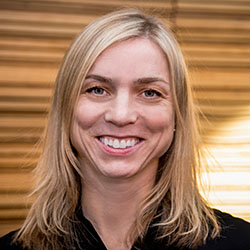
Carrie L. Heike, MD, MS

Carrie L. Heike, MD, MS

Craniofacial

On staff since July 2006

Research Center: Center for Clinical and Translational Research

Overview

Board Certification(s)
Pediatrics
Medical/Professional School
University of Washington School of Medicine, Seattle
University of Washington School of Medicine, Seattle, Clinical Genetics
Residency
Pediatrics, University of Washington School of Medicine, Seattle
Fellowship
Medical Genetics, University of Washington, Seattle
Clinical Interests

Research includes whether genetic variation contributes to the development of craniofacial anomalies in 22q11.2 deletion syndrome.

Research Description

My current clinical research focuses on the investigation of the relationship between the genotype and phenotype in children with the 22q11.2 deletion syndrome. My clinical and research training in the Children's Craniofacial Center has provided me the opportunity to work with a number of children with the 22q11.2 deletion and observe the wide variability in clinical phenotype. Within this collaborative environment, I have worked with our multi-disciplinary team to generate hypotheses to further our understanding of the phenotypic variability in this patient-population. Our current research is designed to expand scientific understanding regarding the role of specific genetic variations in the development of craniofacial anomalies within this specific population. To accomplish this goal, we are applying novel methods to quantify the subtle facial features which are affected in some individuals with this condition. We are also resequencing genes in the TBX1 pathway to determine sequence variations that may contribute to the phenotypic variability.

I also participate in research to use advanced technology further quantify the phenotypic features affected in other conditions that alter craniofacial features. Advances in the field of three-dimensional imaging combined with anthropometry now provide opportunities to obtain very objective and specific information in craniofacial features. Our ongoing work to characterize facial features in children with 22q11.2 deletion syndrome incorporates new methods that we hope will also be valuable in quantifying craniofacial variation in other conditions that affect craniofacial structures. We have enrolled over 200 participants in our Craniofacial Normative Database study, and we are developing novel techniques to quantify typical and atypical craniofacial variation.

I work with collaborators at Seattle Children's Hospital, as well as in the Departments of Genome Sciences, Computer Science and Engineering, and Epidemiology at the University of Washington on these projects.

Research Focus Area

Epidemiology, Genetics and Developmental Biology, Craniofacial

Publications

Increased risk of orofacial clefts associated with maternal obesity: case-control study and Monte Carlo-based bias analysis.
Paediatric and perinatal epidemiology , 2010 Sep: 502-12
3D digital stereophotogrammetry: a practical guide to facial image acquisition.
Head & face medicine , 2010 Jul 28: 18
Single nucleotide polymorphism discovery in TBX1 in individuals with and without 22q11.2 deletion syndrome.
Birth defects research. Part A, Clinical and molecular teratology , 2010 Jan: 54-63
Craniofacial summer cAMP: an educational experience for campers, cAMP staff, and the craniofacial team.
Plastic surgical nursing : official journal of the American Society of Plastic and Reconstructive Surgical Nurses , 2010 Jan-Mar: 6-11; quiz 12-3
Picture perfect? Reliability of craniofacial anthropometry using three-dimensional digital stereophotogrammetry.
Plastic and reconstructive surgery , 2009 Oct: 1261-72
Evaluation of the infant with an abnormal skull shape.
Current opinion in pediatrics , 2007 Dec: 645-51
Sleep disturbances in 22q11.2 deletion syndrome: a case with obstructive and central sleep apnea.
The Cleft palate-craniofacial journal : official publication of the American Cleft Palate-Craniofacial Association , 2007 May: 340-6
Syndromic craniosynostosis: from history to hydrogen bonds.
Orthodontics & craniofacial research , 2007 May: 67-81
Geographic and occupational risk factors for ventricular septal defects: Washington State, 1987-2003.
Archives of pediatrics & adolescent medicine , 2007 Jan: 89-95
Skeletal changes in epidermal nevus syndrome: does focal bone disease harbor clues concerning pathogenesis?
American journal of medical genetics. Part A , 2005 Dec 1: 67-77
Skeletal changes in epidermal nevus syndrome: does focal bone disease harbor clues concerning pathogenesis?
American journal of medical genetics. Part A , 2005 Dec 1: 67-77

Research Funding

Grant TitleGrantorAmountAward Date
Stereophotometric Assessment of Chest and Abdominal Wall Motion for Children with Thoracic Insufficiency SyndromeChest Wall and Spine Deformity Research Foundation $19,405.00Jan. 1, 2010
Craniofacial and Genetic Variation in 22q11 Deletion SyndromeNIHSept. 1, 2007
Craniofacial Variation in 22q11 Deletion SyndromeSeattle Children’s Hospital $100,000.00July 1, 2006
Craniofacial and Genetic Variation in 22q11 Deletion SyndromeNIH NIDCR $631,697.00July 1, 2006

Primary Office

Seattle Children's
W-7847 - Craniofacial
4800 Sand Point Way NE
Seattle, WA 98105
206-987-2208

Find a Provider or Researcher

Find a Provider or Researcher

Provider or Researcher Name:

More search options