
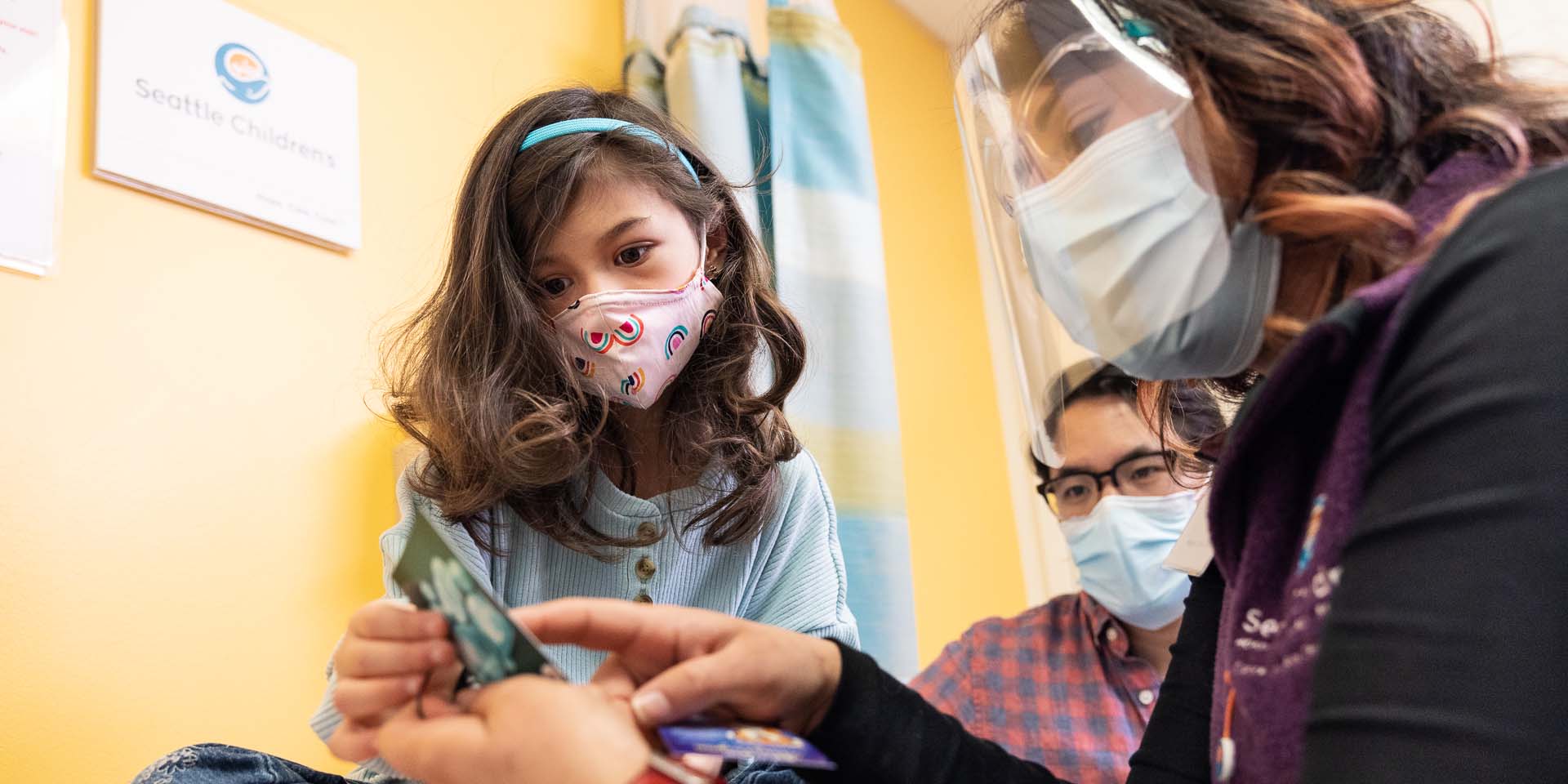
Preparing for Your Child’s Stay
During your child's hospital stay, we will do everything possible to make you and your child feel included, safe and comfortable.
You and your child are essential members of the healthcare team. Please ask us questions anytime.
In this section you'll find important information and helpful checklists about coming for a hospital stay.
Sharing Your Room During Respiratory Season
So that we can care for all of the patients who need our services, we are carefully and thoughtfully resuming shared rooms on some of our patient care units. We are committed to keeping our patients, families and workforce safe from respiratory illnesses and we are taking extra precautions to make sure that sharing a room does not pose any additional risk of exposure to the virus.
Here are some of the steps we are taking to protect everyone from respiratory illnesses:
- We have limited the number of visitors entering our buildings.
- Our cleaning protocols follow our infection prevention standards.
- Two parents or adult caregivers will be allowed to stay the night in a shared room.
- Everyone is screened for symptoms before entering our building.
If your child will be admitted into a shared room, you’ll be notified by a member of our staff and given special instructions for any required testing or preparations.
Before You Arrive for a Hospital Stay
If you know your child will be staying in the hospital, you will have some things to take care of before they come. We suggest you start checking off these items at least 1 week before your child arrives.
-
Arrange for a place to stay, food and transportation
If your child is spending the night at in the hospital, you will want to look at sleeping, transportation and food options. If you need help finding a place to stay or transportation in Seattle or Bellevue, contact Guest Services.
To get help with transportation, a place to stay, or for questions about your visit, contact Guest Services.
To learn more about hospital campus amenities, see the Hospital Campus Visitor and Family Guide.
-
Arrange childcare for siblings
Day procedure
The length and nature of your visit may make it difficult for young children to attend. If children attend, we recommend bringing another adult to supervise.
If you need to bring siblings, we have a free, supervised playroom for brothers and sisters ages 3 to 11 who are toilet-trained. They may stay for two hours, and there are no reservations. As long as there is space, we allow siblings in.
To learn more, look for "Sibling Playrooms" on the Child Life page.
Staying overnight and in the hospital
Siblings younger than 1 year old may stay overnight with their caregiver. All other siblings may not stay the night. You will need to make other child care arrangements.
To find out when siblings and others can visit, see our Visitor Policy.
-
Tell us about religious or cultural beliefs, access or other special needs
Let us know about cultural beliefs or unique needs that may affect you child's treatment and care.
Interpreters
We offer free interpreters for Deaf and hard-of-hearing, and non-English languages. We should have arranged them when you scheduled.
Wheelchairs
If you need a wheelchair when you arrive, let us know at 206-987-3360.
-
Send medical records
If requested, ask your child's doctor(s) to send medical records, X-rays or test results to the hospital.
-
Get insurance authorization
Ask your insurance company if you need a managed-care referral from your child's primary doctor and/or pre-authorization for your child's hospital stay..
To learn more, visit our Insurance section. For questions, call Seattle Children’s Insurance Processing Department at 206-987-5757.
Fax Managed-Care Insurance Referral
If you do need a managed-care referral, ask your child's doctor to fax us at 206-985-3297.
Important: Make sure we receive the insurance referral at least four business days before your child's admission.
To learn more, visit our Insurance section. For questions, call Seattle Children’s Insurance Processing Department at 206-987-5757.
-
Apply for financial assistance
Learn more about financial assistance.
-
Media requests
If anyone from the media plans to join you for your child’s appointment, you need permission before they can come to the hospital. Call Seattle Children’s Public Relations at 206-987-4500 or email.
Preparing Your Child
Seattle Children's has a variety of resources to help you talk to your child about their hospital stay. Call the Family Resource Center or talk with a child life specialist. Child Life also created this resource about what to expect during your stay:
What to Expect at Your Hospital Stay at Seattle Children’s (PDF)
-
Tips for preparing your child
Here are some tips to help your child feel safer about his upcoming visit:
- Talk together about the hospital stay before you come.
- Remember, your experience with hospitals may be very different than what your child will experience.
- Listen to your child.
- Be honest about what will happen and what may hurt.
- Use short, simple terms they know.
- Reassure them that if something hurts, there are ways to help the pain, including medicine, relaxation, listening to music and playing games.
- Use one of their stuffed animals to show what will happen and encourage them to ask questions and talk about fears.
- Reassure your child that you will be with them as much as you can.
- If your child seems uneasy with talk about the hospital or clinic, stop and try again later.
- Reassure them that having to go to the clinic does not mean they have done something wrong.
- Encourage your child to bring toys or activities from home.
-
Recommended books
You are welcome to come to the Family Resource Center on level 7, in the River zone by the Frog elevators, and check out books. In addition to the titles below, you can call 206-987-2201 and request a copy of our recommended book list.
- Preschool: Franklin Goes to the Hospital
Paulette Bourgeois, Scholastic Paperbacks, 2000. - Preschool to third grade: When You're Sick or in the Hospital: Healing Help for Kids
Tom McGrath, Abbey Press, 2002. - Third to sixth grade: Everything You Need to Know about Staying in the Hospital
Patricia J. Murphy, Rosen Publishing Group, 2000. - Seventh grade and up: Coping with a Hospital Stay
Sharon Carter, Rosen Publishing Group, 2002. - Adult: Your Child in the Hospital: A Practical Guide for Parents
Nancy Keene and Rachel Prentice, Patient Centered Guides, 1999.
Here are more resources and books (PDF) on how to prepare children of all ages for a surgery or hospital stay.
- Preschool: Franklin Goes to the Hospital
-
Helping children of different ages
Children understand things based on their age and developmental level. You probably have many ideas of your own. Here are some of ours that you might find helpful.
Infants and toddlers
Infants and toddlers need to have familiar objects around them at the hospital. Bring along your child's favorite toy, blanket or other comfort item.
2-to-6-year-olds
As children get older, you can talk with them about going to the clinic, and about what will happen while they're there. It is important to let them express their feelings.
Saying "I'll bet you're wondering what it's going to be like at the clinic, aren't you?" rather than, "How do you feel?" will encourage your child to talk.
Let them be the doctor to a doll or stuffed toy. They can "operate" on it, give it "shots" or just apply a Band-Aid. They might express their feelings more clearly while playing than if you ask them directly.
Reassure your child that you'll stay with them when you can and that other people will take care of them if you can't be with them.
6-to-12-year-olds
Many of our suggestions for younger children are helpful with this age group as well. However, these children understand more than younger children and will ask more questions.
Explain that the hospital treats children of all ages, with many different medical problems. It's important to explain that doctors, nurses and other people at the hospital will do certain tests and procedures to find out what's making them ill or to help make them feel better.
Teenagers
Teenagers are able to understand more information about their illness and treatment. They may, however, be reluctant to ask questions about things they don't understand. Encourage your teenager to talk to their doctors and nurses about their condition.
Be sure they are included in discussions and decisions about care so that he will feel independent and more in control. Your teen may be worried about his privacy. Reassure them that the hospital staff will treat them with respect.
Even at this age, a familiar object, journal or favorite tape or CD can help your teen feel calmer at the clinic.
During Your Child's Stay
-
Your child's healthcare team
Children’s is a teaching hospital. Your child will receive care from a team that may include many doctors and staff members.
A registered nurse (RN) on each shift is assigned to care for your child. The RN is your main contact with other members of your child's healthcare team. This nurse will teach you and your child about their care during and after a surgery or hospital stay.
Learn more about specific roles on your child's healthcare team.
-
Inpatient rooms
Your child will be assigned to a room based on their diagnosis, age and sex. When rooms are shared, please be respectful of other children and families. Each inpatient bed has a television and telephone.
-
Your child’s schedule, unit rules and safety
When you are admitted, you will receive a unit brochure that has unit-specific information about your child’s healthcare team, your child’s schedule, how to keep your child safe, specific unit rules and more. Your nurse will go over most of this information, but please read and ask questions.
-
Important things to bring
Insurance cards
Bring your health insurance and prescription cards.
Medical coupons
Remember to bring coupons if your child is on Medicaid, DSHS, Apple Health or Basic Health Plus.
Legal papers
Birth or adoptive parents do not need to bring a birth certificate or any other legal papers. If you are a legal guardian, we will need to see the legal papers that say so.
If you are the parent, but do not have legal custody, we will need to see the legal papers that allow you to make healthcare decisions for your child.
If you do not have the legal papers we need to see, call our Social Work Department at 206-987-2760 (voice) or 206-987-5186 (TTY) for help.
List of medicines
Bring a list of the prescription and non-prescription medicines and vitamin supplements your child is taking, including the name, dosage and concentration. If you do not have a list, feel free to bring the actual bottles of medicines or vitamins. It’s important you do not give your child medicines from home while at Children’s.
Clothing
Children’s provides gowns and footwear, but your child may feel better in his their own clothes, like sweat pants, large T-shirts, socks, underwear, pajamas, etc.
Play and comfort items
A favorite blanket, toy, book, video or music (with headphones), phone or computer will help soothe your child. Consider bringing pictures of family, friends and pets.
Car seat or booster seat
Remember to use a car seat or booster seat or seat belt (depending on your child's age and weight) when transporting your child.
-
Visiting policy, amenities, food options, special needs and more
To learn more about hospital campus services, see the Hospital Campus Visitor and Family Guide.
-
Media requests
If anyone from the media plans to join you for your child’s appointment, you need permission before they can come to the hospital. Call Seattle Children’s Public Relations at 206-987-4500 or email.
Your Doctor Will Answer Your Questions
Here are some helpful questions to ask your child's doctor. Read them over before your child is admitted.
-
Condition
- Do you have any written information that I can use to learn more about my child's special health needs?
-
Treatment
- Can you explain what will be done while my child is in the hospital?
- Who do I ask to talk to if I have questions about my child's care?
- When and how will I learn about my child's test results?
- Do I need to schedule a follow-up appointment with a clinic after my child is discharged?
-
Medicine
- What is the name of the medicine? What is the medicine for?
- Is it safe to give if my child has allergies or adverse reactions to some medicine? Is the dose correct for my child's weight?
- When we go home, how am I supposed to give it? What time each day? With or without food? What is the best way to measure my child's liquid medicine?
- If my child is still taking the medicine once we go home, how long should my child continue taking it? When should I see an improvement?
- What side effects may occur? What do I do if they occur?
- Is the medicine safe to give with other medicines or dietary supplements? What food, drink or activities should my child avoid while taking the medicine?
- Who do I ask if I have questions about the medicine?
-
Support
- Are there any support groups where I can connect with other parents?
- Do you know of any other local or Internet-based resources?
Caring for Your Child at Home
Throughout your child's hospital stay, you and your child's nurse or other care provider will plan for them to leave the hospital (their discharge) and the care they will need at home. If your child had a surgery or procedure, there will be special recovery instructions to follow.
Before leaving, ask your nurse and provider questions to make sure you feel comfortable to care for your child at home. If your child needs special home care equipment or home nursing, your child's nurse will help you arrange it.
Before your child goes home, plan to talk to:
- Your child's nurse about activity levels for your child, how to care for them at home, medications, therapies or follow-up appointments
- Your child's teacher about homework assignments and returning to school
- The school nurse about your child's condition and healthcare needs, and any necessary steps to take to arrange for returning to school
- Your childcare provider about your child's condition and returning to a care schedule
- Your friends and family about help you may need, such as care after returning home or help with transportation home
Changes in your child’s behavior
You may notice changes in your child's behavior when they return home from the hospital. These might include changes in sleep patterns or fear of being away from you.
Your child may also show behavior from an earlier age like thumb-sucking, temper tantrums or changes in toilet training. These are usually temporary.
Encourage your child to talk about their time in the hospital and reassure them that a hospital stay or surgery can be upsetting. If changes in behavior continue for 6 weeks or more, talk with your child's doctor.

-
Do you have a MyChart account?
It’s the easiest way to keep track of your appointments and communicate with your healthcare team.